



The implementation of an expanded 24-team College Football Playoff has been publicly in the works for a couple months but was officially announced on Monday, with ESPN and the CFP agreeing to a five-year, $1.7 billion deal.
The abandonment of the 12-team field after just three seasons is a bit jarring from a naive sports fan perspective. But with massive amounts of interest, it made sense financially for the CFP to test out just how big the playoff field can be.
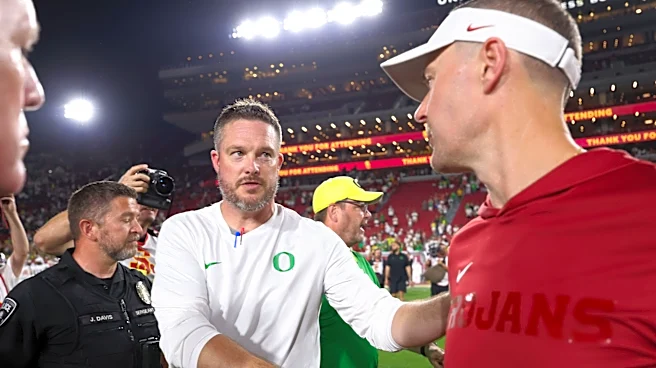
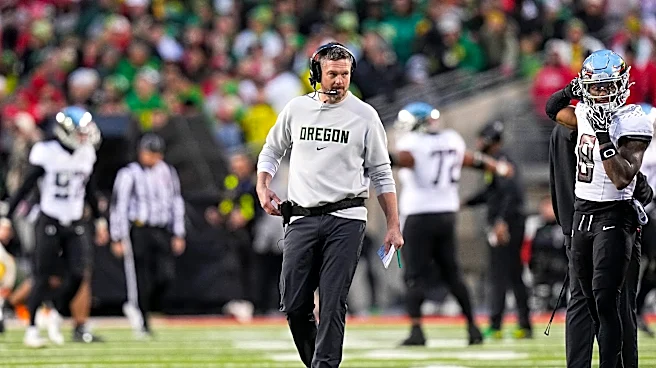
At the same time, the new CFP format will feature the elimination of conference championship games, essentially doing away with the history that comes with those contests. During Monday's press conference, Oregon Ducks head coach Dan Lanning was asked about the conference championships
going by the wayside in 2027 and beyond.
"Obviously the loss of the conference championship games is going to be unique and sad in some respects because that's always a really awesome game to be a part of," Lanning said. "But in reality, it's almost a punishment for those teams that are playing in it because they're playing football when nobody else is. So it certainly makes sense with the landscape of college football and what it's like right now."
Lanning raised what has been a significant talking point going all the way back to when the CFP was first implemented over the BCS system.
The issue being that in the CFP rankings prior to the conference championship game, a specific team could be safely in the CFP field alongside, say, two or three conference foes — commonplace in the SEC and Big Ten. Only two of those teams will be playing in the conference title game, with the loser adding another loss and damaging their resume, potentially falling out the field... while the other conference teams that fortunately didn't make the title game don't have to risk any damage at all to their resume, comfortably staying in the field.
It's a situation that's played out going all the way back to the four-team version of the CFP. Despite the traditions that come with conference championship games and actually crowning a winner, the logic of eliminating the game is prudent.
"I think it's a necessary evil. Like I said, I like that game. I would love for it to be a part, but I don't think it's fair necessarily to the teams," Lanning continued. "We experienced it a couple years ago. We're playing a conference championship, and everybody else is able to relax on their couch, and then we go almost a month without."
Lanning is referring to when the Ducks played in the Big Ten title game in 2024, beating Penn State and gaining a bye week in the CFP — only to have to wait three weeks and face an opponent in Ohio State that had played the week prior. By the time Oregon had knocked the rust off, the score was 34-8 and Jeremiah Smith had embarrassed the Ducks' secondary time and again.
Having gone through that experience and getting burnt, Lanning offered up an idea that would be more similar to the professional ranks in terms of scheduling.
"I think the thing that I've always said is the game should be played in sequence, very similar to the NFL playoffs or any other playoff model. So there's still a lot to college football," he said. "I think it has to get better, but I do think if you're going to expand the games to 24 teams, then that's going to be part of what is missing."
There's certainly a give and take with the new 24-team formula. The take is the conference title games. And the give, it were up to Lanning, would be to schedule games closer to the end of the regular season instead of nearly a month of time off.
Time will tell if the powers that be get the memo.
Contact/Follow @Ducks_Wire on X (formerly Twitter) and like our page on Facebook to follow ongoing coverage of Oregon Ducks news, notes and opinions.
This article originally appeared on Ducks Wire: Dan Lanning reflects on no conference championships in new CFP format