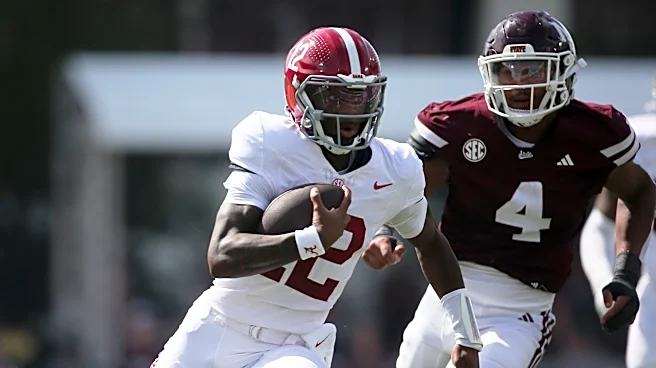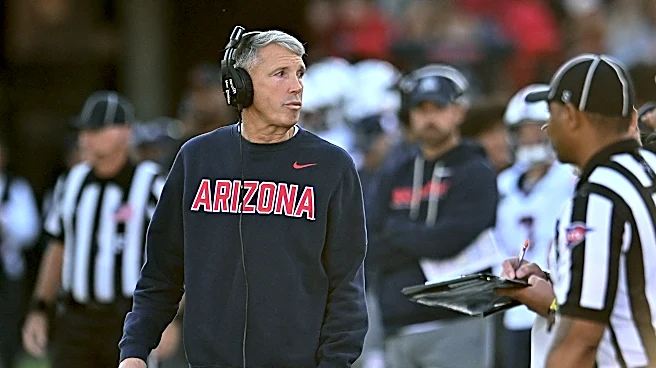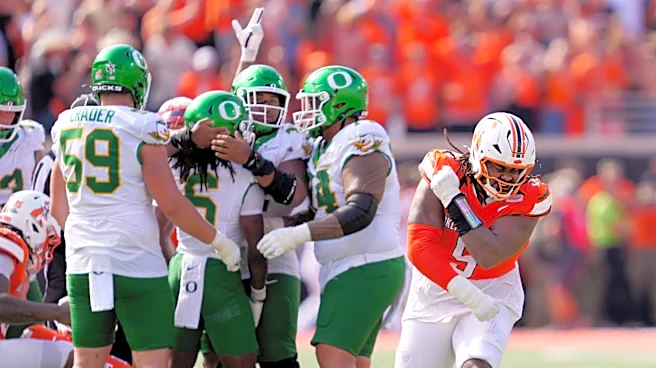

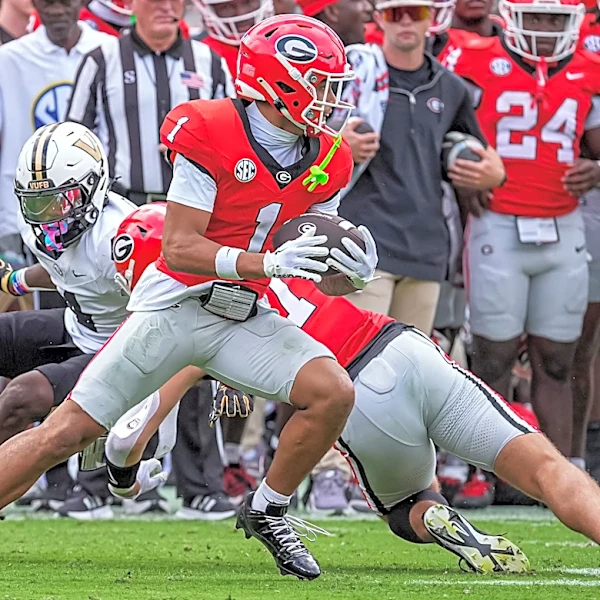

While it's not quite midseason for the Oregon Ducks as they take a break for the bye week, we've gathered tons of information on the 2026 version of the Ducks.
Starting the season at No. 2 in the AP poll, expectations were about as high as they've ever been as Oregon returned an uber talented roster filled with both young blue-chippers and accomplished future NFL draftees. That combination was supposed to put the Ducks among the top national title contenders in college football — but two weeks into the year, that wasn't the case at all.
Stillwater proved to be a house of horrors for the Ducks, as they fell, 39-31, to the unranked Oklahoma State Cowboys in one of the biggest upsets of the early college football season. That followed an underwhelming
season-opening win against the Boise State Broncos, though the Broncos easily look like the best Group of Six team through four games.
A beatdown of the Portland State Vikings and a excellent road win over the USC Trojans came next as Oregon looks to dig itself out of an early-season loss that dropped them to No. 21 in the rankings. They now sit at No. 15, though they're very much still finding themselves with eight games in the regular season still remaining.
Information has been gathered this month on the Ducks, but much still remains to be seen. These are the five biggest questions facing Oregon as they go head-on into Big Ten play and take the field every weekend until December.
What is this team's mental makeup?

As I just mentioned, coming off of the bye, the Ducks will have a game every weekend for the next eight weeks. It's one thing to show up in a rivalry game against the hated Trojans, but can they bring the same mentality and energy for the next eight weeks against the likes of Ohio State, Michigan, Washington and some pesky Big Ten teams?
While a 10-win Big Ten squad is likely to make the College Football Playoff, the Ducks sure don't want to run the risk of being on the outside looking in come December. For that not to happen, and to secure a spot both in the Big Ten title game and the CFP, essentially wiping away the stink of the early-season loss to Oklahoma State, Oregon will have to completely run the table and go undefeated the rest of the way.
The Ducks put themselves in this position; do they have the mental fortitude to dig themselves out of it?
What does the quarterback situation look like moving forward?

This isn't a question of whether or not there will be a quarterback competition with two highly-talented passers, but one of when starter Dante Moore can return and how long backup Dylan Raiola may need to be in the lineup. There's a chance that Moore returns against the UCLA Bruins in Week 6, but after being taken off the field via ambulance, Raiola has to be ready to take his first start with the Ducks.
The former Nebraska Cornhuskers starter for two seasons looked terrific against the Trojans, throwing for nearly 300 yards and a pair of touchdowns in relief of Moore. While there was a significant amount of pressure on him in Los Angeles, there's added pressure with two weeks of preparation as the potential starter as well.
But if Moore is ready to take the field after a concussion, he'll need to play better than he has early in the year. He had a career day against Boise State in Week 1, but was ineffective in Week 2, missing throws that he normally makes and looking disjointed overall. Offensive coordinator Drew Mehringer has to reconnect with his quarterback, getting on the same page and elevating him for the stretch run of the season.
If Raiola or Moore aren't at or near their best, it could spell doom for the Ducks.
Can the defense produce splash plays?

Last season, the Ducks were middle of the pack in both total sacks and tackles for loss despite playing 15 games. That's carried over to 2026, as the Ducks have just seven sacks (77th in the nation) and 13 tackles for loss (127th). While creating negative plays at the line of scrimmage is important to a defense, Oregon's saving themselves a bit having forced seven turnovers (six interceptions, one fumble recovery) through four games, tying for 17th in the country — though four came against the hapless Vikings in Week 3 and one came on the final play against USC on a Hail Mary.
The lack of negative plays and turnovers forced in competitive games puts more stress on the overall play-to-play performance of the defense. This season, however, the Ducks are 22nd in the country with an opposing red zone touchdown percentage of just 43.8%. It's a bend-but-don't-break approach, one that can work against the mid-tier opponents but tends to break more often than not against elite, talented teams.
Creating habits of forcing turnovers and finishing plays behind the line of scrimmage will offer the Ducks' defense more margin for error against the great teams left on the schedule. If they can't do that, they'll have to be near-perfect to contain the likes of Ohio State and others in potential postseason matchups.
Can the Ducks have consistency on the offensive line?

Oregon seemed to settle in with their five-man offensive line lineup against USC and the group performed as well as could be expected. But that wasn't the case for the first two games, with players rotating in and out of the lineup as the coaches hoped to find a group that meshed better than others.
We know that center Iapani Laloulu is a star, with tackles Ziyarre Addison and Fox Crader providing solid play against the Trojans. Guard is the biggest question, with Kawika Rogers pushing Douglus Utu and Dave Iuli. True freshman Tommy Tofi and transfer Michael Bennett III have also seen the field, but project as reserves.
Considering that the Ducks consider themselves to be national title contenders, allowing seven sacks in four games just isn't good enough. It's solid, but has put the Ducks back in early downs too often combined with a higher number than expected of negative first down runs.
If the Ducks find a five-man offensive line that meshes well, it has the potential to be amongst the best in the nation. But, similar to a microcosm of the entire team, that has yet to happen — though there have been moments of excellence.
Will the safety play improve?

There have been many holes on the Oregon defense thus far, with the edge rushers flying too far upfield and the supporting linebackers alongside Devon Jackson not playing up to their potential. But the biggest Achilles heel has been the safety play, with too many pass completions occurring in between the hashes with the middle of the field proving to be a safe space for opposing quarterbacks.
That was far from the case last season with 2026 first-rounder Dillon Thieneman patrolling the middle, but Minnesota transfer Koi Perich was expected to excel in replacement. He hasn't met expectations, instead looking to be just a step late and not fully playing to the speed that he needs to play at. It's not an issue of raw speed, but rather some hesitancy in adjusting to the Oregon defensive system.
Aaron Flowers hasn't played at the level that he did in 2025 either, with some of the blame being on his subpar coverage skills early in the season that were glaring against elite teams late last year. With neither playing the way that the defense needs, the unit won't reach their full potential.
Is it time for a change? Reserves Trey McNutt and Peyton Woodyard remain waiting in the wings, as is talented true freshman Jett Washington, who picked off two passes on back-to-back defensive plays against Portland State. A spark is needed and it would be welcomed by either Perich or Flowers, who have the experience, but the Ducks may have to look elsewhere if the issues continue.
Contact/Follow @Ducks_Wire on X (formerly Twitter) and like our page on Facebook to follow ongoing coverage of Oregon Ducks news, notes, and opinions.
This article originally appeared on Ducks Wire: Five questions for the Oregon Ducks to answer the rest of the season