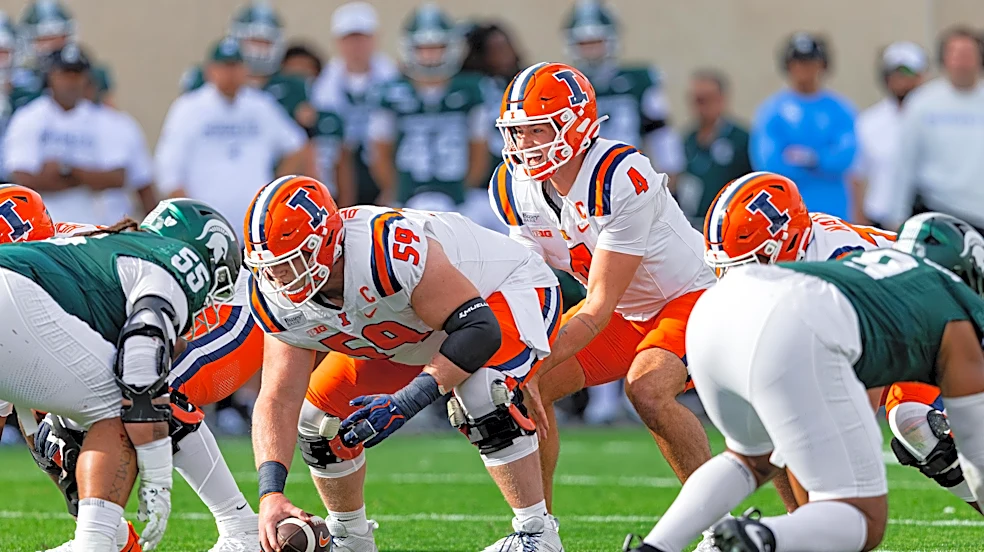


For the first time in nearly a month, the Oregon Ducks will get on a plane and fly away from home for a Big Ten matchup. This week, the Ducks are heading to Champaign to take on the Illinois Fighting Illini, who are coming off a bye week.
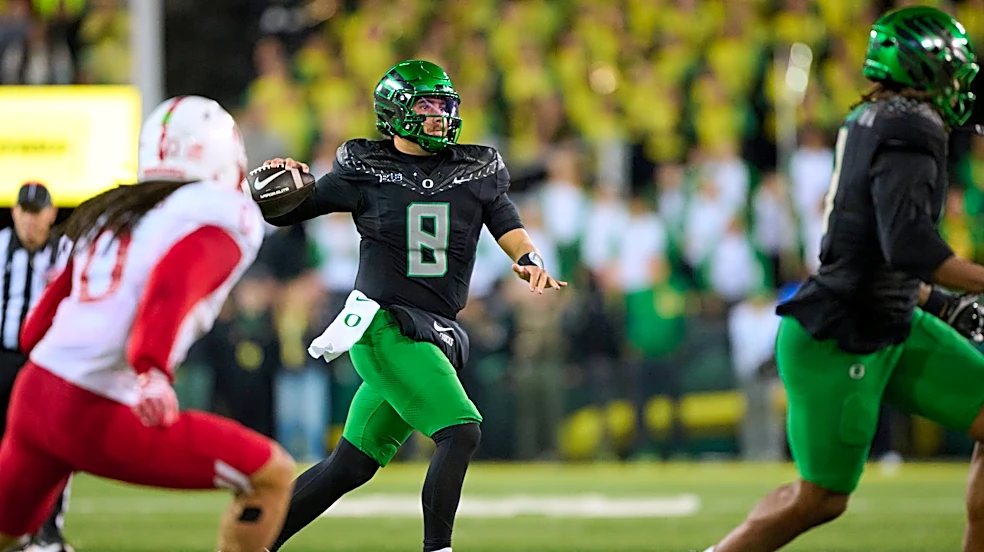
The Ducks did ease many concerns about the offense last week, despite a 17-14 victory over Nebraska and a heroic fourth-quarter performance off the bench by Dylan Raiola. Dan Lanning noted after the game that the quarterback competition between Raiola and Brock Thomas, who was benched after three quarters and less than 100 yards of offense, will continue in practice this week.
Illinois has already fired its defensive coordinator this season and is one of the worst defenses the Ducks will face this season, but
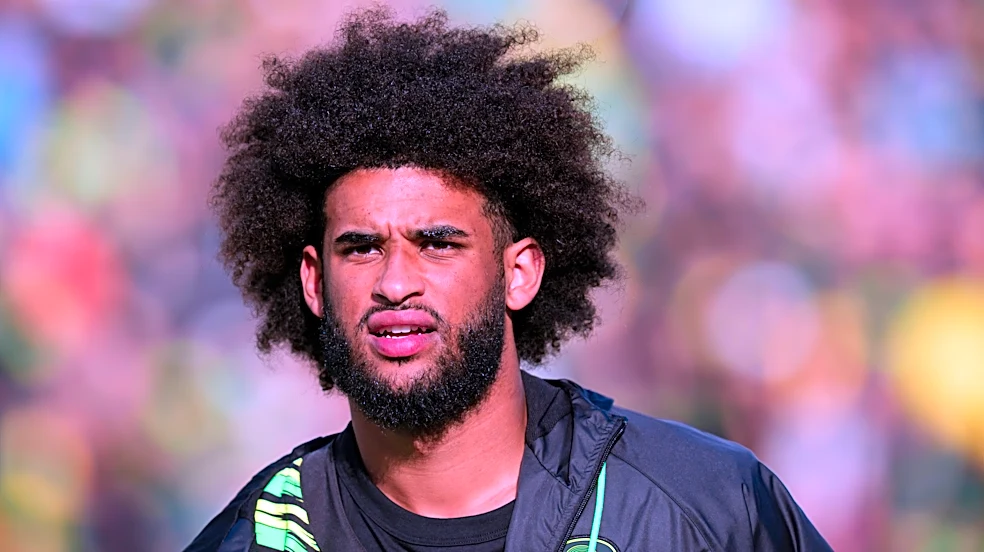
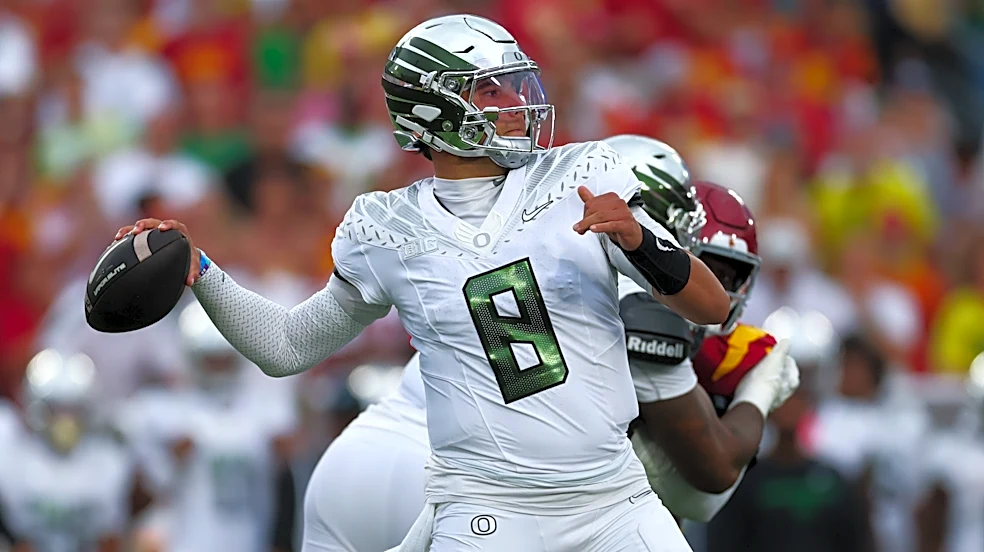
traveling on the road with uncertainty under center can be dangerous. Lanning addressed the position while speaking to the local media on Monday, as well as the status of star quarterback Dante Moore.
The Illini will be rolling with a backup quarterback in the matchup following an injury to starter Katin Houser in their last game. Lanning noted some of the challenges the Illinois offense presents, and how Oregon's defense can continue its stretch of good play and take the show on the road.
Lanning also briefly addressed the situation surrounding wide receiver Evan Stewart, who missed the Nebraska game with an undisclosed injury and was arrested and booked early Sunday morning on a DUII charge.
Here is everything Lanning had to say on Monday before the Ducks travel to the Midwest:
Opening Statement & Addressing Evan Stewart Situation

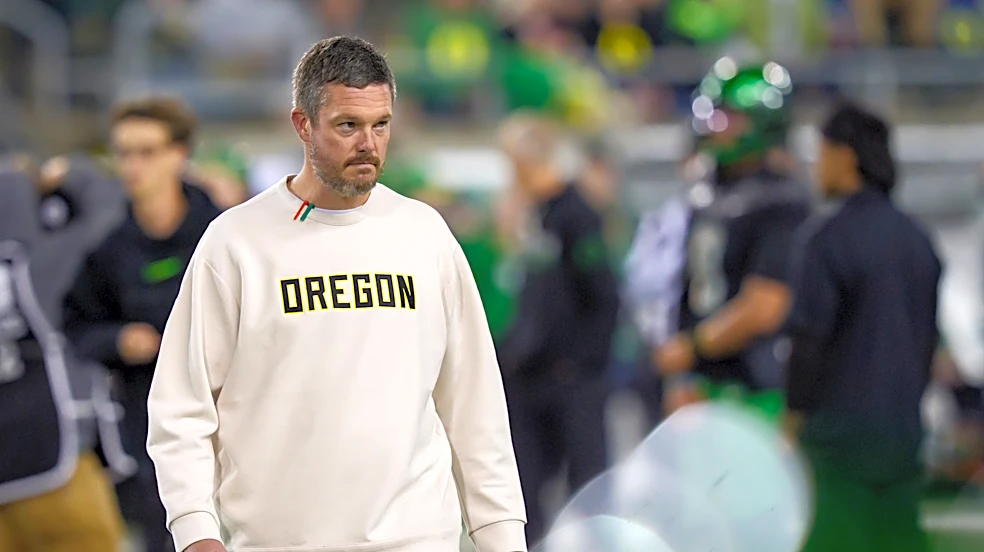
Dan Lanning: "Just to start things off first, obviously, there's some there's an incident this weekend that didn't match our standard here in our program. There will be appropriate action taken. Still gathering some details on what the situation looks like, but that'll be handled internally. I'm not going to respond to any other questions about that. Going to handle that with our guys. There's an expectation of what you have to do, how you have to act, and how you need to perform in our program. (The incident) kind of overshadows the success that we had on Saturday, which is disappointing, but that will be handled by us internally. It's not something I'm going to speak on publicly.
"Going back after reviewing the game, obviously it's tough to win. I said that post-game in college football, especially when you're playing a good defense, and Nebraska is outstanding; they held Indiana to six points through three quarters. It's tough. It's a tough team to go get touchdowns against, and we saw that for us. That being said, just like I said after the game, there's a lot that we can get better at, and some that's based on what we need to be able to do with our personnel and how we can improve there. I did think, after watching our defense play extremely well, there are some wards that we can clean up there as well, especially on the third down penalty right before half. Special teams, same thing. There are some really good moments with the field goals, but there's also some poor decision-making and poor execution at times in some of our receiving units, and that. So going forward, you look ahead at Illinois, and what do you notice immediately? It's a really well-coached team. Coach Bielema always does a phenomenal job. They've obviously had this previous week to really prepare for us and get healthy. So I know they've been looking at us for a little bit, and you feel like you're behind a little bit when you start looking at a team like Illinois and the skill set that they have.
"They've dealt with a lot of injuries this season, but they've done a good job of taking advantage of the personnel they do have and creating explosive plays. You immediately recognize what they're able to do on offense. They have some playmakers and some weapons, and they do as good a job as anybody in football as far as getting their guys the ball and taking advantage of those weapons. What they do on defense is extremely unique. You don't see a ton of teams playing the 3-3 stack the way that they play it, so it creates some different guys that identify in the back end, a lot of different pressure variables, and really kind of hard to get a beat on what they're doing at times. So something we have to be really sound against, find effective answers, and then obviously play well to have success in this game. So that being said, definitely, definitely excited to go get on the field again and anxious for the body of work that's ahead of us this week."
Following Up on Stewart

Question: I understand you don't want to talk about punishment, but it's the second time in seven months that something like this has happened to people associated with this program. What would you say to the community about what steps you're taking to prevent this from continuing to happen? What are you doing to help bring awareness to help stop?
DL: " I'm not discussing that any further. Like I mentioned already, to think that there aren't things that happen in our program to prevent it would be wrong. There are, but that doesn't mean that bad things don't happen. But I'm not answering any questions about that."
Benching Brock Thomas

Q: What went into the decision to stay with Brock Thomas until the fourth quarter, and I guess is the competition remaining open this week between those (Thomas and Dylan Raiola)?
DL: "There's always competition in positions, right? There's always competition at positions. Obviously, it's funny. The week before, you guys were wondering why did I take so long to switch to Brock, right? And this week it was why did you wait so long to switch to Dylan, right? There's a body of work that happens between Monday and Friday that is used to evaluate that. Brock the week before went 11 for 15, and you can say, 'Oh, the first series he threw two incomplete passes. Why didn't you switch him right then?' If we switched every time somebody made a mistake, we'd have a lot of switches within ball games. That's just not the way it works. Players have to have an opportunity to get in a rhythm. Brock wasn't in a rhythm. We weren't effectively moving the ball. But it was a tight game. We felt like ultimately protecting the ball was going to lead to an opportunity to have success. He had protected the ball better in the week, similar to what I said in my previous conference here Saturday after the game. But Dylan came and gave us a spark. He played with great confidence and did an unbelievable job. But there will always be competition, right? And it's again-it's always about the body of work.
"But the way things finished there, Dylan played well. He did some things really well. So I think the hot hand kind of played into Brock's ability to be the guy. That can certainly play into this week as well for Dylan."
Turnover Risk

Q: On that subject, do you think that the risk of turnovers in that situation, going with Dylan, outweighed the struggles that Brock was having? It seemed like those struggles, those issues placing the ball, really stretched well into the third quarter for him.
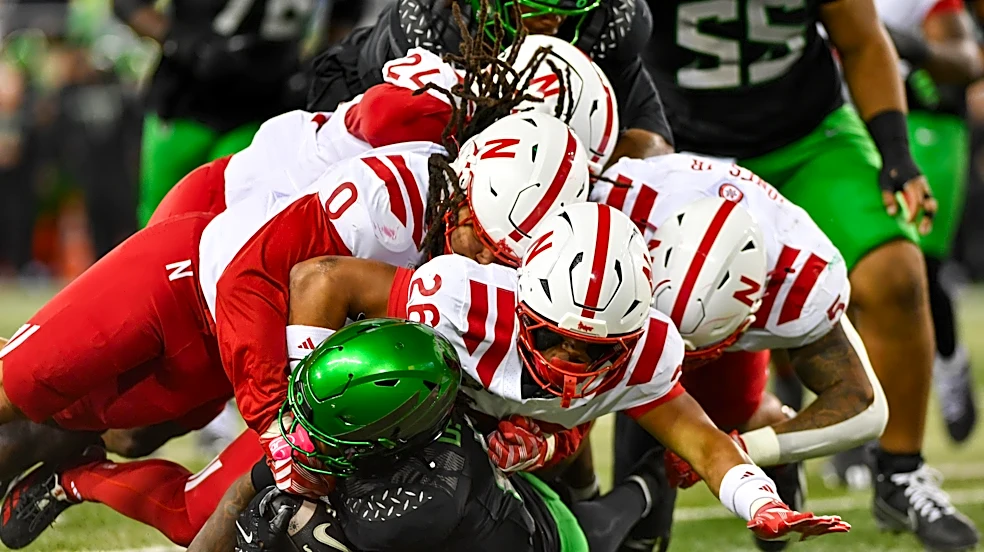
DL: "That's the same guy again that went 11 for 15 the week before, right? So, did I think every turnover mattered drastically in this game? Absolutely. And was I assuming that Dylan was going to turn the ball over? No. That wasn't the assumption. I mean, there's only been three touchdowns scored against that defense the last two weeks. I don't know the questions that other programs are getting about it, but you know, through three quarters, as I said, Indiana had six points. They rushed for 54 yards. I think in that game they've been averaging 250. It's a hard team to run the ball against. They're an extremely good defense, so that's not just an indicator of success. With your defense playing well, protecting the ball is super important. We made the change because we thought it gave us our best chance to have success and win. I don't know what else to say other than that's when we felt comfortable. Let's make the change. It was getting more evident that we needed to be able to throw the ball down the field to have some success. And the reality is, they probably played Dylan a little bit different when he came in the game, and it opened up some run lanes for us as well. So they're a really good defense. That all said, I think I've said it multiple times: We need to be better on offense and create some more success."
Timeout Usage

Q: I want to ask about the timeout usage in the second quarter. I understand the philosophy of trying to get the ball back when they have a third-and-22. You don't envision them converting that up to that, but it's results-oriented to look back and say that you know you shouldn't have done that. But up to that point, your offense did have 50 yards, seven punts. Does that weigh into your decision-making at that point, or are you always going to take that time out there?
DL: "Everything weighs into it, but a field goal could have won that game at that point, right? We've been really good in two-minute situations this season. I think over the last 10 years, third-and-22, it's probably an average of a 6% success rate, meaning that they actually convert on third-and-22. The one area we didn't play great defense on Saturday night was third-and-long. I think if you look at their success, we were really good on third down. We weren't good on third-and-long, and we have a coverage that is supposed to be covered, and it wasn't. But no, I absolutely don't regret that decision. With a 1:12, when a field goal matters, our kicker's been 100% on the year, I'd like to give him an opportunity for a long field goal at the end of half. Something I would do 100% of the time. You There's probably three calls in that game that I would say are really interesting. If it's called differently on the field, is it reversed the other way? I mean, I've watched that touchdown several times. I don't know that that gets called a touchdown.
"You've watched Jordon's fumble, which we've got to be better with ball security in the red area. I don't know if that gets called a fumble if it's called the other way initially. There's one where we get the ball out at one point, and it wasn't. It was blown dead. Does that look different? At any point, the sweet spot in two-minute is really a minute and 20 seconds to two minutes. So with us being able, if we get a stop on an incomplete pass there, we're gonna have a minute and seven seconds to get 30 yards to have an opportunity to potentially kick a field goal. So 100% of the time, I'm gonna definitely take a timeout there. I mean, analytics would tell you any third-and-eight-plus, you're definitely taking a timeout, right? And that was third-and-22, right? So that's a no-brainer for us. You can't again live in 'Oh well, it didn't work, so that's a bad decision.' I'll do that every day of the week. Again, if they had a successful third down play, then you don't call a timeout. They didn't have theirs. We had ours. We still had two. Which is really a minute and 10 seconds; it's like an eternity with two timeouts in the game."
Another Incident

Q: Well, where this is probably not going to be your favorite question—
DL: "I don't mind hard questions."
Q: There were rampant rumors last night online that Oregon players were involved in a separate speeding incident.
DL: "I was talking about the same thing whenever I first addressed it."
Q: So you are not aware of any players being involved in that situation?
DL: "No, no, I'm saying there's an incident that we're taking appropriate action on, and I'm not going to have any further comment on that. Appreciate you."
Tommy Tofi

Q: Thoughts on the job Tofi did and that group did up front after he entered the game?
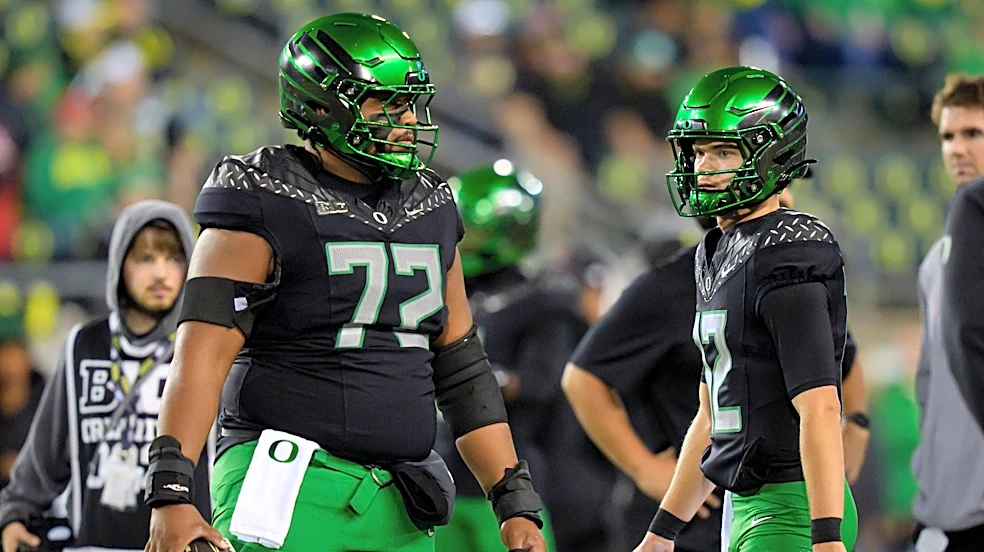
DL: "He's big. He can move bodies. There's some real positives in some of those moments, what he was able to create at times in the run game, being able to get some movement on some guys up front. There's also some misses that he has that are going to come with more time and more experience. What you have to weigh in our situation with a young player like Tommy is that you know he's going to be really, really good. There are going to be mistakes that happen within there as well, especially with the variety of defenses you can get. So there were some positives, and there were some things that weren't good enough, and he knows that. But you know, if he continues to get more reps, more time, I think he's going to be able to be a really, really good player for us. Again, I think I said it last week: there's competition. There's a lot of competition right now in our offensive line, and not a lot of separators right now of like, 'This guy's distinctly better.' They kind of all have different skill sets that they're good at. So Tommy's going to be a guy that's right in the mix of that."
Illinois' Wideouts

Q: I think four or five of Illinois' receivers average about 10 yards per reception. What type of challenges does Illinois' passing attack present, and how do you make sure that your defense gets off the field on those third-and-long situations where it's an obvious passing situation?
DL: "It's tough. They do an unbelievable job of scheming guys open. Even if a guy's not necessarily open, but they do a great job of creating touches. I think their screen game is really effective as well as their shot game down the field, and those guys are dynamic players. Obviously, they find ways to make sure that the players that need to touch the ball are touching the ball in their system. So we have to be aware where they're at at all times. They have good speed. They're complete wideouts. They're not guys that can kind of do one thing. They can run good intermediate routes. They can take the top off. They're positive in the screen game as well."
Rushing Attack

Q: Why was the run game so effective in the fourth quarter when it hadn't been for the previous three? I know last week you said that the offensive line rotation will kind of reveal itself when it will. Was that good enough to where that feels like maybe that took place on Saturday, or is that too premature?
DL: "Yeah, there's a couple tells that I thought we had that affected us right in a negative light. It's something you just have to continue to evaluate every single week as far as whether they were able to take advantage of things that we've seen in our stances that guys fell back to, and they were able to use for their ability to close on runs, things like that. Then also we were able to find they had an empty check throughout the game. So if you notice, we'll start an empty at times, and then we're able to recreate some runs and take advantage of that in the second half. Also, I thought they started to play for pass a little bit more. Like I said, when Dylan came in the game, and that created their weak safety did a really good job fitting runs, you know, for them internally, and we just didn't get as much movement up front on some of our double teams. So we came to some schemes that were going to give us better movement."
Chris Hampton

Q: What's your impression of the job coach Hampton has done to press the right buttons since the Oklahoma State game to get the defense to where it is now, where it looks more like what you guys expected?
DL: "I think the entire defensive staff has done a really good job. I think that's credit to continuous improvement and the opportunity to keep working and finding things. Even after that game, they're going to be most critical of themselves. They're receiving a lot of praise, I'm sure, right now, deservedly right for playing well, but we're thinking about the penalty that we got on the third down before the timeout that Zac didn't think I should call. In that situation, we're off the field. We get the ball back even earlier, right? We're thinking about the third-and-22, or the third-and-17, or the third-and-10 scramble pass that we can improve in. We're thinking about playing with a little bit better technique on a deep shot, so I think the key is never get infatuated with the praise. Right there's growth in there somewhere, and that's what the defense is focused on: continue to grow, and hopefully don't spend any time reading your press clippings because we can play better than we did."
Fumble Rulings vs. Nebraska

Q: You mentioned those two or three calls that just didn't go your way, and I know you're not blaming the officials because that was the call on the field. If it went the other way, then they would have stuck with it. Do you think there's a better way to go about that to not have that happen?
DL: "It's going to go both ways, right? Ultimately, with Jordon's fumble, if you blow that dead and say it's down, then you can't get frustrated when the other play gets blown dead and isn't ruled a fumble when you felt like it was, so it definitely goes both directions. You can't have your cake and eat it too. It just felt like a lot of those went the wrong way for us on Saturday."
Young Guys Stepping Up

Q: Not just Tofi, but you've got contributions at running back, at receiver, from true freshmen, and some key moments late. Offensively, you've had some guys there as well. Obviously, every guy's different, but generally speaking, does this tend to be when you get to the point of the season between practice reps and then getting some game experience when some young guys start to get their feet under them a little bit?
DL: "There's no timeline for any players, but it's awesome that when you have young players that are able to contribute and make an impact on your program, and we've had some guys that are able to show up. Sometimes that happens earlier for some, and sometimes that happens a little bit later. Sometimes that happens the next year, which is harder and harder to get that to happen in college football. But it's great to be able to have young guys that are able to contribute. I think we went through it in our staff. We have 83% of our snaps right now this season have come from guys that started here as high school players and are playing football for us, which is huge. It's a great example of the development over time here where guys can go make an impact."
Dante Moore Update

Q: Are you able to tell us whether or not Dante is medically cleared or if he's still in concussion protocol?
DL: "I'm not able to tell you that."
Travel Plans

Q: At this point in the Big Ten, have you learned anything since you started with managing players and longer travel more consistently?
DL: "We've had a ton of success on the road in the Big Ten, and I think every time we travel, we still tweak little things. But rest and recovery is really important. What you're putting in your body is really important. Ultimately, traveling time zones, I think you just have to have, 'Hey, this is kind of our mantra, and this is how we do it.' We kind of have our system based on how many time zones you're traveling. When's the game going to be played? What that looks like. So we've kind of stuck to kind of our guns on some of those looks and been able to do well so far in our travel in the Big Ten."
Progress on Offense

Q: In terms of the potential progress that might have happened for the offense between the two games. Obviously, from the outside, fans and media might see it differently with the struggles between the two games. But where do you think you saw progress between UCLA and Nebraska?
DL: "Yeah, I think that as much as you won't be able to see it, the process itself of developing what we're going to do, I think improved. I think the communication was distinctly different and improved. Ultimately, the execution has to be better. And then I think, in general, we have to be a team that does a better job of playing without the ball. Right? You have to. We have to do a better job on the perimeter and blocking. There are some opportunities that are missed. Just taking advantage when you have the opportunity to get the ball down the field, we've got to take advantage of those opportunities as well."
Injury Management

Q: Last year, your offense had to deal with a lot of injuries as well. How much did that experience and figuring out the solutions help right now?
DL: "Yeah, it's beneficial. It's been beneficial for us because it's looked different for the guys that we've had out there, and we've talked about it before. Where if we need to be an 11 personnel team, we'll be an 11 personnel team. If we need to be a 12 team, we'll be a 12 team, or a 21 team. So we can change; we can adapt, right? Where that can become more of a challenge is as coaches. 'Alright, we call it this formation when we want this guy here. We call it this formation when we want this guy here.' And then how much parity, and how do you practice that well, based on what happens within the sequence of a game, or an injury might happen. We've had injuries in pregame this year where that totally kind of changes what you prepared for and how you planned it. So you've got to make sure that guys have enough reps at certain positions, and it's that balance of carrying volume that has answers versus what can you execute at a really high level? Well, there were a couple of plays that were huge for us in the Nebraska game that we practiced three or four times in practice, and then they ended up being game-changing plays for us within the game where we were able to have some success. So that's always tough, but I think you try to stick to kind of some of your camp rules and some of your day one rules of what successful plays look like, and make sure that you carry those."
Illinois' Backup QB

Q: Like you guys, Illinois is unfortunately dealing with an injury at starting quarterback. Their backup's a little different, though. I think he's had one quarter of play in overtime. What's the scout process with a player like that?
DL: "Yeah, it's harder without a body of work that you can actually evaluate. You watch high school film, right? You get an idea of again. I don't think very rarely there might be wrinkles, but very rarely do people change like the identity of their offense based on a change in a position. So you prepare, and then you make sure you have answers for what you think that skill set is, and you kind of plug, pull, and figure out what fits based on the scheme. All of a sudden, when they run six-man protection, the six-man protection is still going to be different. The question is: how do you control the guy that's back there, right? When you when you're attacking certain runs, the point of attack of the run doesn't change. Unless maybe the quarterback's carrying it, right? That changes things. So there are some things you prepare for slightly differently. You try to evaluate the player and what his best skill set is, but you have to really go a little bit more off the system than the player."
Personal Growth

Q: You mentioned after the game on Saturday that you feel like this season you've grown the most personally. I'm just curious, where do you think you've grown the most? Is it game planning, game prep, game management, or just adapting to the course of the season?
DL: "I think it's hard to pick one area. For me, I hope I continue to grow because I'm still not done. I hope not the best version of myself, right? But yeah, I think a lot of pieces. Again, we talk about analytics. There are things that it says you should do or shouldn't do. That there's been a different philosophy for us this year, based on results and our success rate and what we're able to do. You talk about personnel, right, and how you utilize personnel in different ways. I think that's better. I think communication style, whether it be coaches or players. I think that's an area where I've grown. Just recognizing there's truths, and then there's reality, and then there's things that just aren't reality. Being able to figure out what's what and what actually gives you solutions to answers, I think, is something that I'm better at."
Podium Persona

Q: This has been remarked about a little bit online, but it seems like ever since the UCLA game, your demeanor at the podium feels a little bit different. Do you agree with that at all? It just feels calmer, I guess. But maybe I'm wrong on that.
DL: "I don't know. I mean, you guys probably pay attention to that a lot more than me. I'm trying my best to give thoughtful answers to you guys because you guys ask questions, and I realize not every coach does that. I guess I'm just trying to give you the truth. Does that work?"
Q: I'd say so.
DL: "So, if you're around me all day, you might not feel like that."
Contact/Follow @Ducks_Wire on X (formerly Twitter) and like our page on Facebook to follow ongoing coverage of Oregon Ducks news, notes, and opinions.
This article originally appeared on Ducks Wire: Everything Dan Lanning said before Oregon's trip to Illinois