
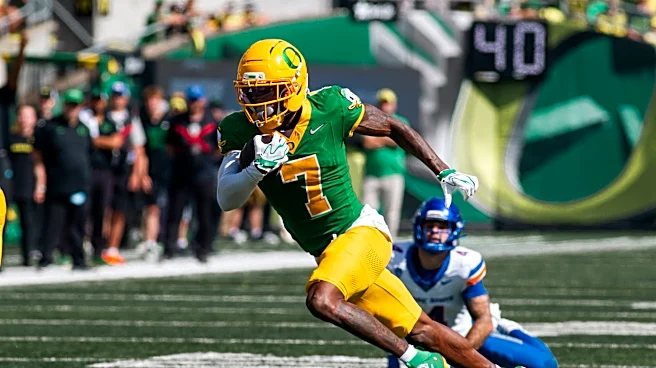
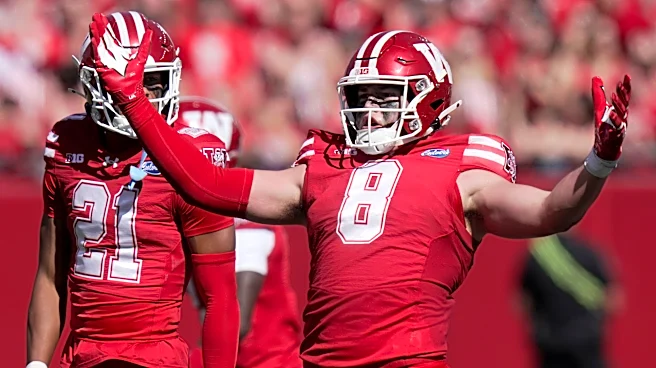
When the Oregon Ducks take the field on Saturday inside Autzen Stadium, the UCLA Bruins will have plenty of familiar faces. The pipeline from James Madison to UCLA this offseason was flowing, as several players on both sides of the ball followed head coach Bob Chesney to Los Angeles.
Oregon stomped the Dukes in the College Football Playoff last season, as the James Madison defense was no match for the Ducks' high-octane scoring ability. Still, Dante Moore tossed two interceptions in the game, and UCLA has a dose of talent from around the country that has allowed its defense to evolve into one of the most productive in the country so far this season.
The Bruins create pressure and turnovers. The Ducks have had trouble protecting the quarterback
at times this season, but they haven't given the ball away often. It's strength versus strength for Oregon and UCLA, and both teams are well-rested coming off a bye week.
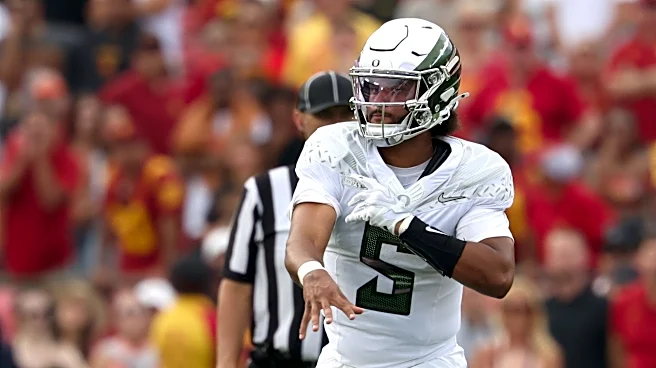
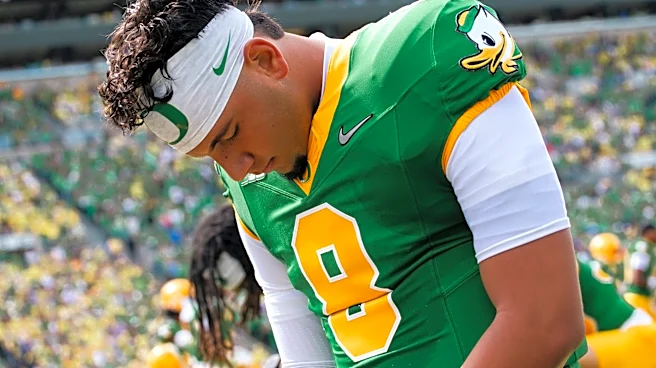
Oregon has a major question coming into the game surrounding its quarterback, with Dante Moore returning to practice but still recovering from a concussion, and Nebraska transfer Dylan Raiola starring in his place against USC. As of now, it remains unclear who will take the field on Saturday, but UCLA's aggressive front will be waiting for them.
Let's take a look at what UCLA does on defense schematically, who to look out for, and what the Ducks might be able to do to put points on the board.
What does UCLA do well on defense?

No matter who is at quarterback for Oregon on Saturday, they better be ready to face the heat. Although UCLA only has nine sacks this season, defensive coordinator Colin Hitschler loves to send different simulated pressures out of various looks to try to confuse the quarterback. Oregon has allowed seven sacks this season, but the offensive line is starting to round into form. Dante Moore has struggled under pressure in the past, and Dylan Raiola has tried to force the action at Nebraska when faced with pressure, so the Bruins will dial up blitzes to come after the Ducks.
Along the defensive line, Sahir West is often on the move and does a great job getting pressure while being conscious of the run. The Bruins allow less than 100 rushing yards per game, and their front seven has plenty of experience, with some contributors coming from James Madison and having already played in Hitschler's defense.
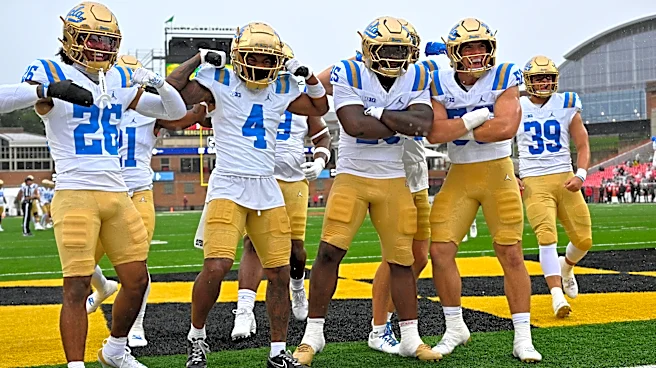
UCLA hasn't faced a dominant passing game like Oregon's this season, but they have been decent against the pass, especially when it comes to creating turnovers. The Bruins rank third in the nation with eight interceptions, thanks to Hitschler's 4-2-5 base defense, utilizing an extra defensive back. Oregon should be able to find success through the air, but the Bruins could force the first turnover of the season from the Ducks' passing attack.
Players to Know

LB Sammy Omosigho
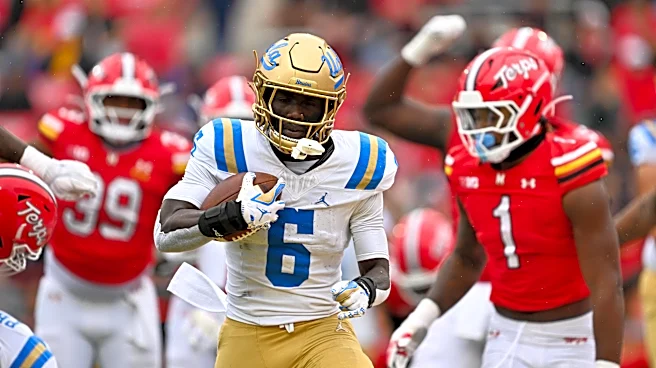
There have been very few linebackers better than Sammy Omosigho this season. The Oklahoma transfer leads UCLA's defense with 37 tackles, three sacks and four forced fumbles. He works well with West up front to stop the run, and he is rarely fooled on tape. Omosigho is also terrific in coverage as an off-ball linebacker, taking away the middle of the field. He is also very quick, so he will be a threat to cover outside runs as well, while sticking to Jamari Johnson or routes crossing the middle of the field.
S Ta’Shawn James
UCLA's defense knows how to force turnovers, and Ta'Shawn James has been a big part of that. The senior safety leads the Bruins with three interceptions since taking on a bigger role after transferring from Iowa State. James can play deep and take away downfield shots, often baiting quarterbacks and making up for the distance with his closing speed. He is also occasionally part of UCLA's pressure plan, so he is worth keeping an eye on when he plays near the line of scrimmage.
CB Rodrick Pleasant
Why not highlight a former Duck? Rodrick Pleasant spent two years at Oregon as a reserve corner and a sprinter for the track team. He is one of the fastest players in the country, regardless of position, and he can run with any of Oregon's wideouts on the perimeter. Pleasant has leveled up this season with a trio of deflections and an interception, and paired with James and Malik Hartford at safety, he could take away one of Oregon's field stretchers.
Are the Ducks built to score on UCLA?

Oregon should be able to throw the ball on the Bruins, but rather than airing it out for deep shots, efficiency will be key for the Ducks. No matter who is under center, the Ducks could find easy completions underneath to start the game, using the pass to set up the run, and then using play-action to create explosive plays. UCLA is full of tremendous tacklers, especially in the secondary, so Oregon should be able to rip off chunks and fall forward after contact.
West and Omosigho have done a great job this season shutting down interior runs, where Oregon has often opted to give Jordon Davison and Dierre Hill Jr. the ball. Instead, running off tackle might be more beneficial, as long as the Ducks' offensive line can get to the second level to take Omosigho out of the play. I really like Oregon's chances in the running game against the Bruins' secondary, especially if Davison gets out into space.
The simulated pressures UCLA will bring have given Oregon trouble in the past, particularly against Indiana last season. The plan up front isn't much different than what Oregon saw from James Madison, and they will try to force either Moore or Raiola into bad decisions by making them get rid of the ball quickly. For as decent as Omosigho is in coverage, anytime Oregon can get Jamari Johnson lined up against a linebacker, that's a win for the Ducks.
What should we expect?

Moore tossed two interceptions against James Madison last season, one of which was the result of a poor pressure pickup up front. That's how UCLA is going to try to win this game: confusing whoever is under center so they never know where the blitz is coming from. Oregon can neutralize that threat with quick passes or running on the edges, but it will be a big challenge either way.
Matchups will be key, and how the Ducks shift into advantageous positions will be important. Using pre-snap motion and bringing a wideout tight to the formation to get a linebacker exposed in open space is how Oregon can create chunk plays. The UCLA secondary is great at forcing takeaways, but the Bruins don't always communicate well. The Bruins allowed Purdue to throw for more than 400 yards because they failed to keep up in man coverage if the pressure didn't get home.
There aren't many disguised coverages that UCLA will run, so the game comes down to how Oregon's quarterbacks and offensive line handle the different looks up front, and if the Ducks can take advantage of the mistakes in the secondary. I expect Oregon to have a tough time running the ball early on, but there will be times where receivers are running with nothing separating them and the end zone.
Contact/Follow @Ducks_Wire on X (formerly Twitter) and like our page on Facebook to follow ongoing coverage of Oregon Ducks news, notes, and opinions.
This article originally appeared on Ducks Wire: What should the Oregon Ducks expect from the UCLA Bruins' defense?