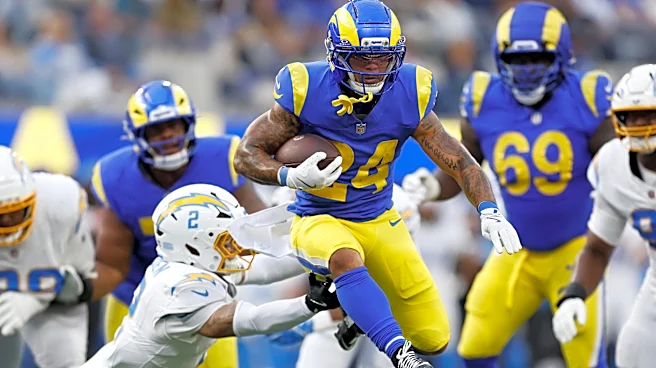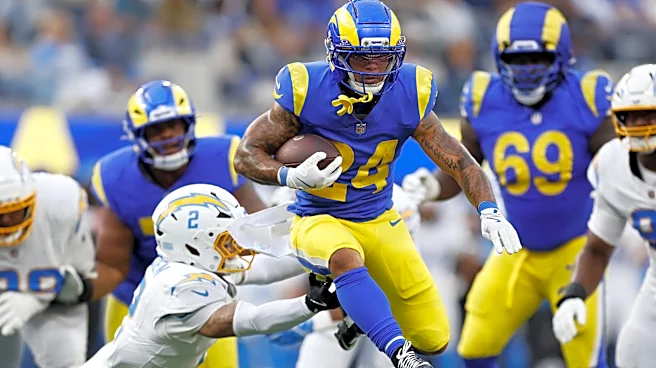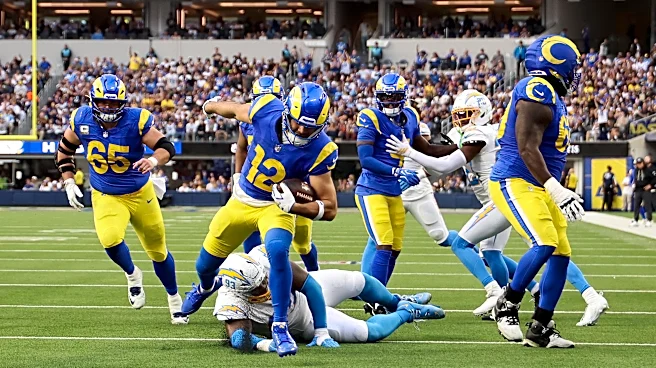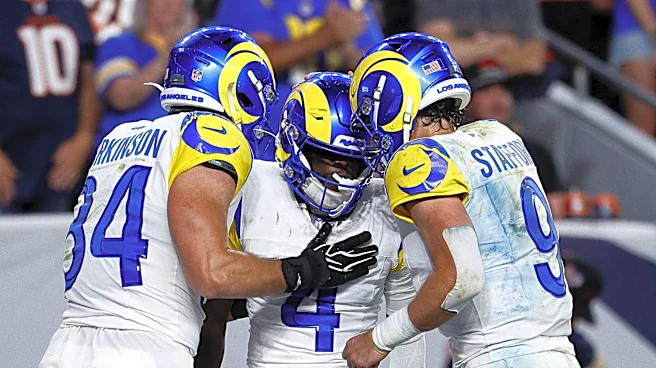





Last Sunday, the Los Angeles Rams' offense looked flat for about 28 minutes of the first half before launching into a last-minute, up-tempo drive that resulted in a touchdown to take a 10-9 lead into halftime after trailing 9-3.
The numbers do not do the situation justice in terms of how much the offense benefited from going at a faster pace. With their no-huddle approach, the Rams ran five plays on their final drive of the half, going 66 yards, with Matthew Stafford throwing four completions on four attempts before Kyren Williams ran in the score.
The Rams caught the Chargers struggling to organize defensively, with Tutu Atwell burning his defender for a 40-yard gain, setting the Rams up in the red zone. Before that drive, the Rams had five other
drives, and they were awful. Three points, no first downs, and their only score came after an interception by Quentin Lake that set the Rams up in the red zone.
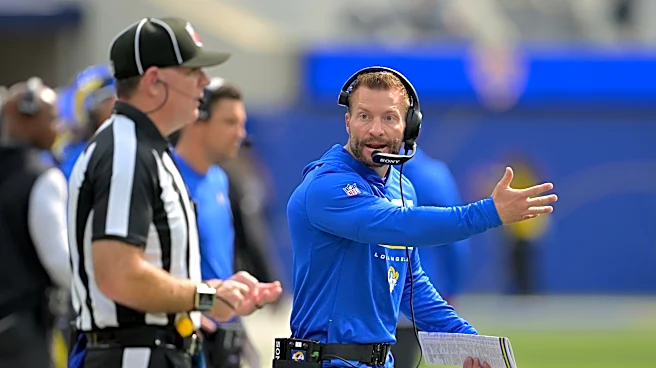
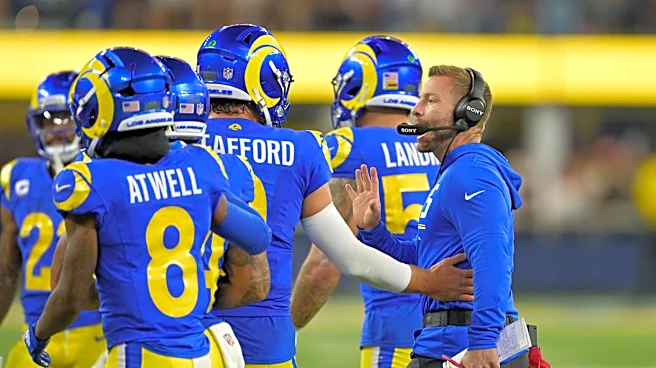
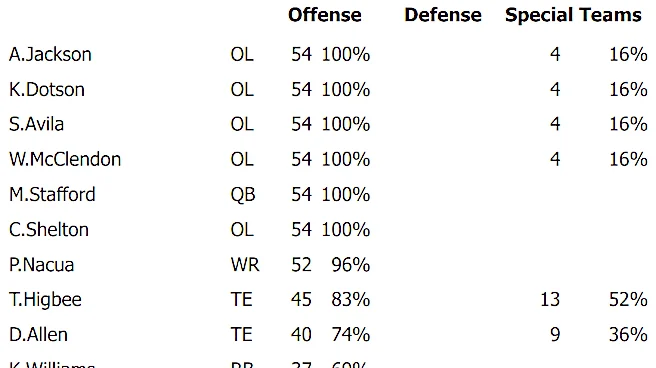
Their slowed-down, huddle-up approach, especially while running 11 personnel, provided no opportunities for the run game to get established, while the passing attack was poor and snuffed out with ease. Considering such a stark difference, head coach Sean McVay was asked about the effects of going up-tempo and if he's willing to explore using it outside of two-minute situations.
“Yeah, we've done that. The crazy thing about the way that game started, we were getting like 5 yards on first down, then second down, and we were in third-and-manageable for the most part. We just weren't converting," he said. "It was a unique deal where you're not in negative situations all day. We weren't executing at a very good clip and there were so few opportunities. That first play of the two-minute represented the 16th snap offensively. To answer your question, yes, we're always looking for things, but we didn't even get a chance. When we were looking at our stuff at halftime, we hadn't even started playing yet because you hadn't had enough snaps to even gather enough inventory of, how did they wanted to play you? What are we trying to really be able to get off and get done? I thought our defense did such a good job."
He continued by saying the Rams have used an up-tempo offense to get back on track in the past, but he doesn't want to rely on that all the time.
"To answer your question, yes, that's something that we've done from time to time," he said. "We've been good in that phase. You don't want to necessarily have to do it. Those are all a little bit different in terms of what the defensive structures elicit when they're in that same mindset and mentality. Tempo has been something that when we feel like we've been in a rut, that is always something that you can go to and pick it up. Even to be able to do good in tempo or two-minute, you better be good on that first play of the drive. Getting a 9-yard completion to Puka Nacua to get to a second-and-1 and then they play a man coverage and we're able to hit Tutu on a big play. All that stuff goes hand in hand and there are so much that occurs on a snap in, snap out basis to be able to play good offensive football. That is a really long-winded unnecessary way of answering yes, we could have.”
McVay would also say he believes the team is comfortable executing in up-tempo situations, but the blame for the offense's slow start simply comes down to execution.
Regardless, McVay and company got the points they needed in the first half, before scoring 14 points in the third quarter to put the game on ice.
This article originally appeared on Rams Wire: With no-huddle offense working so well, could Rams use it more?