

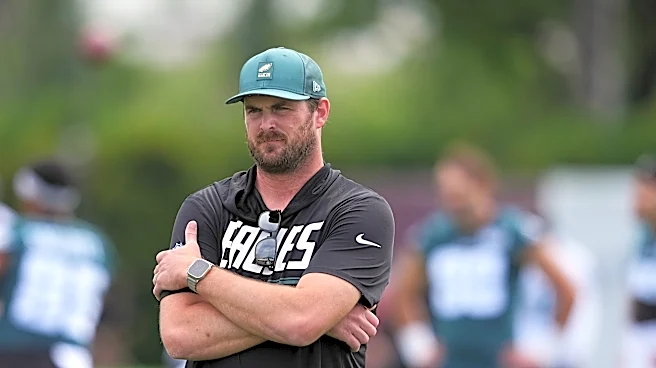
Some of the faces have changed. The Philadelphia Eagles have obviously moved on from the great Jeff Stoutland, beginning Chris Kuper's era. There's a new offensive coordinator, but much of what makes the Eagles who they are never changes, and it probably never will.
It was, has been, and always will be about the trenches with this organization. Philadelphia builds from the inside out, and their goal is always to build one of the NFL's most respected offensive lines. The blueprint is to do so by blending elite coaching, smart drafting, and patient development.
That formula has helped the organization navigate retirements, free-agent departures, and injuries without suffering the dramatic drop-offs that often derail contenders. This summer offered
another test of that philosophy. Questions were asked about Cam Jurgens' physical readiness. Perhaps more were asked about Landon Dickerson.
Both are back for another season. Dickerson went as far as to state he wasn't considering retirement. While outside observers wondered whether more proven depth was needed, the organization largely resisted the urge to chase veteran solutions. Philadelphia entered training camp prepared to see whether several young linemen already on the roster were ready for larger roles, and it appears that many are.
The Eagles' next wave of linemen is beginning to emerge
The early returns suggest that the confidence the Eagles put into their developmental linemen may not have been misplaced. One of the more interesting developments of training camp has been the progress shown by players who spent much of last season developing behind the scenes.
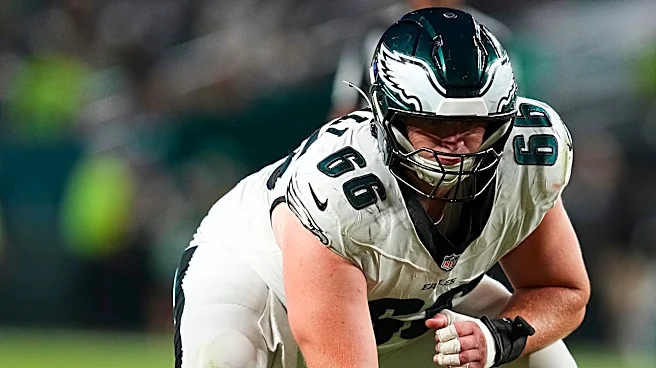
Drew Kendall has taken meaningful steps forward as he continues learning the guard position. Willie Lampkin has become one of the more talked-about young offensive linemen in camp, consistently demonstrating that leverage, technique and toughness can compensate for a lack of prototypical size.
All eyes are on guys like rookie Micah Morris. He played 34 offensive snaps during the preseason opener. John Ojukwu has found opportunities to strengthen his standing through positional flexibility and improved play. None of those developments guarantee future success. Training camp and preseason football have a way of creating excitement that doesn't always carry into meaningful games. Still, the Eagles are seeing enough positive signs to reinforce a strategy they have trusted for years.
A familiar Eagles organizational philosophy helps shape the interior of the offensive line.
It's well known in league circles and among Eagles fans that strategy isn't simply about finding starters. It's about creating a pipeline. The Eagles rarely view offensive-line construction the same way many teams do. Rather than repeatedly shopping for veteran depth (though they will if they have to), they have invested heavily in developing players long before they are needed.
Philadelphia added Michael Jordan in June by way of free agency,a move that was slightly overshadowed by the addition of A.J. Epenesa. Mostly, however, they have determined that the route they are taking involves continued investment in guys already on the roster and reliance on the draft. Still, if the concerns were about what's behind Jurgens and Dickerson, the Birds seem in good shape.
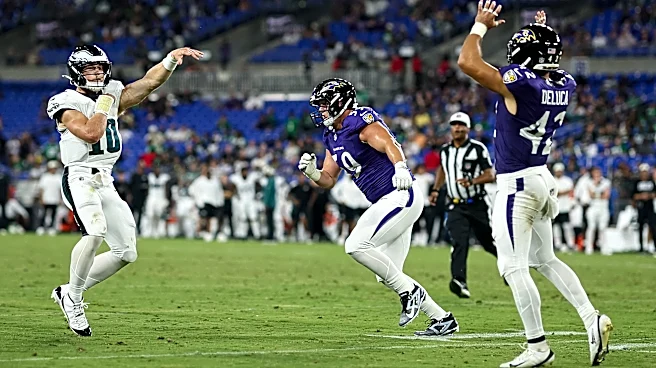
Kendall, Lampkin, and Majors are all becoming more confident with each rep. There's also room to grow. A strong eight-yard run by running back Will Shipley in the second quarter of the opening preseason game was called back because of a holding infraction by Majors. That helped stall a promising drive, but Majors should learn from the moment.
All in all, however, the Eagles' approach has produced a lengthy list of success stories over the years. Players have entered the building as developmental prospects and eventually emerged as reliable contributors. That has allowed the Eagles to absorb roster turnover without entering a constant state of crisis.
That philosophy appears alive and well in 2026. The organization's willingness to cross-train players at multiple positions reflects a desire to maximize roster flexibility. The emergence of young depth pieces also helps explain why the Eagles did not aggressively pursue outside reinforcements despite questions surrounding the interior offensive line earlier this offseason.
Philadelphia is looking beyond 2026. Perhaps the most significant aspect of this developmental push is what it says about the future. The Eagles are not only trying to build quality depth for this season. They are also laying the groundwork for eventual transitions that every franchise must face.
Whether it's identifying future starters, strengthening the reserve pipeline, or preparing for inevitable roster turnover, the organization continues to think several steps ahead. That's why some of the most important training camp battles are taking place away from the spotlight.
While attention naturally gravitates toward established stars, the Eagles are once again evaluating whether the next generation of offensive linemen is already in the building. If recent performances are any indication, the organization believes the answer may be yes.
This article originally appeared on Eagles Wire: Eagles are betting heavily on internal offensive line development