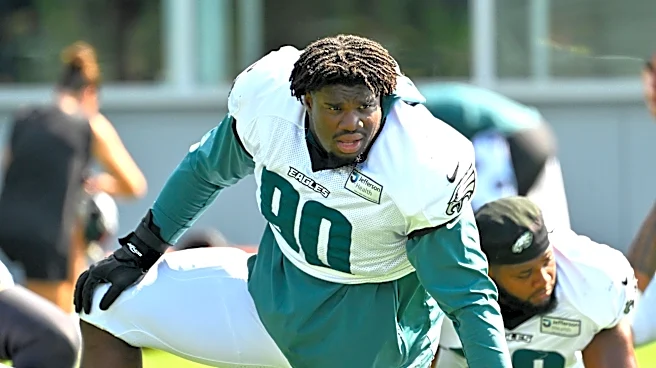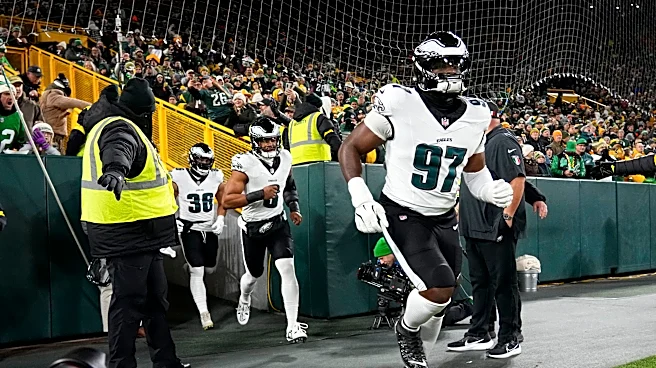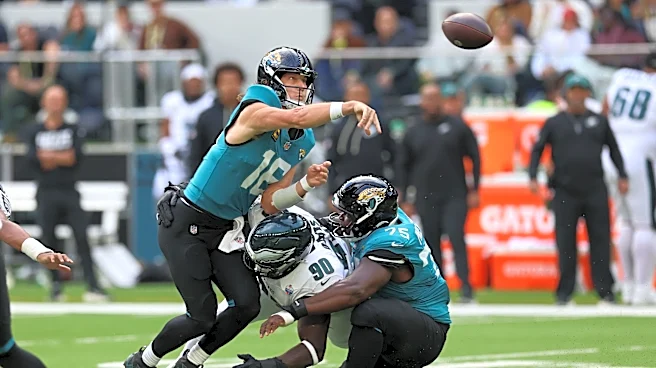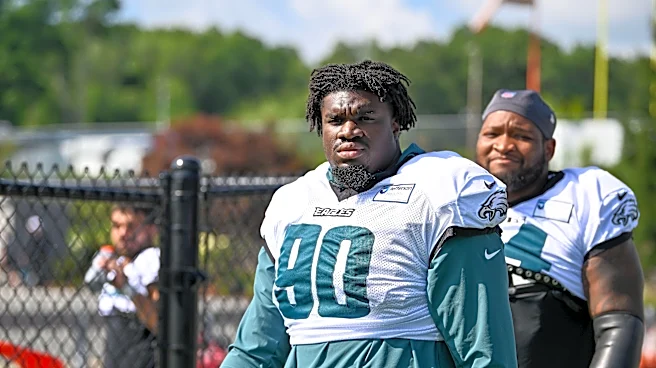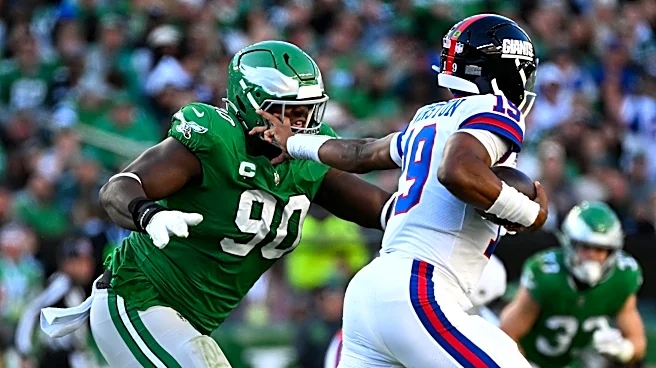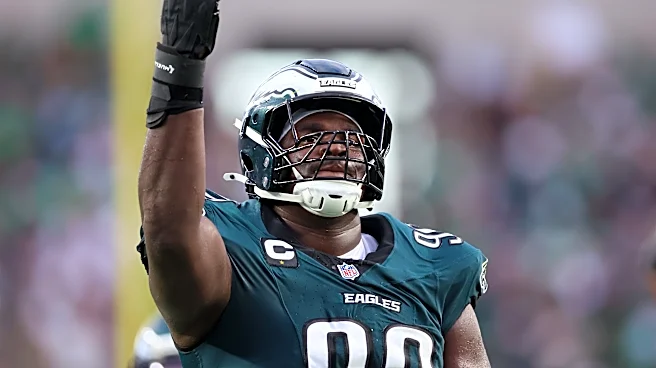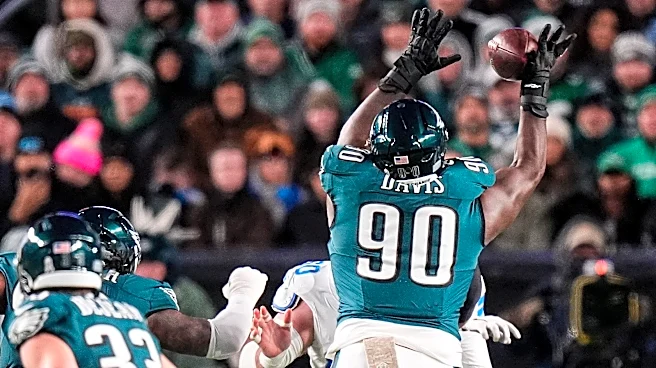



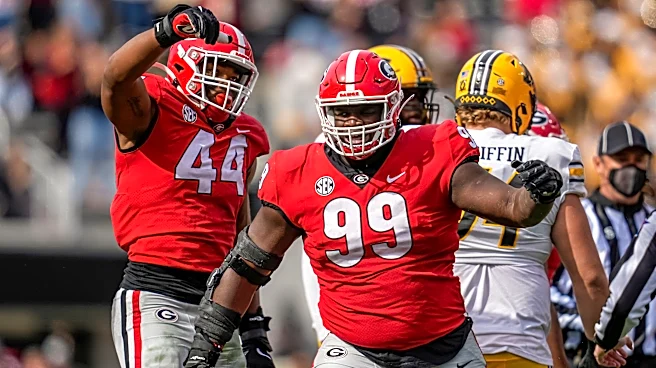
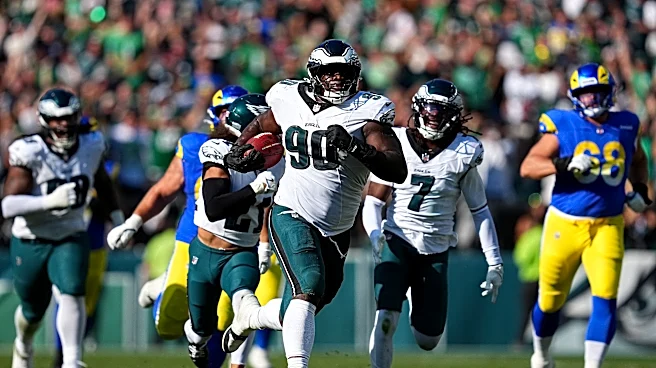
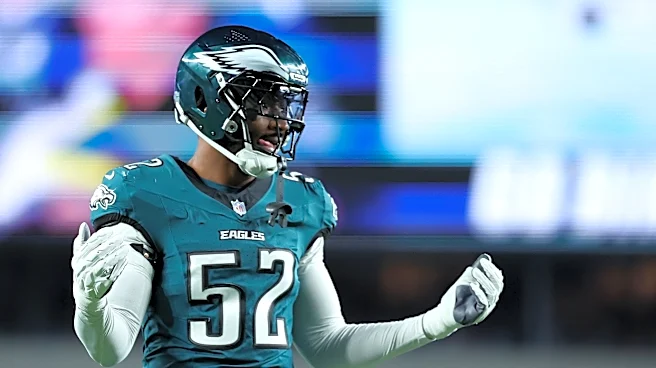
The draft return explains why the Eagles considered moving Jordan Davis. The defensive responsibilities he leaves behind explain why the decision still carries an on-field cost. Philadelphia acquired a 2027 first-round pick and a 2029 second-round selection from Jacksonville, but it also removed an established interior defender from a rotation that relies on different combinations and workloads.
Davis played 38 of 67 defensive snaps against the Giants in his final appearance for the Eagles. Replacing that assignment requires more than adding his snaps to another player’s total.
An established option in the middle
Davis gave Philadelphia a substantial interior presence for fronts designed to contest the running game. The tactical question after his departure is how the Eagles want
to defend those same formations with their remaining personnel.
A different alignment can redistribute responsibilities, but it also changes what the linebackers and adjacent defensive linemen must handle. It would be inaccurate to credit Davis with every successful run stop simply because he occupied the middle. It would be equally incomplete to evaluate his work solely through tackles or sacks. A full film review must track his alignment, blocking matchups, and effect on the play.
Rotation flexibility
Against New York, Carter played 58 defensive snaps, and Ojomo played 42. Young handled 16 and Robinson nine.
Those figures show why Carter cannot simply replace Davis by playing more. He already carried a substantial workload. Philadelphia needs the rest of the rotation to support its leading defenders rather than make every adjustment depend on them.
Young and Robinson now have a chance to establish larger roles, but opportunity is not the same as proven replacement production.
Interior passing-down contributions
Davis recorded a sack against the Giants and has shown he can contribute beyond early-down run defense.
His departure narrows the available combinations when Philadelphia wants fresh interior rushers or a particular matchup. Ojomo and Carter remain important options, but the Eagles must manage their workload across the entire game.
The Eagles can change their packages. They still need enough effective players to execute them.
Experience within the defensive structure
Davis had played through multiple seasons, postseason runs, and changing responsibilities in Philadelphia. That familiarity mattered when the front office needed to adjust formations and communicate assignments.
That doesn't mean younger players cannot develop the same understanding. It means the transition requires preparation, not assuming the next defender can immediately perform an identical assignment.
The trade may benefit Philadelphia’s future. On the field, the Eagles are losing an established contributor whose work must be replaced as a unit. The next question is whether the remaining front can stay effective while changing how it operates.
This article originally appeared on Eagles Wire: What Eagles lose on the field after Jordan Davis trade to Jacksonville