

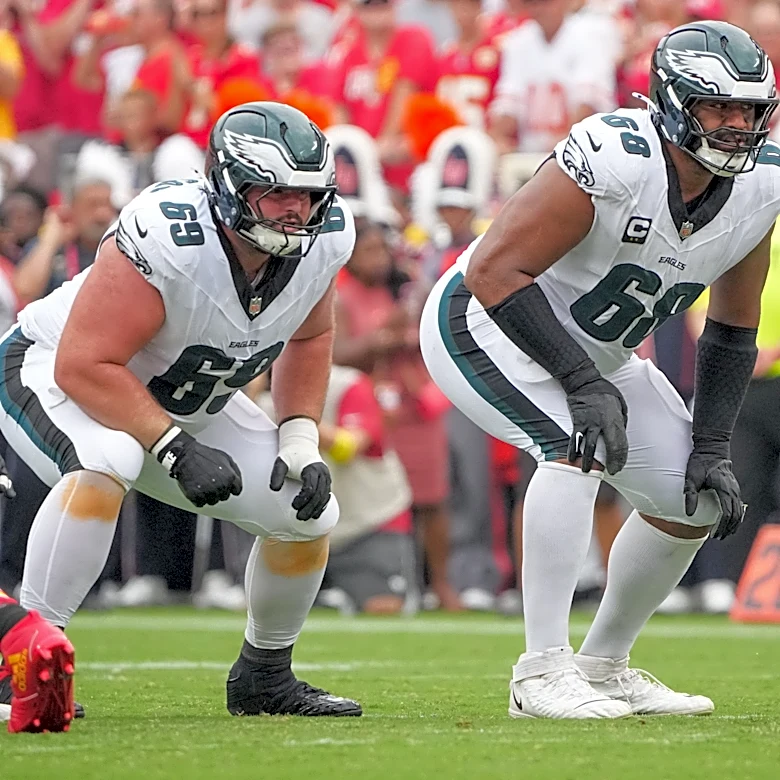


The Eagles will look to reconfigure their offensive line after placing starting left guard Landon Dickerson
on injured reserve. Jeff McLane of The Philadelphia Inquirer first reported the move, noting that Dickerson had been playing through multiple ailments, including a knee injury. The Eagles have two intriguing options to replace Dickerson, but choosing between Drew Kendall and Willie Lampkin requires more than comparing their depth-chart positions.Kendall offers superior size, NFL experience, and familiarity with Philadelphia’s offense. Lampkin brings exceptional leverage, extensive offensive guard experience, and an accomplished college résumé.
With Dickerson placed on injured reserve, offensive line coach Chris Kuper must decide which player
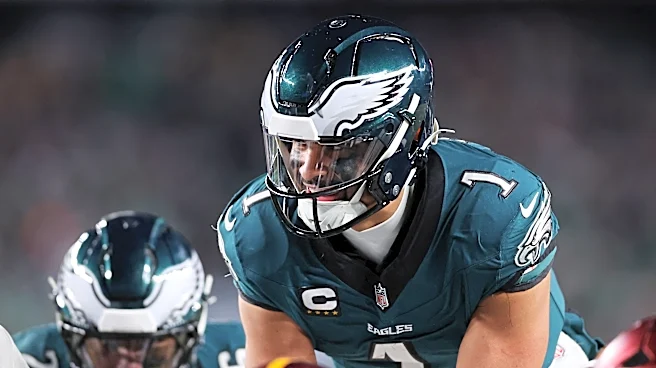
best gives Philadelphia a chance to maintain continuity around Jalen Hurts and Saquon Barkley.
Drew Kendall’s résumé
Philadelphia selected Kendall with the No. 168 overall pick in the fifth round of the 2025 NFL draft. The 6-foot-4, 308-pound interior lineman started 37 of his 39 games at Boston College between 2021 and 2024. Kendall was named first-team All-ACC following his final college season. He earned a team-high 83.1 pass-blocking grade and a 76.8 overall offensive grade from Pro Football Focus, allowing only five pressures over 350 pass-blocking snaps. During his rookie season, Kendall appeared in seven games and made one start. He logged 89 offensive snaps while also contributing on special teams.
Pros
Kendall has the size and frame normally associated with an NFL interior lineman. His center experience also gives him a strong understanding of protection calls, defensive fronts, and blocking assignments. He plays with controlled footwork and generally maintains sound positioning in pass protection. Kendall’s 2024 production at Boston College suggests he can handle isolated pass-blocking assignments without frequently requiring assistance.
Kendall also has an important advantage that cannot be measured at the combine: He has already played meaningful NFL snaps. That experience should make the transition less dramatic than it would be for a player making his regular-season offensive debut.
Cons
Most of Kendall’s experience has come at center. Although he has worked at guard, moving to Dickerson’s former position would require him to adjust to different angles and more frequent one-on-one matchups against defensive tackles. Kendall possesses adequate strength, but he does not consistently overwhelm defenders. Replacing Dickerson’s power in the running game will be difficult, particularly when Philadelphia wants to create movement at the point of attack.
Willie Lampkin’s résumé
Lampkin began his college career at Coastal Carolina before transferring to North Carolina. He played guard and center while establishing himself as one of college football’s most productive interior blockers. The 5-foot-11, 290-pound lineman earned first-team All-American and first-team All-ACC honors in 2024. He also won the Jacobs Blocking Trophy, which is presented to the ACC’s top blocker. Lampkin signed with the Los Angeles Rams as an undrafted free agent in 2025. After being waived with an injury designation, he was claimed by Philadelphia following roster cutdowns and placed on injured reserve two days later.
His first season became largely developmental, but Lampkin gradually improved and carried that progress into a strong 2026 training camp.
Pros
Lampkin understands how to use his unusual build to his advantage. His low center of gravity makes it difficult for defensive linemen to get underneath his pads, while his wrestling background shows up through his balance, leverage, and hand strength. He also has considerably more college experience at guard than Kendall. That matters when replacing an established left guard in an offense that relies heavily on combination blocks, movement and physicality.
Lampkin’s first-team All-American selection and Jacobs Blocking Trophy reflect more than effort. He was a highly productive blocker against major-conference competition and demonstrated the versatility to play guard or center.
Cons
Lampkin’s measurements cannot be ignored. At approximately 5-foot-11 and 290 pounds, he lacks the length and mass of most NFL guards. Longer defensive tackles could control the matchup before Lampkin gets close enough to establish leverage. His size could also create problems in pass protection against defenders who can convert speed into power. Lampkin may win early with positioning but could struggle to recover if a rusher gets into his chest.
Unlike Kendall, Lampkin has not played a regular-season offensive snap. Starting him would require Philadelphia to accept more uncertainty in front of Hurts.
Final analysis: Drew Kendall should start
Lampkin may ultimately prove to be the better natural guard, and his leverage could make him a valuable option in Philadelphia’s running game. For Week 2, however, Kendall should receive the first opportunity. Kendall’s size, pass-protection history, and limited NFL experience make him the safer choice. He has spent more time in Philadelphia’s system and has already experienced the speed and physicality of regular-season football.
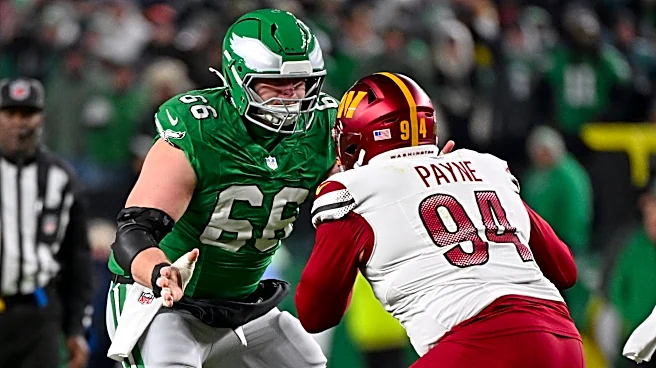
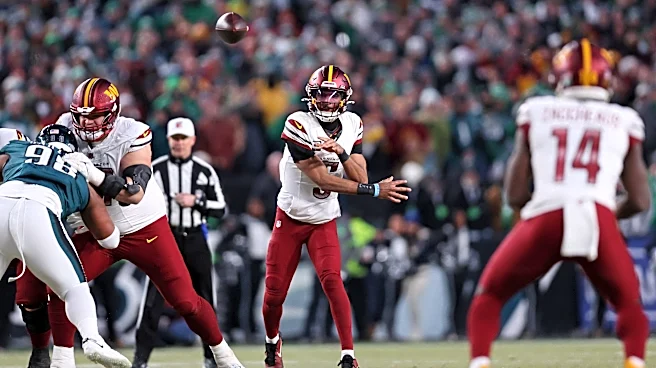
Starting Kendall at left guard would also allow the Eagles to keep Cam Jurgens at center and Tyler Steen at right guard. That approach would create only one change along a line that already struggled with communication, penalties, and interior pressure against Washington. Kuper can keep Lampkin ready as the primary alternative at guard or center. If Kendall struggles to generate movement or adjust to guard, Lampkin’s physicality and natural leverage would give Philadelphia another option.
Kendall has not proven he can replace Dickerson over an extended stretch. He has, however, done enough to earn the first chance.
This article originally appeared on Eagles Wire: Drew Kendall or Willie Lampkin: Who should start at left guard?