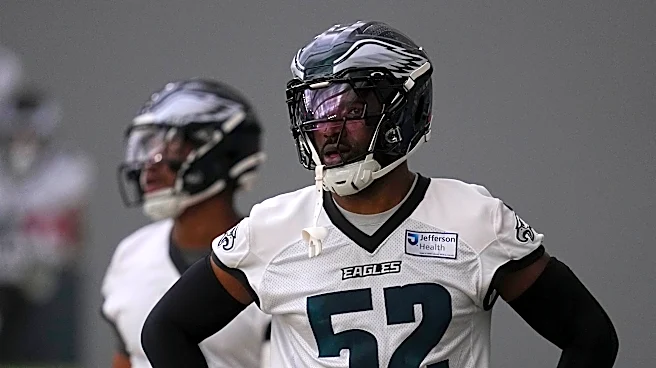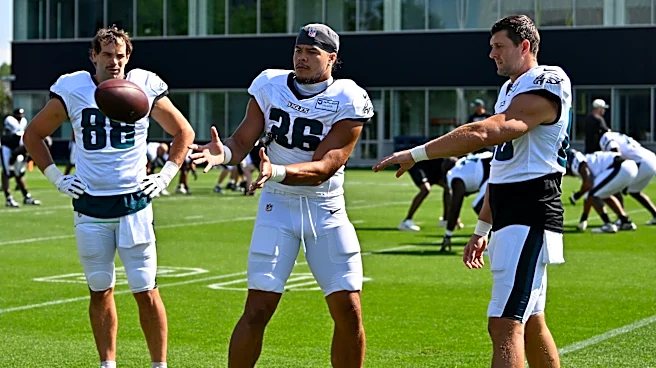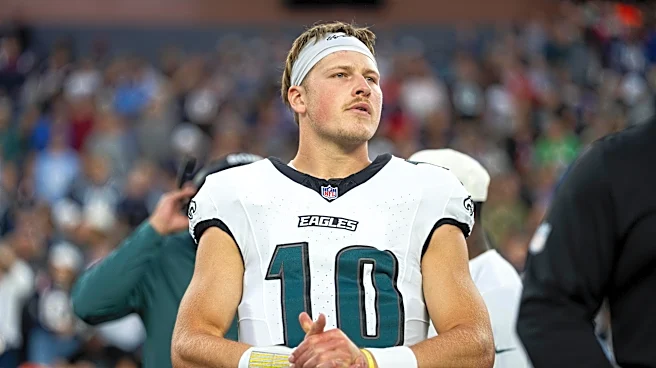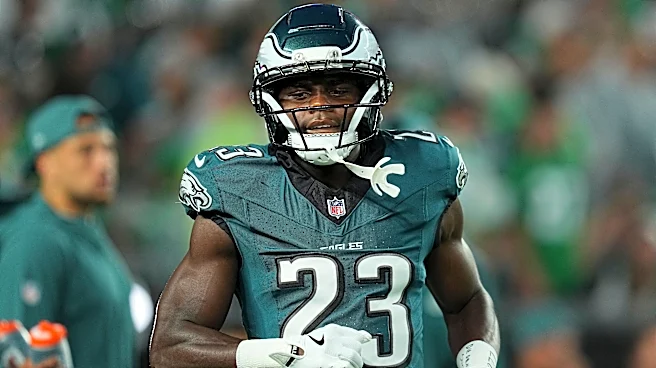


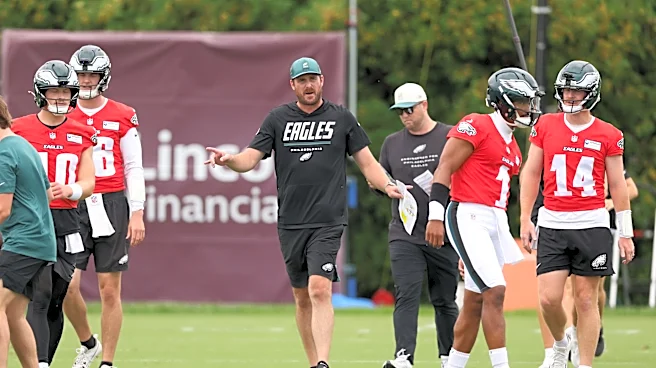
The Philadelphia Eagles established their initial 53-man roster after completing more than 30 transactions before Sunday’s deadline. Philadelphia’s decision to keep four quarterbacks generated the most attention, but it was not the only significant development. Several young players earned roster positions, while recognizable veterans were released.
The Eagles also placed cornerback Jakorian Bennett and tight end Grant Calcaterra on injured reserve with return designations. Both must miss at least four games, leaving Philadelphia with 27 offensive players, 23 defenders and three specialists.
The initial 53-man roster 🦅 pic.twitter.com/QX2lb3OQb8
— Philadelphia Eagles (@Eagles) August 30, 2026
Buy Philadelphia Eagles tickets
Here are 10 takeaways from the Eagles’ initial 53-man roster.
1. The Eagles are carrying four quarterbacks
Philadelphia
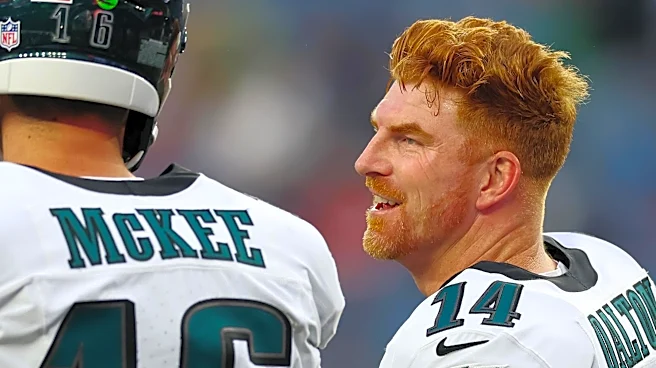
kept Jalen Hurts, Andy Dalton, Tanner McKee and rookie Cole Payton, delaying what appeared to be an inevitable decision between Dalton and McKee.
Hurts remains the unquestioned starter, but there was no obvious winner in the competition behind him. Keeping both veterans gives Philadelphia experienced insurance while preventing another team from claiming Payton, a fifth-round pick, on waivers.
Carrying four quarterbacks is unlikely to be a permanent arrangement. It allows Howie Roseman to continue exploring possible trades without surrendering a player simply to satisfy the roster deadline.
2. The initial roster is not the Week 1 roster
The word “initial” is important. Philadelphia can submit waiver claims, sign released veterans or complete trades before facing the Washington Commanders.
The Eagles may also create an opening by trading one of their quarterbacks. McKee is entering the final year of his rookie contract and could appeal to teams seeking an affordable backup. Dalton’s experience could also attract interest if another team loses a quarterback.
Philadelphia’s current roster provides flexibility, but it should not be treated as finished.
3. Darius Cooper earned his place
Darius Cooper entered training camp competing in one of Philadelphia’s deepest position groups. He emerged with a roster spot after consistently producing throughout the summer.
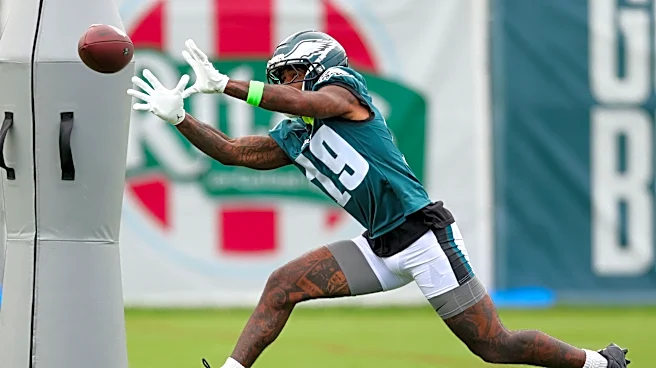
The Eagles kept six receivers: Hollywood Brown, DeVonta Smith, Makai Lemon, Dontayvion Wicks, Elijah Moore and Cooper.
Cooper outlasted Britain Covey, Danny Gray, Erik Ezukanma, Quez Watkins, Samori Toure and Tahj Washington. His ability to make contested catches and contribute on special teams helped separate him from the rest of the competition.
4. Philadelphia kept only three running backs
Saquon Barkley, Tank Bigsby and Will Shipley constitute the entire running back room.
The Eagles released Dameon Pierce and waived Carson Steele and Jordan Mims. Pierce remains a candidate for the practice squad, while Steele may receive waiver interest after producing as a receiver during the preseason.
Keeping only three running backs suggests Philadelphia expects Bigsby and Shipley to handle complementary offensive roles while contributing heavily on special teams.
5. E.J. Jenkins was one of the roster’s biggest winners
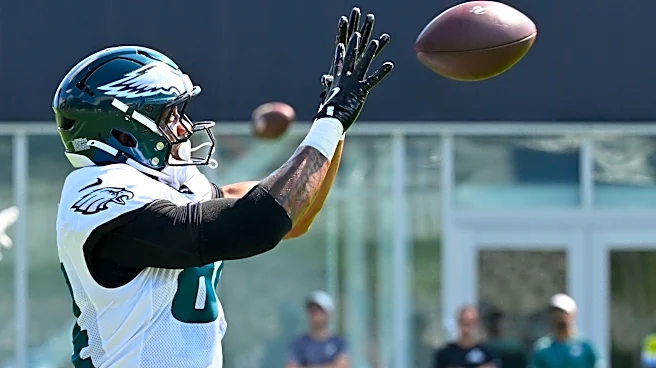
Dallas Goedert, Johnny Mundt, Eli Stowers and E.J. Jenkins made the roster at tight end. Grant Calcaterra was placed on injured reserve with a return designation.
Jenkins beat out Cameron Latu and Stone Smartt for a position after spending time developing on Philadelphia’s practice squad. His combination of size and receiving ability gives the Eagles another developmental option behind Goedert.
Mundt enters the season as the most experienced blocking tight end, while the Eagles can gradually develop Stowers without asking the second-round pick to play an extensive early role.
6. Offensive-line depth remains a major priority
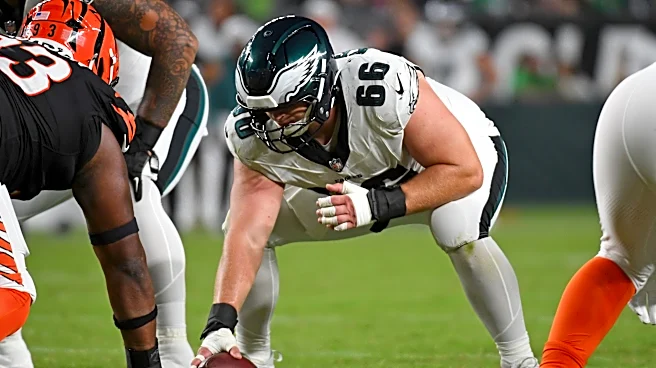
Philadelphia kept 10 offensive linemen, the most of any position.
Willie Lampkin, Drew Kendall, Markel Bell, Fred Johnson and Micah Morris will provide depth behind Jordan Mailata, Landon Dickerson, Cam Jurgens, Tyler Steen and Lane Johnson.
Lampkin and Morris strengthened their positions during training camp, while Bell gives the Eagles another developmental tackle with rare size. Keeping 10 linemen reflects the organization’s continued commitment to developing offensive players from within.
7. Jonathan Greenard’s roster status is encouraging
Jonathan Greenard made the active roster after spending the summer recovering from a pectoral injury. Had Philadelphia moved Greenard from active/PUP to reserve/PUP, he would have been required to miss at least four games. His placement on the initial roster preserves the possibility of an earlier return.
That does not guarantee Greenard will face Washington in Week 1. It does indicate the Eagles believe his recovery could be completed before the end of the opening month.
8. Ty Robinson secured a defensive-line role
Ty Robinson turned an impressive summer into a position within Philadelphia’s defensive-line rotation. The second-year defender joins Jalen Carter, Jordan Davis, Moro Ojomo and Byron Young in a five-player group. His emergence allowed the Eagles to waive Uar Bernard, David Blay, Gabe Hall and Zion Wilson.
Five defensive linemen represents a relatively light group, particularly when compared to the 10 offensive linemen Philadelphia retained. Cooper DeJean’s versatility and the size of several edge defenders could provide additional flexibility in certain packages.
9. Philadelphia chose experience at outside linebacker
The Eagles kept Nolan Smith Jr., Jonathan Greenard, Arnold Ebiketie, A.J. Epenesa and Jalyx Hunt. That left no position for Keyshawn James-Newby, Joshua Weru, Jose Ramirez or Tarron Jackson. James-Newby was a seventh-round pick, while Weru was one of the most physically intriguing developmental players in camp.
The decision shows that Philadelphia prioritized defenders who can contribute immediately. Bernard, Weru and James-Newby remain potential practice-squad targets if they clear waivers.
10. The secondary will depend on versatility
Riq Woolen and Quinyon Mitchell enter the season as Philadelphia’s starting outside cornerbacks, while Cooper DeJean will remain one of Vic Fangio’s most flexible defenders. The Eagles kept nine defensive backs after moving Bennett to injured reserve. Andrew Mukuba and Marcus Epps are the primary safeties, while Kelee Ringo, Mac McWilliams, Jonathan Jones and Michael Carter II provide cornerback depth.
DeJean’s ability to play safety, nickel cornerback and multiple roles within subpackages makes the numbers work. His versatility will be especially important until Bennett becomes eligible to return.
Final analysis
The initial roster contains several surprising decisions, but it also reflects Philadelphia’s established priorities. The Eagles protected their quarterbacks, kept substantial offensive-line depth, and retained players capable of filling multiple roles.
More changes are likely before Week 1. For now, Philadelphia has preserved depth and flexibility while leaving Roseman with several ways to continue reshaping the roster.
This article originally appeared on Eagles Wire: Takeaways from Eagles initial 53-man roster