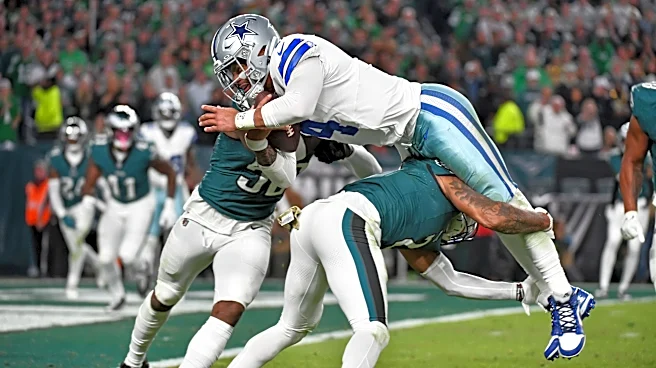



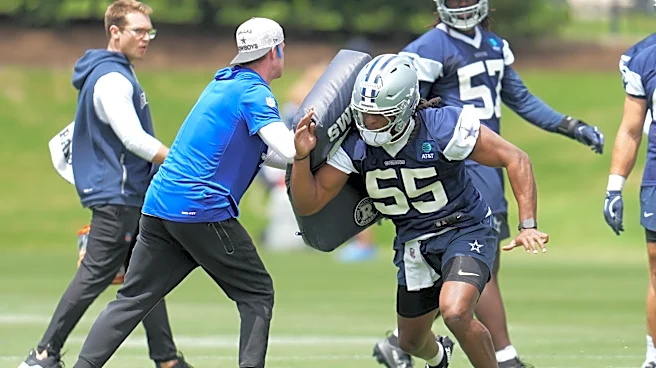
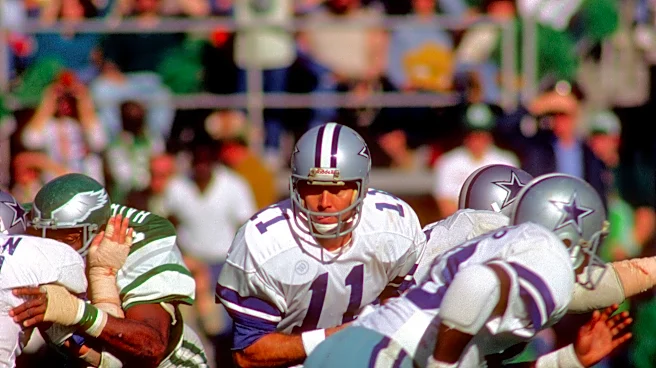
Missing the playoffs hasn't changed one thing about the Dallas Cowboys, or the test they'll again provide for the Philadelphia Eagles in 2026. They're still capable of putting points on the scoreboard and doing so in a hurry. Despite falling short of the postseason for a second consecutive year, Dallas remained one of the NFL's more productive offensive teams in 2025.
They finished among the league leaders in both scoring and total offense while Dak Prescott continued to produce at a high level. When Philadelphia renews one of football's oldest rivalries in Weeks 7 and 12,including a Thanksgiving Day showdown, Vic Fangio's defense will once again be tasked with slowing an offense that has enough firepower to challenge any opponent.
Dallas still knows how to move the football.
The Cowboys'
offensive production remained impressive even as the team's overall record disappointed. Dallas finished seventh in the NFL in points per game while ranking second in total offense, proving the unit was rarely the primary reason the Cowboys struggled to win consistently.
Sustaining that level of production despite missing the playoffs speaks to the amount of talent still present on the offensive side of the ball. For the Eagles, that means the margin for error remains slim. Philadelphia's defense won't be facing a rebuilding offense but one that consistently generated yardage and forced opponents to defend every area of the field.
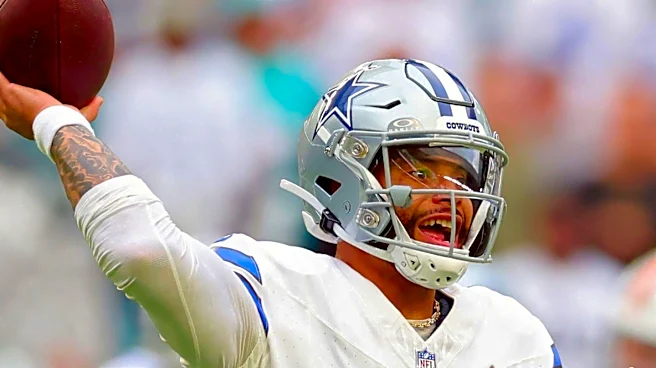
Dak Prescott continues to deliver during the regular season
Prescott remains one of the league's most productive quarterbacks when healthy. The veteran threw 30 touchdown passes against just 10 interceptions in 2025, finishing with a 99.5 passer rating and a 3-to-1 touchdown-to-interception ratio.
While postseason success has often defined conversations surrounding Prescott, his regular-season production continues to rank among the NFL's better quarterback performances. Few quarterbacks are more dangerous when they're allowed to play on schedule. That makes pressuring Prescott without sacrificing coverage one of Philadelphia's biggest priorities whenever these teams meet.
The Cowboys have again invested heavily in their passing game.
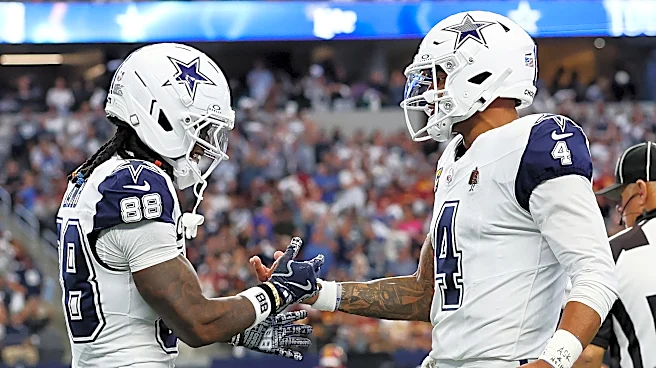
The Cowboys have made it clear where they're willing to spend their money. CeeDee Lamb remains one of the NFL's premier receivers, while George Pickens rewarded Dallas' investment by producing 93 receptions, 1,429 receiving yards and nine touchdowns. Lamb added 75 catches for 1,077 yards and three touchdowns despite appearing in only 14 games, giving Prescott one of the conference's most talented receiving duos.
That star power comes with a significant financial commitment. Prescott, Lamb and Pickens account for a substantial portion of Dallas' salary cap, raising fair questions about whether concentrating so many resources on three offensive players has made it more difficult to build depth elsewhere, particularly on defense.
Regardless of the long-term roster implications, the Eagles will have their hands full trying to contain both receivers in single coverage.
The Cowboys consistently extended drives.
Dallas also excelled in situations that often determine games. The Cowboys converted 41.1 percent of their third-down opportunities, ranking 11th in the NFL, while scoring touchdowns on 56.92 percent of their red-zone possessions.
Although there is room for improvement inside the 20-yard line, those numbers reflect an offense capable of sustaining drives and creating scoring opportunities. Against a disciplined defense like Philadelphia's, winning those situational battles often becomes the difference between settling for field goals and finishing drives with touchdowns.
The Eagles' defensive line gave Dak Prescott time to operate.
Protection played an important role in Dallas' offensive success. The Cowboys allowed 31 sacks all season, ranking among the league's better teams in that category. Quarterbacks were pressured on just 32 percent of dropbacks. The right side of the offensive line showed some vulnerability, however, as Tyler Booker and Terence Steele combined to allow 15.5 sacks.
That matchup could become one of the game's biggest storylines. Jalen Carter, Nolan Smith Jr. and the rest of Philadelphia's pass rush will undoubtedly look to exploit those weaknesses, particularly if they can consistently create pressure without relying heavily on extra blitzers.
The Eagles have fielded one of the NFL's premier defenses in recent seasons, but rivalry games have a way of ignoring recent history. Dallas still possesses a proven quarterback, an explosive group of pass catchers and an offense capable of moving the football against quality opponents. If Philadelphia hopes to continue asserting itself in the NFC East, slowing the Cowboys' offense will remain one of its toughest challenges in 2026.
This article originally appeared on Eagles Wire: 5 Cowboys offensive trends the Eagles must game plan for in 2026