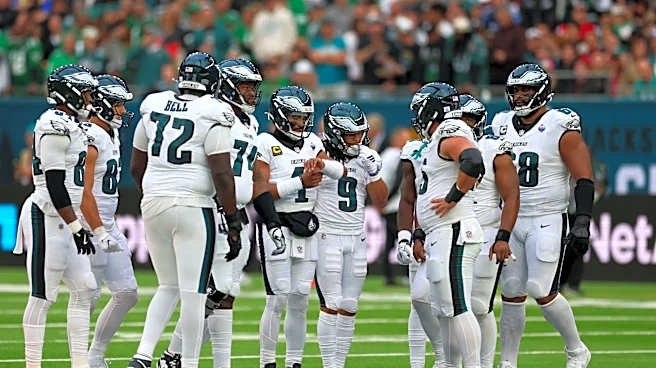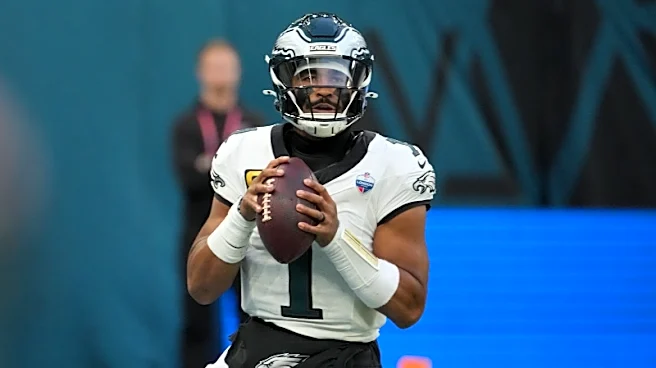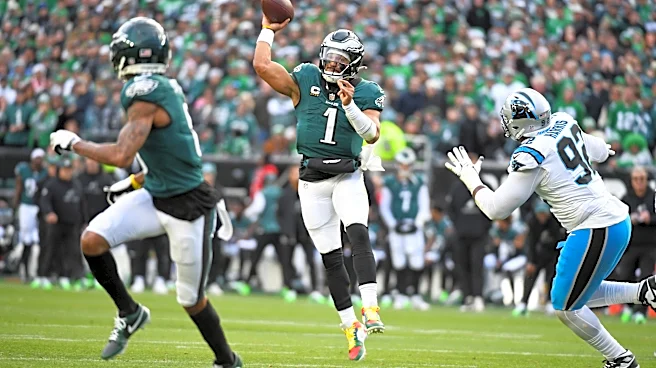


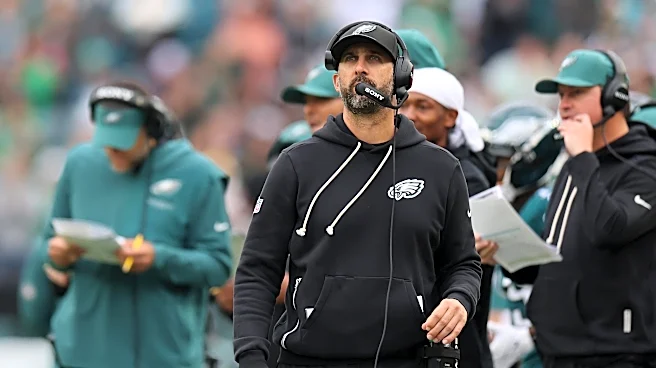
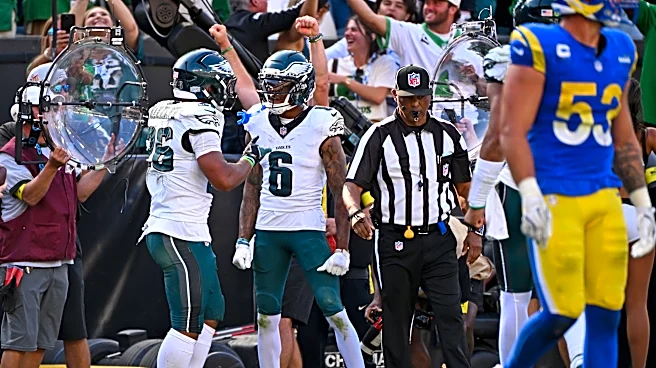

Jalen Hurts will miss Sunday's game against the Carolina Panthers after a follow-up ultrasound showed movement in a superficial blood clot, according to the Philadelphia Eagles.
The immediate football consequence is clear. The recovery timetable is not.
Blood clots have sidelined professional athletes for weeks, months and, in some cases, permanently. But those experiences involve different diagnoses, locations and treatments. Hurts' reported superficial clot should not be treated as equivalent to the deep-vein thrombosis or pulmonary embolism that other athletes have experienced.
The distinction matters when assessing both the danger and how long Philadelphia could be without its quarterback.
What the Eagles have disclosed about Hurts
According to the team's medical timeline, Hurts requested
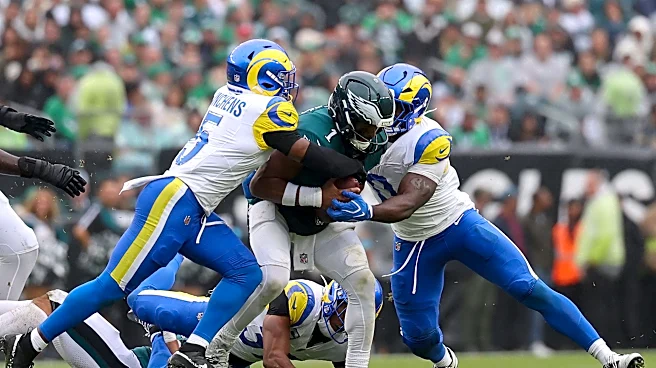
calf treatment after practice on October 8. He told the medical staff he had been cleated during the October 4 game against the Rams. An ultrasound after the team arrived in London on October 10 revealed a superficial blood clot. The Eagles said their medical staff and doctors in London reviewed the results and determined Hurts could safely play, with activity and mobility considered important.
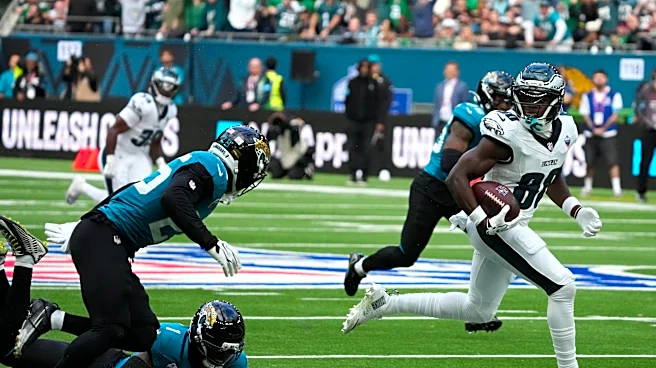
Hurts played without limitation against Jacksonville and practiced in full Wednesday. A follow-up ultrasound Wednesday night revealed “movement in the small blood clot,” prompting Philadelphia to rule him out against Carolina while determining treatment.
The team has not publicly identified the affected vein, the clot's dimensions, its proximity to deeper veins, or whether Hurts will receive anticoagulant medication. It has not announced a diagnosis of deep-vein thrombosis or pulmonary embolism. “Movement” alone does not establish that the clot entered a deep vein or traveled to his lungs. The statement also does not establish that either the cleat injury or the London flight caused it.
Why a superficial blood clot still requires attention
Cleveland Clinic explains that superficial venous thrombosis involves veins near the skin's surface. Deep-vein thrombosis, or DVT, involves deeper veins. Superficial clots are generally less dangerous than DVT, but they can extend or occur alongside a deeper clot. Their location and extent help determine whether observation and supportive care are sufficient or anticoagulation is appropriate.
The most serious concern with DVT is pulmonary embolism: a clot that travels to the lungs and blocks blood flow. That can be life-threatening. Sudden shortness of breath, chest pain, or fainting warrants emergency medical attention.
As the American HeartAssociation reports on athletes and blood clots, excellent conditioning does not eliminate clot risk. Injuries, surgery, and prolonged immobility during travel can create relevant exposures, although an individual athlete's cause requires medical evaluation.
Why treatment can keep an athlete out after symptoms improve
For an NFL quarterback, feeling better is only part of the return decision.
Anticoagulants, often called blood thinners, help prevent clots from growing and new clots from forming. They also increase bleeding risk. That creates a particular concern in football, where tackles and other collisions are unavoidable.
The American College of Cardiology's discussion of antithrombotic therapy in athletes emphasizes bleeding risk and individualized participation decisions. A player might be able to exercise while remaining restricted from contact.
The Eagles have not said whether Hurts is taking those medications. Any projection built around a particular prescription would therefore be conditional.
Other athletes' experiences show why no single timetable applies
NFL players have dealt with serious clotting conditions, including Panthers tackle Taylor Moton, who returned to practice October 13 after blood clots in his right lung were discovered in June. Returning to practice does not, by itself, establish game clearance.
Patriots defensive tackle and Philadelphia native Christian Barmore was diagnosed with blood clots in 2024. After returning to action, recurring symptoms sidelined him again that December. patriots.com Hall of Fame linebacker Harry Carson has described two clotting episodes after retirement, including pulmonary embolism. His experience illustrates the danger, rather than an active player's return timeline. Blood Clots
Examples across other sports also span very different outcomes:
Those cases establish that successful returns are possible and complications can be serious. They do not establish Hurts' prognosis. Lillard's relatively quick return and Bosh's career-ending recurrence represent different medical circumstances, not opposite ends of a reliable countdown for Philadelphia.
How many weeks could Jalen Hurts miss?
One missed game is confirmed. A medically defensible estimate beyond that requires information the Eagles have not released.
The useful numbers are treatment benchmarks, rather than a prediction based on other athletes:
These benchmarks come from Cleveland Clinic, vascular society guidelines and the American College of Cardiology. my.clevelandclinic.org
The vascular guidelines distinguish superficial clots by length and distance from a deep-vein junction. Certain clots warrant 45 days of anticoagulation; those very close to a deep-vein junction can require full anticoagulation for at least six weeks. PMC
Those recommendations are not instructions for Hurts, whose relevant imaging details are unknown. Neither a 45-day course nor three months of medication functions as an automatic return-to-play clock.
The most supportable outlook is therefore one game out for certain, with additional weeks possible depending on imaging, treatment and contact clearance. A six-to-seven-week absence is a conditional treatment scenario, not an Eagles timetable. There is also no disclosed basis for declaring his season over.
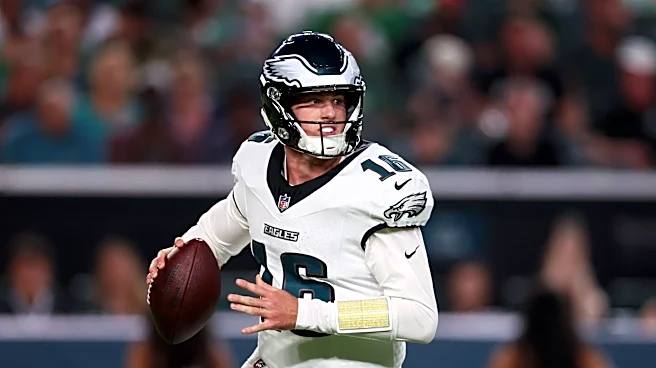
For Philadelphia, the immediate implications center on Tanner McKee and the Week 6 offense. For Hurts, the next meaningful update is whether the clot remains superficial and what treatment his doctors recommend. Those answers will tell the Eagles far more about his availability than another athlete's comeback date.
This article originally appeared on Eagles Wire: Jalen Hurts' blood clot: The key risks and what could delay his return