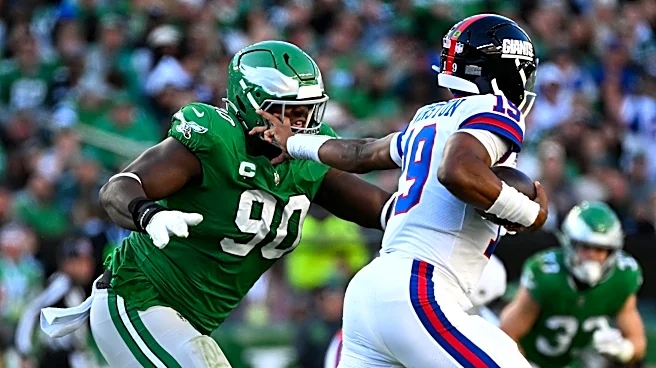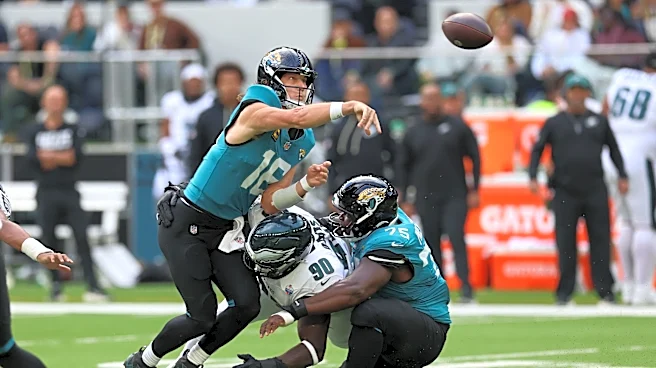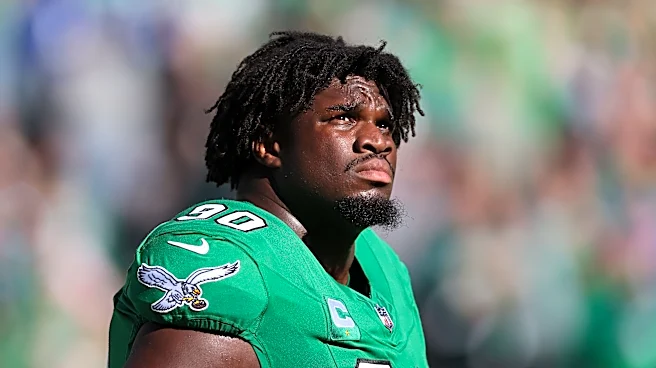


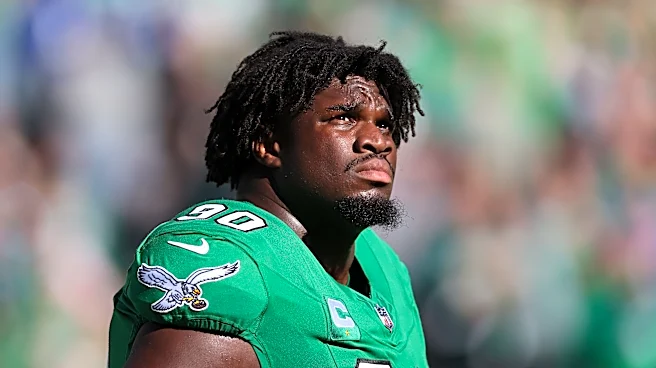

The Eagles received premium draft capital for Jordan Davis, but trading the defensive tackle does not provide immediate relief across their salary-cap outlook. Philadelphia will carry approximately $4.4 million in dead money this season and another $15 million in 2027, according to Spotrac’s breakdown of the deal.
The 2027 charge represents a $6.5 million loss in cap space compared with keeping Davis on his existing contract, Spotrac reported. Philadelphia is accepting that accounting cost while acquiring a 2027 first-round pick and a 2029 second-round pick from Jacksonville.
The distinction matters when evaluating the blockbuster. The Eagles gain draft flexibility and shift future payment obligations, but they are not clearing Davis’ entire contract
from their cap.
Eagles absorb dead-money charges across two seasons
Davis signed a three-year, $78 million extension in March that placed him under contract through 2029. Moving him months later leaves Philadelphia responsible for cap charges associated with compensation already accounted for under the deal. Dead money is a salary-cap charge, rather than a new payment triggered simply by trading a player. In this case, Spotrac lists approximately $19.4 million in combined Eagles dead money across 2026 and 2027.
The particularly significant figure is next year’s $15 million charge. Because that exceeds Davis’ previously scheduled 2027 cap number, the trade reduces Philadelphia’s available space next season by approximately $6.5 million.
Jaguars assume Jordan Davis’ remaining contract payments
According to Spotrac, Jacksonville takes over $607,500 in remaining 2026 compensation and approximately $18.9 million in fully guaranteed compensation for 2027. Davis is scheduled to receive $26 million in both 2028 and 2029.
Spotrac reports that his 2028 compensation becomes guaranteed March 13, 2027.
The difference between annual cash payments and cap charges reflects how the contract distributes compensation for accounting purposes. Spotrac also lists a $40,740,200 void-year cap charge in 2030 under the current structure; that is not a scheduled $40.7 million cash payment to Davis.
Philadelphia prioritizes draft return over near-term cap relief
The financial breakdown adds context to Philadelphia’s decision. This was not simply an effort to remove an expensive player and immediately create spending room.
The Eagles accepted substantial dead money in exchange for two premium selections and the transfer of future contractual obligations. Whether that trade-off benefits Philadelphia will depend on how it uses the picks, replaces Davis’ defensive responsibilities, and manages the remaining cap charges.
This article originally appeared on Eagles Wire: Jordan Davis trade costs Eagles $15 million in 2027 dead money