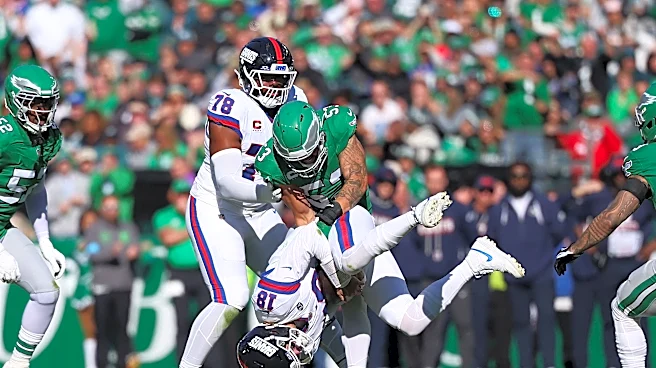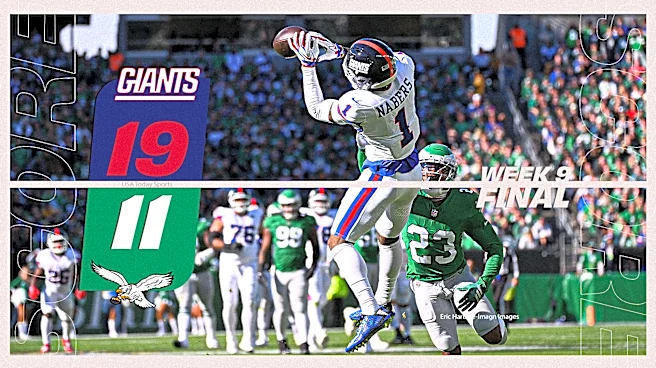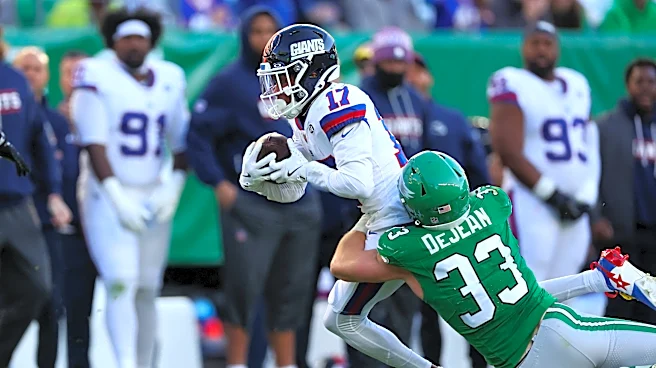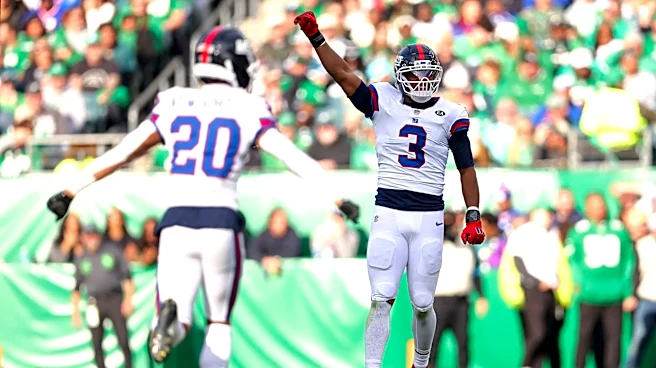


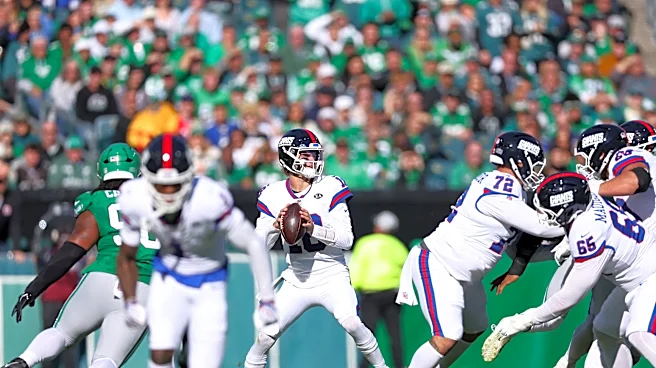
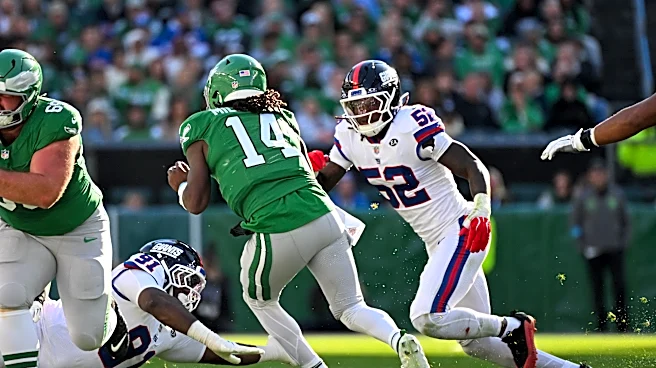
Abdul Carter did not record a sack against the Eagles on Sunday, but Philadelphia’s attention to the Giants' edge rusher offers another layer to its protection failures. New York finished with seven sacks in a 19-11 victory, repeatedly disrupting Joe Milton despite the resources directed toward Carter.
According to Giants analyst Bobby Skinner, Carter was double-teamed at a 66.7% rate, the highest among 57 qualifying edge rushers in Week 9. Carter shared the post with a message celebrating his teammates’ production: “As long as my bruddas eat I’m good!”
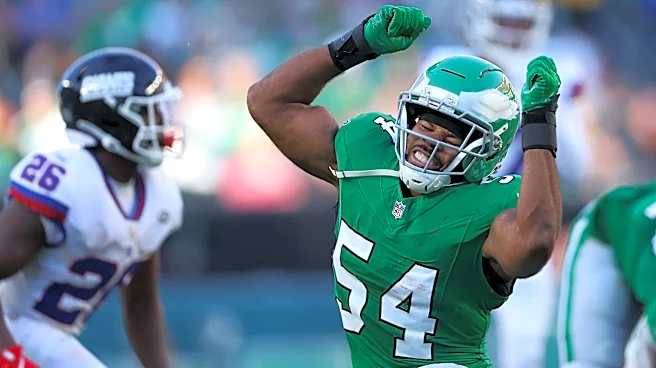
The figure helps explain why Carter’s modest individual statistics don't tell the whole story. He finished with one assisted tackle and no sacks, while rookie linebacker Arvell Reese led New York
with three sacks and a forced fumble.
Abdul Carter commanded attention beyond the box score
Accounting for a dangerous edge rusher can change how an offense distributes its protection. More attention on one defender can create opportunities elsewhere, especially when a defense combines its front with pressure from the linebacker level. Skinner’s reported double-team rate indicates Carter remained a focal point for Philadelphia. It does not establish that his presence directly created every sack, but it provides context for a game in which other Giants defenders repeatedly reached Milton.
The Eagles could not consistently protect the quarterback even while committing extra resources to one matchup. That is the more consequential takeaway for an offense entering its bye with seven consecutive losses.
Arvell Reese capitalized on Giants’ pressure opportunities
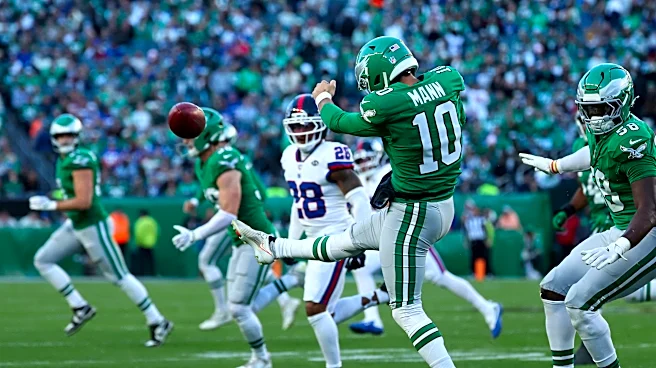
Reese supplied the most damaging individual performance, recording 12 tackles, three sacks, and a forced fumble. His strip-sack erased an opportunity Philadelphia had gained by recovering a muffed punt. According to Next Gen Stats, as cited by the Giants, Reese reached Milton in 2.29 seconds on the strip-sack, the fastest sack time recorded in the NFL this season. His other two sacks came from an inside linebacker alignment.
The variety of pressure illustrates why Philadelphia’s evaluation must extend beyond individual blocking matchups. Recognizing where the rush is coming from and ensuring every immediate threat is accounted for remain essential parts of the operation.
Eagles need a complete pass protection answer
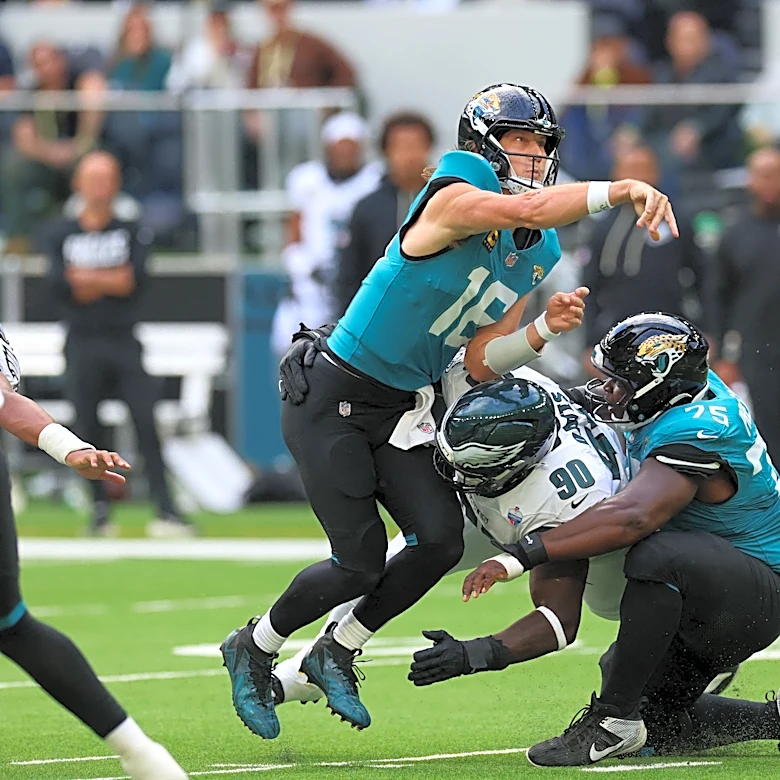
Milton absorbed seven sacks for 41 yards in losses, leaving Philadelphia with 128 net passing yards. The Eagles scored their only touchdown in the first quarter and managed three points after halftime. Carter’s response reflected satisfaction with a collective result. For Philadelphia, the lesson is less comfortable: Limiting one prominent pass rusher’s individual production means little if the remaining defenders still dismantle the protection.
This article originally appeared on Eagles Wire: Abdul Carter’s double-team rate adds context to Eagles’ protection woes