
Wins are hard to come by in the NFL, and the Philadelphia Eagles have an opportunity to start the season 2-0, with matchups against the Bears (MNF), Rams, and Jaguars looming. On Sunday, Philadelphia will introduce another offensive-line configuration against the wrong defensive front for uncertainty.
Landon Dickerson’s placement on injured reserve created an opening at left guard, where Philadelphia has considered several replacement options. Drew Kendall and Willie Lampkin have experience inside, while Fred Johnson worked at left guard with the other starting linemen during the portion of Thursday’s individual drills open to reporters.
That observation did not confirm Johnson as the Week 2 starter. The Eagles knew reporters could see the drill,
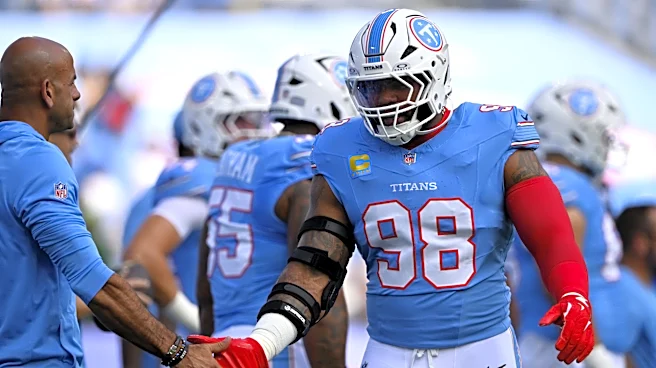
and the team installed its game plan after practice closed. Still, using Johnson there suggests Philadelphia is keeping every configuration available. The eventual choice must make his first start against Jeffery Simmons, the centerpiece of Tennessee’s defensive front. Simmons earned first-team All-Pro honors in 2025 after recording 11 sacks. His power, initial quickness, and positional flexibility let Tennessee move him across the formation and find the weakest point in a protection.
That likely means testing Philadelphia’s new left guard early.
Cam Jurgens will help the replacement identify Tennessee’s pressure looks while staying aware of John Franklin-Myers. The Titans signed Franklin-Myers to a three-year contract this offseason, giving Simmons another experienced interior defender who can move outside. Franklin-Myers produced three tackles and one pressure during Tennessee’s opening loss. The Titans need more from him, but Philadelphia cannot assume his quiet debut will continue.
The challenge extends beyond the interior.
Jermaine Johnson II gives Tennessee a long, athletic rusher who can test Jordan Mailata and Lane Johnson. Jacob Martin provides speed from the opposite edge, while rookie Keldric Faulk and Oluwafemi Oladejo offer rotational depth.
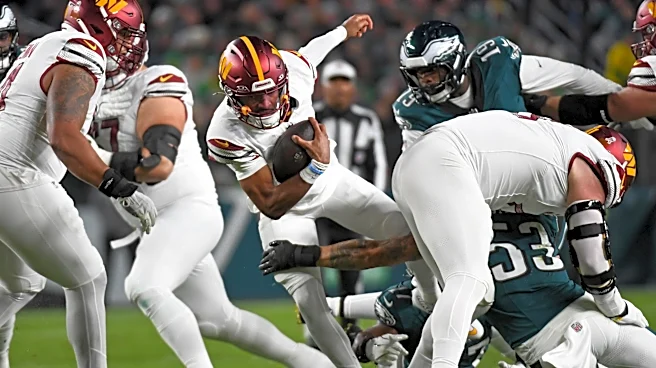
Philadelphia’s established tackles give the offense advantages outside. The concern is whether Tennessee can isolate Simmons against the new left guard or create confusion with stunts between Simmons, Franklin-Myers and the edge defenders. The Eagles allowed three sacks against Washington. Landon Dickerson surrendered three pressures, including one quarterback hit, and committed a holding penalty while playing through several ailments. Cam Jurgens and Dickerson combined for three holding calls during an uneven afternoon for the interior.
Sean Mannion also identified negative plays as one of Philadelphia’s biggest offensive problems. The Eagles overcame third-and-17 and third-and-18, but repeatedly operating behind the chains is unsustainable.
A productive rushing performance would provide the easiest solution.
Saquon Barkley gained 83 yards on 15 carries against Washington, but 42 came on one play. Philadelphia must create more consistent movement for Barkley and prevent Simmons from disrupting runs before they develop. The Titans allowed the Jets to rush for 142 yards in Week 1. Tennessee’s front has impressive names, but New York demonstrated it can be moved when blockers remain connected and running backs reach the second level. Philadelphia does not need its new left guard to dominate Simmons individually. It needs sound communication, timely help, and an offensive plan that doesn't repeatedly leave one blocker isolated against Tennessee’s best defender.
If the Eagles control the line, Hurts should have opportunities against Tennessee’s secondary. If Simmons takes over inside, Philadelphia’s first road game could become far more uncomfortable.
This article originally appeared on Eagles Wire: Philadelphia’s offensive line draws another physical challenge