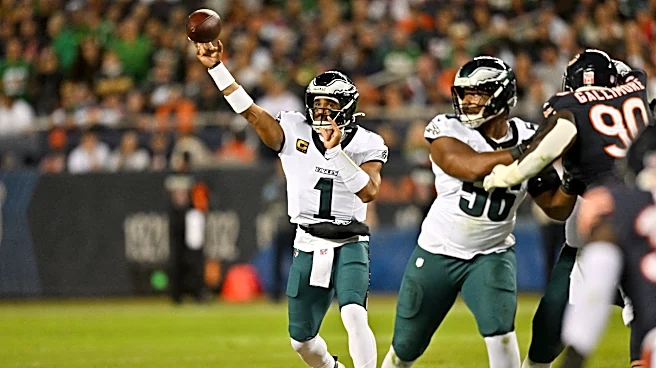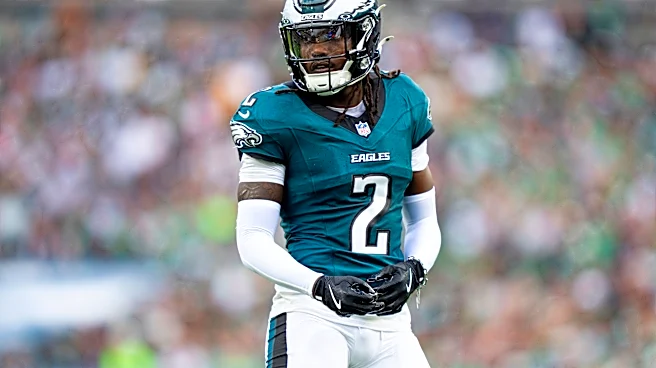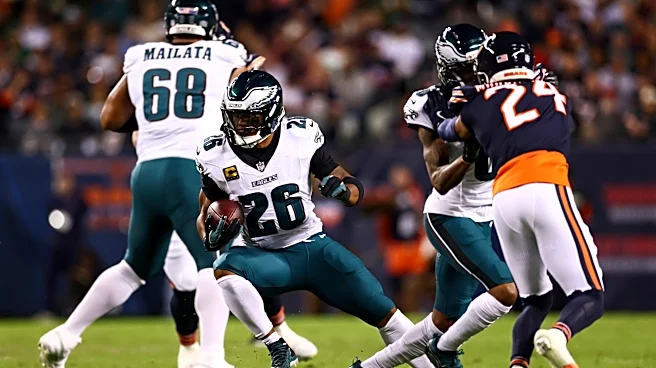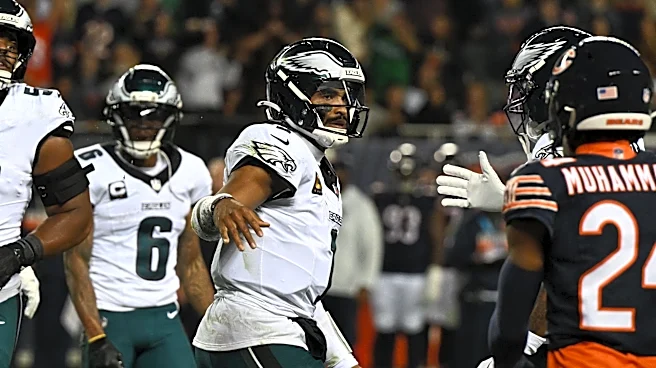


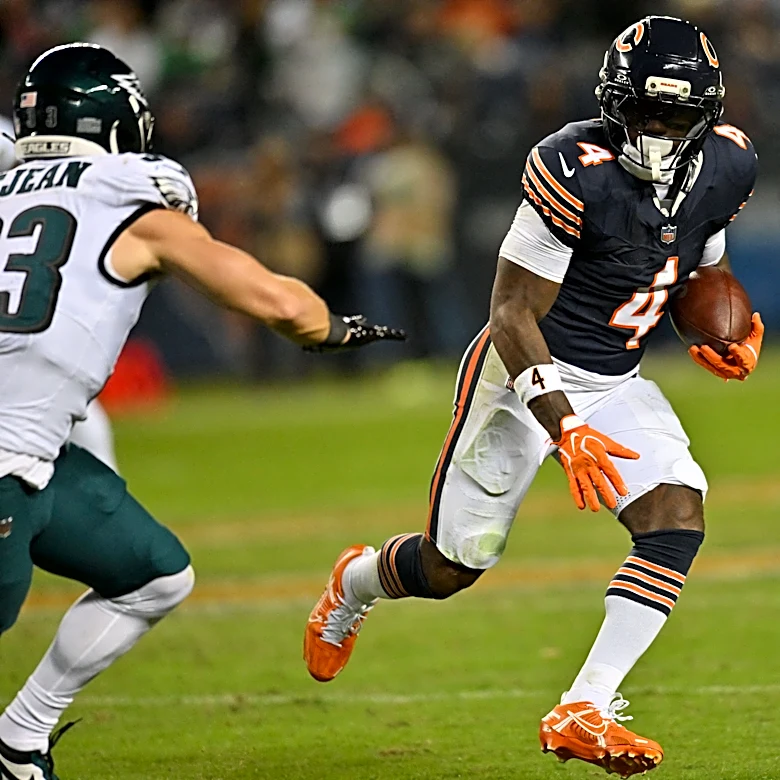

The Philadelphia Eagles have repeatedly emerged from halftime with the ball and a chance to take control. Instead, the opening minutes of the second half have become one of their most troubling weaknesses. Philadelphia has been outscored 40-20 and outgained 563-334 after halftime through three games. The problems became impossible to ignore during Monday night’s 27-7 loss to Chicago, when the Eagles opened the third quarter with three consecutive three-and-outs while the Bears extended a three-point lead to 20-7.
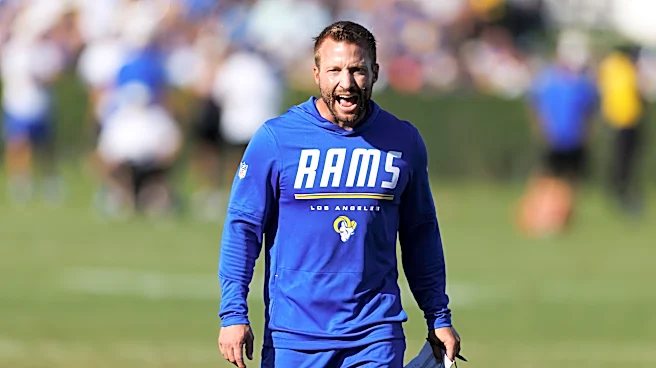
Offensive coordinator Sean Mannion said the staff has discussed the pattern each week and is working to improve its second-half approach.
“You hate to do a lot of nice things in the first half of some of these games and kind of fall into
a rut in the second half,” Mannion said.
The Eagles also stumbled coming out of halftime during their Week 2 victory over Tennessee. That makes the Chicago performance less of an isolated failure and more of a developing trend.
Mannion explained that Philadelphia’s coaches track defensive looks throughout the first half, meet during the break, and quickly chart a plan for the final two quarters. The NFL’s short halftime leaves little room for an extensive overhaul, which makes communication and advance preparation essential.
Some responsibility belongs to the players. Penalties, negative plays, and missed assignments have repeatedly placed the offense behind schedule. Still, the Eagles must also determine whether their sequencing has become predictable or whether they are moving away from successful concepts too quickly.
Los Angeles presents another difficult test. If Philadelphia again receives the second-half kickoff, its first possession must become an opportunity instead of another empty series. The Eagles cannot continue giving opponents additional chances to seize momentum while their offense searches for rhythm.
This article originally appeared on Eagles Wire: Eagles searching for answers to their persistent second-half struggles