





Anyone who has ever set foot on the first tee of The Judge course at Capitol Hill in Prattville, Ala., will remember it for a lifetime.
I first played it 25 years ago, during a week-long tour of five Robert Trent Jones Golf Trail sites. To this day, I can tell you who my playing partners were that day, the name of the director of golf who came out to see us off, what club I hit off that tee (hybrid) and my score (bogey … of course).
The first tee at The Judge sits 200 feet above the fairway, with the Alabama River pinching into the landing area on the right and swampy terrain to the left. It is as beautiful as it is terrifying – a fitting opener for a scenic, yet demanding layout.
On Oct. 1, The Judge reopens to the public following a 10-month
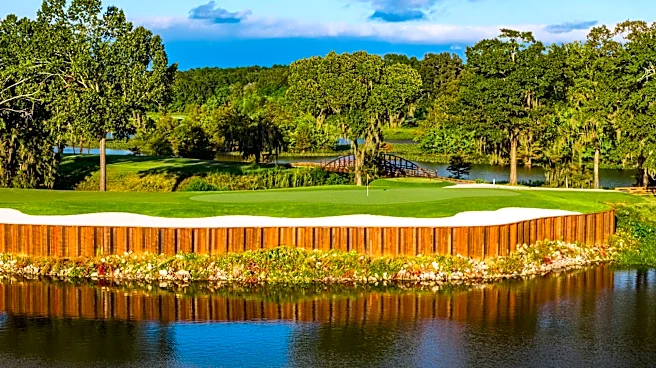
renovation and restoration project. Some of that reflects the normal restoration of a high-demand course entering its 27th season. For example, new irrigation was installed around all 18 greens and each surface received a fresh resurfacing of TifEagle Bermuda, which also combatted the natural shrinkage on the periphery of the greens. In addition, the aging wood walls that lined the river holes were replaced with metal sheet piling, which will provide more structural support and reduce erosion.

Much of the work, however, reflected a desire by the leadership of the Robert Trent Jones Golf Trail to create an even more strategic and enjoyable experience for all golfers, whether they’re scratch players or 20-handicappers.
Several years ago, Mike Beverly was the director of golf at Capitol Hill, and one of things he found was that pace of play on The Judge usually was fine from tee to green, but sometimes ground to a standstill on the greens. Now the president and CEO of the Robert Trent Jones Golf Trail, Beverly knew that he wanted to use this year’s renovations to temper the slopes on many of The Judge’s putting surfaces.
“Most of them were softened because they were very severe,” Beverly said. “It’s such a long, hard golf course that we really wanted to improve pace of play. The travelers love The Judge because it’s so scenic and it’s very hard. If you’re here for a weekend, you have to play it and you’ll love it.”
But Beverly knew that the locals, his year-round players, favored the sister courses at Capitol Hill, The Legislator and The Senator because The Judge is such a difficult test.
“So we wanted to make the green complexes a little more playable, a little more fair,” Beverly said.

Ironically, softening the slopes allowed Beverly’s team to increase green speeds to around 11 on the Stimpmeter.
“When you get those real severe greens, you can’t do that,” Beverly said. “We had four greens that would almost be unplayable if we got them to that speed and would eliminate hole locations.”
Seven of The Judge’s greens – Nos. 1, 7, 10, 12, 15, 17 and 18 – were redesigned and relocated. In addition, eight new forward tees were installed on Nos. 1, 2, 4, 5, 8, 10, 14 and 15.
Returning golfers will notice the changes the moment they arrive at that iconic first hole. The green has been shifted to the left and a long, narrow bunker that fronted the surface has been removed in favor of a waterfall bunker wrapping around the right side of the green along the river. The crowned fairway that used to kick center-cut drives toward the river or swamp has been flattened, and thanks to some tree work, the Alabama River once again is showcased.
“The river always has been a focal point, but it’s even more visible now,” Beverly said. “A lot of the things we’re doing here are aesthetic, but we’re also trying to improve the experience and speed up play.”
Golfers are going to notice that The Judge has become even more strategic following its renovation. For example, the approach to the par-5 fourth used to be a forced carry, but now there’s a run-up area that will accommodate high-handicappers’ third shots, while also tempting better players to go for the green in two.
There’s a similar design tweak at the par-5 seventh, where the green was shifted to the left and the inlet that fronted the green has been back-filled to facilitate a run-up area onto the left side of the green. Similarly, at the final par 5, No. 15, the green has been moved to the left and forward, and also lowered about six feet, so that the neck that feeds into the green facilitates the ground game.
“I love giving players options,” Beverly said. “Now we’re giving slower swing-speed players options, but we’re also giving really long hitters the option of trying to run the ball up on the greens. The green complexes are much prettier, but they’re also much more player-friendly.”
Playability is a theme that comes up repeatedly when Beverly discusses the philosophy behind the design tweaks at The Judge. Many courses on the Robert Trent Jones Golf Trail, including The Judge, approach or even exceed 8,000 yards from the tips, so he knows low-handicappers will get all the golf they want, but he wants to ensure everyone enjoys the experience.
Consider The Judge’s par-3 12th, whose design bears a passing resemblance to the world’s most-famous par-3 12th, that one being at Augusta National. A thumb in the green used to kick tee shots toward the river, not unlike balls rolling back into Rae’s Creek. That’s been addressed through new bunkering and a raised retainer wall fronting the green. Aesthetically, Beverly’s team leaned into the Augusta National resemblance with new azaleas that frame the backdrop from the tee.
For a course as long and relentless as The Judge, the 358-yard 18th hole always has been a relatively gentle sendoff – aside from a green complex that often saw putts roll down to the bottom of the hill fronting the green. Now it’s a much more playable two-shelf green with a tiny false front.
“It’s going to be a fun birdie hole,” Beverly said.
Don’t take that for granted. The Judge still issues birdies grudgingly.
This article originally appeared on Golfweek: All rise: The Judge is back in play on Alabama’s Robert Trent Jones Golf Trail