

When golf’s governing bodies publish something called a “Notice and Comment on New Model Local Rules,” it sounds like new rules have landed on the first tee and everyone should start checking the fine print.
Fear not. At least for now.
The USGA and R&A have jointly published a notice proposing two Model Local Rules that could become available starting Jan. 1, 2028, for the highest levels of men’s professional golf. One would place a stricter limit on the balls players could use. The other would tighten the manufacturing standard applied to drivers tested at tournaments.
Comments from stakeholders and groups within the golf industry are being accepted through Dec. 18. After that process concludes, the governing bodies will decide whether to create
the MLRs. Even then, however, they would be optional. The PGA Tour would have to adopt one or both before they would be enacted at a Tour event.

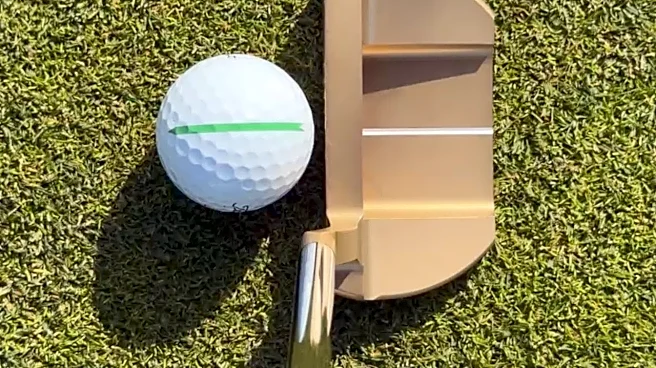
If the ball MLR became available and the PGA Tour adopted it, players would have to use a model on the List of Conforming Golf Balls that tests at 317.0 yards or less under the Overall Distance Standard.
That does not mean Scottie Scheffler would be penalized if he hit a tee shot that went 318 yards or more. The 317-yard figure comes from a laboratory test conducted under controlled launch conditions. Scheffler, Rory McIlroy and other pros often produce shots and create conditions that produce more speed and distance than the test conditions.
The MLR would remove the 3-yard testing tolerance that is part of the test which effectively allow a ball to reach 320 yards in the controlled conditions. A model testing above 317 yards could remain conforming, generally, but would be ineligible at a tournament using the MLR.
That could encourage manufacturers to produce Tour-specific versions, or steer players toward existing models that remain under the line. Either way, it would create a gentle form of equipment bifurcation before the broader ball rollback scheduled for 2030.

The driver proposal follows the same idea. A player’s driver would have to produce a Characteristic Time (CT) reading of 239 microseconds or less during on-site testing. Characteristic Time measures the flexibility of the face. Current testing allows an 18-microsecond tolerance, so a driver reading 257 or below can still be conforming.
Under the MLR, that driver would remain legal for general play but could not be used in a Tour event. Over time, high-speed players can weaken the face of their driver, making it more springy, a condition referred to as CT Creep. The proposed MLR would also eliminate that, so for professionals who like to keep a trusted driver for a while, regular testing and backup heads would become even more important.
A third idea discussed in September, reducing the maximum permitted club length below 46 inches, is not being advanced.
None of this changes the Equipment Rules today, and none of it changes what recreational golfers can put in their bags in 2028. Your driver will not need a CT test in the grill room, and your Saturday foursome will not need to check golf-ball laboratory data before a $5 Nassau is paid out.
The larger 2030 rollback also remains on the calendar. That change would use updated ODS test conditions across the game, affecting balls made for professionals and recreational players alike. The proposed 2028 MLR would be a narrower, earlier, measure reserved for elite men’s professional golf.
So, this notice is significant, but it is not a final ruling and it will never affect 99.99 percent of the golfers in the world. The USGA and R&A have put the language on the table. Now manufacturers, the Tours and other stakeholders get their say. Only after they have voiced their opinion will we learn whether professional golf gets a two-year preview of a divided equipment world.
David Dusek is a senior Golfweek writer covering golf equipment and technology. Follow him on Instagram (@daviddusek) and X (Golfweek_Dusek).
This article originally appeared on Golfweek: USGA, R&A send notice to manufacturers on distance-reducing gear