


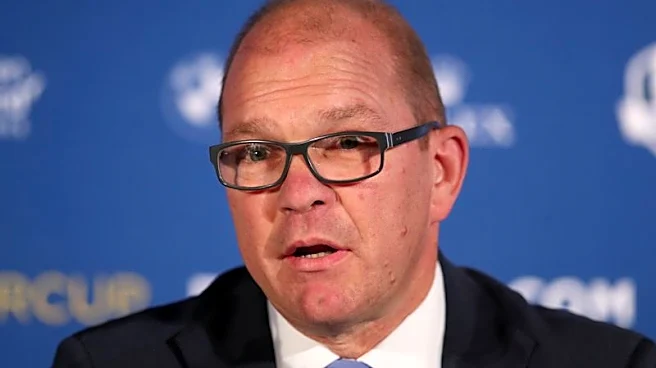

Jay Monahan steps down as commissioner of the PGA Tour on December 31. He recently sat down with Golfweek columnist Eamon Lynch at his home in Ponte Vedra Beach, Florida, to discuss the highs and lows of his decade on the job. Their conversation was for the premiere episode of Golf Channel’s new interview show, Eamon Lynch Has Questions.
This is their conversation.
Eamon Lynch: In a few weeks, you're leaving after 10 years as commissioner of the PGA Tour. Your immediate predecessor, Tim Finchem, served 22 years. Before him, Deane Beman served 20. What's your rush?

Jay Monahan: Ten years is hardly a rush. First of all, those are two legends, Deane and Tim. I think the simple answer to the question is this was part of the plan. I negotiated a five-year contract that took me through the end of 2026. When we completed that, I had made the decision that that would be the end of my time at the PGA Tour. That would be 10 years. And I think in today's
day and age, and what's required of leaders and what's required of stewards, I though that was the appropriate amount of time for me to be at the tour, and ultimately the right time to have a new leader come in. Now, in answering that question, when I felt that, I certainly didn't know what was coming. But I never wavered in that that was the right timeframe for me and my family.
By the time you leave, you'll have spent 3,651 days in this job. Pretty fair to say that one of those days was analyzed and debated more than any other, which was of course June 6th, 2023, when you announced a surprising framework agreement with the Saudis. I want to go back to the night before. What was your mindset on the night of June 5th, knowing what was coming the next day?
JM: I was excited. I was looking forward to letting our players, letting the world know that we had entered into a framework agreement. And again, the framework agreement was a framework for us to negotiate. But ultimately, the reason for my excitement was having been through this conflict for as long as it had been going on at that point in time, knowing that the direction of men's professional golf was under the umbrella and under the control of the PGA Tour was a very important outcome. I was seeking to end a damaging divide in men's professional golf. I felt like we had accomplished that, and I felt for the players and for everybody who believed in the model of the PGA Tour that would ultimately be validation. At the same time, I realized that there was a lot of work that needed to be done. It was a framework. So we had to get back to our board. We had to spend the time deliberating, debating the merits of it. And I was fully prepared to do that. I was excited to get to that work.
When you say you were excited, I'm curious: were you embarrassed as well? Because you were going to go out there and do an about-face on everything you told your members and said in public for the previous couple of years.
JM: I wasn't. The job of a leader is to fully understand when engagement can lead to a better outcome for, in our case, the PGA Tour and the game of golf. And there had been a couple of years where we were competing, and the nature of that competition was franchise-based team golf versus golf the way the PGA Tour plays it. And enough time had passed where I think the market had spoken and it put us in a position to be able to take command of the conversation going forward and to end that damaging divide. And so I would say no, I wasn’t, I wasn't embarrassed at all because ultimately negotiating with your adversaries isn't abandoning your principles. Sometimes it's exactly what you need to do to protect them, okay? And so my public commentary ran contrary to that up to that point in time, but to try and get to the best outcome for the PGA Tour, that's what I felt was the right decision with all the information I had at that point in time.
In terms of what the best outcome was, was your priority getting an agreement to move forward in some kind of unified manner with the Saudis or was it ending the litigation? Because that was potentially ruinous for the PGA Tour in terms of the costs, right?

JM: Ending the litigation was absolutely an important outcome. Not because we didn't believe in our position. In fact, we felt very strongly about it and we had some great people, some great leaders that were advising us in that area. But I think that that is just one piece to a larger puzzle. It was an important piece. Being able to have men's professional golf fall under our umbrella for us to be able to do the things that were identified in that framework agreement, recognizing that there was still a lot more discussion to be had, that was the right outcome.
Game it out for me. What would have happened in your mind had you not pursued the framework agreement? What kind of pathway were you on?
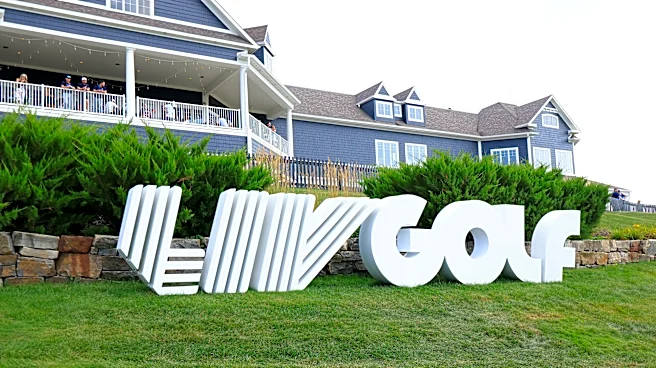
JM: [Pauses] We pursued the framework agreement. We pursued it because for the reasons I've just mentioned, specifically making sure that the PGA Tour was in a control position, that the men's professional golf was coming underneath our umbrella. So that's what was going to happen. That's what I believe was going to happen eventually, but the only difference is that because I mishandled the communication, because the rollout was a failure, that ended up prolonging all of that. And so the goal here was to do this in a relatively expedited manner. It's taken longer as a result of that, but at that point in time I had seen enough. I had been across the table from the other party. I heard what they said. I had a chance to look in their eyes. That gave me great confidence that the PGA Tour was gonna not only endure but continue to get stronger going forward.
But even leaving aside the communication when you chose to announce it, at that time as commissioner you weren't a member of the board. You were working with two independent, non-player directors on the board, one of whom had only been on the board for six months, and in complete secrecy you make the most consequential decision in the history of the organization. So you could see why others think it was a governance issue when it emerged.
JM: What we accomplished with that framework agreement was a framework for negotiation. So again, anything as it relates to the way that was handled or the way people were surprised, that's on me. Would I like to have that back? I would've liked to have had it back that day. But that's not the way things work. And I immediately turned my focus to recognizing the issue that was at hand and ultimately beginning the process of continuing to get the PGA Tour to the right outcome.
Eamon: "You have had several years of hearing people say, ‘Yasir Al-Rumayyan was going to outmaneuver you, and Greg Norman was going to outspend you, and Phil Mickelson would outsmart you.' And they're all roadkill in this sport right now. You're still standing. That has to give… pic.twitter.com/3g8kwIurYx
— Golf Channel (@GolfChannel) November 3, 2026
A lot of your critics said at the time that this could have been avoided had you taken a call from the Saudis at the outset, which doesn't seem like such a smart piece of advice now that they've cut and run from the sport. But why didn't you take that call at the start?
JM: First of all, I'm not aware of the call that was made to me. But I do think anytime you're going to be negotiating with someone, you want to understand what their intent is, you want to understand how sincere they are. And if someone's going to be calling me, or if someone did call me, you have to recognize, depending on what time this call happened, that they had been at our tournaments as a team with their lawyers, recruiting our players, meeting with agents, doing all the things that they felt they needed to do in order to stand up their league. And I think the most important thing here is that it was their belief that franchise-based team golf was a more successful long-term proposition for the game than golf the way it's played on the PGA Tour. That a model that is so successful in stick and ball sports could immediately translate to men's professional golf and that ultimately would win. And they saw us, they were saying it to others, as a feeder tour. So if you're gonna meet, then I think a couple things have to happen. You either have to agree that you need to become that, or largely become that, or you need to look inside and say, ‘What we've created is the right model for our players, for our fans, and for everybody that we serve.’ And that's what was guiding us during that timeframe. It was not a pleasant period. We were focusing on the things that we could control, knowing what it was that we thought they were trying to do. That's where our focus was.
Given how high passions were running at the time, if you had gone to a couple of key players in advance and said, ‘Listen, guys, this is what I think we need to do,’ do you think you would've had support?
JM: Well, hypotheticals are hard for me. There were a lot of people, including players, that wanted us to get to that outcome. But at the end of the day, I made the decision with the information I had at the time and the position that we were in, that this was in the best interest of all of them. Listen, anytime you're in intense negotiations and you're dealing with confidentiality, you're dealing with non-disclosure agreements, we were being investigated, we were being sued. There was a lot in play. That's not an excuse, but that was all part of the consideration for the framework agreement. And ultimately I should have found a better way to communicate. I should have started with the players, and I should have found a better way to communicate it.
Did the intensity of the reaction shock you? Because obviously there were players who decided they wanted you out. There were 9/11 families who felt that they had been betrayed. Some of your own staff at headquarters were upset by it as well. Were you shocked by how intense that reaction was?
JM: I think the cumulative pressure of everything that I had been dealing with as leader of the PGA Tour took a toll on me over time. I think that day or the days and weeks leading into it, and those days that followed, there's no question. I'm not sure if shock's the right word, but I had to step away four days later. Yeah, so you can use whatever term you want, but I had done everything I could as a leader of the organization to try and put the PGA Tour in the best possible position. That's what I was doing every single day and when I felt like I had let people down, to your point, let our players down, let our employees down, let fans down, you name it, that had an effect on me. I take great pride in being someone that people trust and people know is always going to be doing the right thing on their behalf, or trying to do the right thing on their behalf. And it was clear that that's not how a lot of people felt at that point in time.

You mentioned your leave of absence shortly after the framework agreement. What happened to precipitate that? Was it just the accumulated stresses?
JM: Yeah. When you're a leader and when you were in the situation that we were in, you wanna project strength because you believe in what you're doing, you believe in what you represent, you believe in what the outcome is gonna be, even though you don't have all the answers, even though you don't have all the information. This had been going on for a long period of time and it's all I could think about. It was every waking hour and I wasn't sleeping for an extended period of time, thinking about where we were, where we needed to get to, what I was hearing. When that day happened, and when the subsequent days unfolded, it was pretty clear that I needed to focus on myself.
Can you talk about the particulars of when it came to a head for you?
JM: Yeah.
What was that like? Were you here at home? Were you on the road? It had been months building up. Where did you have that moment of realization where you said, ‘I can't continue to do this?’
JM: Here [at home]. I got up on Saturday morning. I went to the beach. I run the beach fairly often. I had been noticing that I couldn't really sustain any runs. I didn't have any energy for an extended period of time. I started to run. I couldn't run. I walked. I had an interview for 11 o'clock that morning and I was thinking about that interview. I sat down and I was all by myself, and I really thought about where I was and what I was feeling and what I was thinking. And I realized that I needed help. I didn't know what to do. I don't think anybody in my orbit knew that I was struggling to the degree that I was. So I came back and I sat out on our deck and I asked my wife to come out because I needed to talk to her. I could tell she knew the minute she walked out that something was really wrong. And I told her. I said, ‘I'm in a bad place and I don't know what to do. I literally don't know what to do. I can keep fighting and keep doing this, but I'm not sure that's gonna be the most productive thing for me in the tour right now.’ So we spent that entire day here. Susan's incredible. She's not only the love of my life, she's also extremely thoughtful and very, very bright, very practical. We decided that in getting help, I needed to go literally get help. So the question is, where are you going do it? I'm not sure I have all the facts straight, but I believe it was later that afternoon I went to the hospital.
It's not as though the stress level has decreased in the few years since. How do you keep on top of that aspect of your life?
JM: I work on it every single day, starting very early in the morning. I've fundamentally changed the way I live my life.
How does that look?
JM: I'm up at the same time every single day, slightly after five o'clock in the morning. I begin my day by journaling. I spend time in my faith. I spend time thinking about the promises I made the day before, what I need to accomplish the day ahead. I get my workout in. I'm more conscious of what I eat. By the time I've woken up at that time of the day, I've slept a lot better than I've ever slept before. It's a combination of a lot of things that I think have, have helped me be able to deal with all the stresses of life.
When you did come back, some of the anger or resentment was still there, might even have become more focused in the time that you were away. You spent a lot of time rebuilding relationships, rebuilding trust with stakeholders in your world. Did you ever get to a point where you felt as though you were spending more time keeping the job than you were actually doing the job?
JM: No, because I wasn't worried about keeping my job. I never was. Again, that's outside of my control. The job's never a popularity contest. The question became, with everything that we had been through, could I work with our players? Could I work with our board? Could I work with our team to come together to strengthen the competitive fabric of the PGA Tour? To strengthen the economic foundation of the PGA Tour, to strengthen the governance of the PGA Tour, to strengthen our position globally, and to do some things to innovate in a way that, independent of anything else that was going on, was gonna be helpful long-term to the PGA Tour.
At what point did you realize there wasn't going to be a deal with the Saudis?
JM: Probably when we left the White House last year.

February 20th. What happened in that meeting? Yasir [Al-Rumayyan, head of the Saudi Public Investment Fund] was there. The President was there.
JM: Correct.
What happened?
JM: I think this is the fourth time we had made a proposal or we'd come with a recommendation on how to proceed. And it was very clear that that wasn't going to work. So the good news from that meeting is that it confirmed what we thought was going to be the outcome. Having Tiger Woods, having Adam Scott, having the president host the meeting, it was very clear that we needed to keep continuing to do what we were doing, which is focus on what we control — making the PGA Tour as strong as we could.
Given all that's happened, do you think you got it right on LIV and the framework agreement or do you think you got lucky? Or was it a little bit of both?
JM: It's hard for me to think that I got lucky with the Framework Agreement. It's not about me. Like, I tried to never make it about me. I tried to make it about …
But you did become the focal point of so much of this.
JM: I know and I accept that. And I take responsibility for that. Like, there's no one else to blame other than me. At the end of the day, whatever has happened is because the PGA Tour has a rich history and tradition. We have not only world-class athletes, but we have athletes that represent this game exceedingly well, who are pushing each other. The competitive friction, the competitive drama, a lot of the changes that we made I think have accentuated that. Those are all changes that they helped us orchestrate. I think we are where we are right now. Like, nothing's over. This is on a continuum, but the path that the PGA Tour is on is the absolute right path, and I'm proud of that. For whatever role I played in that, I'm proud of that. And there's no one rooting harder for that to continue to be the case than me.
Have you had any contact with Yasir Al-Rumayyan since then?
JM: I have not.
Did you get lucky with Greg Norman being the face of LIV Golf? I mean, he's a pretty polarizing guy. Did his presence make a deal less likely?
JM: I don't really have anything to add as it relates to, to him.
If you got a dinner invite from Greg, would you accept it?
JM: I … I don’t … I don't think there ... [Pauses]. My dinner calendar's pretty full.
I want to move on to some of the other significant events of your tenure. March 9th, 2020. It was Monday of the Players. You appeared on CNBC, you announced a new media rights deal that had been the focus of your job for the first couple of years. It was a win for you, a 70 percent increase on the previous terms. You didn't get to celebrate for very long, did you?
JM: [Laughs] That was an extraordinary week, but that day was a result of years of work. And to your point, it was a meaningful increase for the PGA Tour. Media rights are a huge part of the economic foundation of the PGA Tour. And to know that we were extending with CBS, with NBC/Golf Channel, bringing ESPN into the Tour at a time where at that point we were all watching with great interest as to what was happening with this emerging pandemic, and we were also dealing with a competitive threat. So there was a fair amount of pressure and to know that those rights were secured through 2030, that was an important day. That was a proud day.
Three days later you were shutting down the business.
JM: Yeah.
What were those first days and weeks like in the pandemic for you?
JM: We assembled our team that weekend. We didn't know much, but we talked about how we were going to operate and how we were going to surround ourselves and get as much credible information as we could to be able to deal with all the uncertainty. At the same time, I reached out to all the other golf organizations, recognizing that not only did the PGA Tour shut down and the world shut down, but we all were trying to figure out how we were gonna come back. I figured, and we all agreed, that the best way to do it was by openly communicating. And so I didn't take a day off. Once we left TPC Sawgrass, my time with the media that Friday morning, we were working constantly trying to make our way forward.

Golf was the first major sport — and the PGA Tour the first major sports league — to come back during the pandemic that summer. What was your worst-case scenario when you came back? And at what point did you realize that worst-case scenario wasn't coming to pass?
JM: No one knew what the right answer was. The easiest thing to do would be to wait. We recognized that our sport was different than others in that it lent itself naturally to social distancing. The biggest concern was that we didn't operate in the most responsible and adaptive way possible or, candidly, put anybody in harm's way. The safety of our players, the safety of everybody in our world was first and foremost. But you couldn't guarantee safety. What you could guarantee is that you put together the best possible plan and you react to it, but you still didn't know. So I think that's where all the sleepless nights came from.
It was a very difficult environment in which to be making decisions. But I go back to that period of time and people think that we just came back. Our board, our player directors, we were on constant phone calls. Our team was working around the clock. The reality for us in our business — because every single week our players are competing for what they earn — not knowing when you're going to come back, their livelihoods were at stake. That doesn't mean you just come back. It means you do everything you possibly can to come back in the most responsible way. I feel like the collective all of us accomplished that goal.
So we went through a presentation one afternoon and by the end of it, a couple hours in, the players are like, ‘This is insane. Like, there's no way we can do this.’ But it was helpful because by starting there, then you could start to pull back and figure out what's that balancing act of being acceptable enough to be able to get the players to play versus us being safe?
You also oversaw the PGA Tour’s change to a for-profit business model and introduced private investors. Explain why you think that was necessary to people who really didn't feel as though the old model was all that broken.
JM: If you go back over several years, for the PGA Tour in our prior structure as a [non-profit], we're essentially a pass-through organization. Virtually all of our money every single year goes back to our players in the form of prize money, bonus programs, also some money to charity and other areas. I believe when COVID started, we had $244 million in reserves. Not only were you dealing with the continued effects of COVID, but we were dealing with a competitive threat that was largely based on economics. And so for us, how do you protect the heart and soul competitively or the competitive fabric of what the PGA Tour represents in terms of its impact every single week?
Is there a way for us to do a couple of things? One, to strengthen our balance sheet so that we could invest back in our fans, invest back in the future of our organization. Is there a stronger, more unifying way than the independent contractor model to get the players aligned both economically and from a governance standpoint? And that's what we decided as a board was what we needed to do.
And so today you have over 200 players who have an ownership interest in the PGA Tour. We brought on Strategic Sports Group after an exhaustive process, and not only is it capital, you're bringing wisdom and experience outside of professional golf that will benefit us as we move to this new model. And one of the great byproducts of all this too is by having that model in place, I believe it allowed us to recruit a talent the likes of Brian Rolapp. So all those moves were intended to get the PGA Tour to a stronger position.
That Strategic Sports Group investment of $1.5 billion was announced January 31st, 2024. Almost three years later, it hasn't been spent. I get that it was a hedge when you didn't know what the Saudis were gonna do for a number of years, but does that not suggest that the Tour didn't need it if it hasn't been spent yet?
JM: I could see how you would look at it that way. You've actually looked at it that way for a long period of time. But I don't see that being the case because I know what's being contemplated for that use of capital. I would say stay tuned on that front.
So you reject the idea that Strategic Sports Group bought a league with not a dime at risk?
JM: But it's on our balance sheet. Listen, I think they've been a great addition to the PGA Tour and our ownership structure. I sit in those meetings and I'm grateful every day that they're in the room.
The terms of the deal with Strategic Sports Group have never been made public, particularly when it comes to consent rights. If you have a situation where the players want option A but your investors want option B, whose consent is superior?
JM: We could do one of two things here. You could talk about what's in the contract or you can talk about the practical application. And I think, practically speaking, the way that SSG came into the PGA Tour, oftentimes it's not just SSG, it's our independent directors, it's our other board members, it's our player directors, it's management, it's Brian leading these conversations now. We get, in almost every situation, to a place where there's some subset of people who may not agree that that's the right outcome. But we debate it and we ultimately make decisions as a board. So…

But I'm asking about a situation if there isn't that consensus between players and investors. Where does the authority lie in terms of business decisions?
JM: The players are in control. It’s the system, albeit it's still relatively young. We announced this in January 2024. The board is working very, very well together.
Sticking to the subject of money, sports betting has been embraced by every major league. Golf is no different. Do you have any concerns about this being an association that golf may come to regret in the future? Either because of fan misbehavior or potential nefarious activity by players.
JM: I have a larger concern about general civility and decorum. As it relates to sports betting, I think it's important to realize that the Supreme Court overturned PASPA [the Professional and Amateur Sports Protection Act] in 2018. They made it legal, states have adopted it. You can either participate and partner with operators or you can stay on the sideline. We decided then, I believe it's the right decision today, to partner because the information that we're getting allows us to protect the integrity of the PGA Tour. But at the same time, going back to my earlier comments, the health and safety of our players and the integrity of competition are paramount. So it's something we're gonna continue to take a very close look at.
Are you kicking more people out of tournaments these days than you used to? Is that a number you pay attention to?
JM: Yeah, it is. And I spoke to both of our heads of security a few weeks ago. Those numbers in 2026 are comparable to what they've been in the past. It doesn't mean in any way that you don't put full attention into making sure that you’re focused on providing the right environment for our players and fans.
The Future Competition Committee that you've been part of has authored much of the change that we're going to see coming to the PGA Tour in 2028. To casual fans, it might seem fairly similar. You know, it's going to be a series of lucrative events where they want to watch the best players in the world. You still can't necessarily guarantee that the best players are going to show up. Does it feel like chasing an imperfect solution to a problem that might not actually exist?
JM: If ratings have been up 20 percent in ’25 and ’26, and you're strengthening that system and extending it to all of the events, but broadening the participants, and you're making changes to celebrate the season-long champion, you're giving the fans and players what they want. We've heard for a period of time, they want to see match play. You can't put match play in a better position to succeed than where the FCC has put it. So I love where we're going and think it's the right evolution. The strength of Brian is the work is just beginning. He will continue to challenge his team, he'll continue to challenge himself to make sure that we're getting sharper and sharper on the changes that we're making.
We're obviously in the player empowerment era on the PGA Tour in the last few years. Is that healthy for the sport? For the players to be that powerful.
JM: I think it is.

But you've seen in the last few years players make selfish decisions based on where they are in their careers. That's the great lesson from LIV, surely.
JM: I focus on the decisions I've seen players make on the PGA Tour and the decisions that they've helped us make to get stronger. The competitive model with PGA Tour Enterprises, with both their ownership and their stronger voice and governance. We're a membership organization, we're a player-led organization. To go further in your comment, for the players to have the quality of people — CEOs, leaders, captains of industry — that are sitting on our board, and for the players also to have a Player Advisory Council underneath them that's high-functioning and very involved, I think the system right now is in a very good place. So I don't look at it the way that you're asking the question. I look at it kind of more holistically. And I feel good about where it's at.
You've had your share of highs and lows in this job over the last decade. Everyone who knows you says the two most important voices in your life are your wife, Susan, and your dad, Joe. Is there any piece of advice they gave you in that time that kind of stuck with you?
JM: I would say for Susan, we talked earlier about me getting on the right path personally and professionally. So there were a lot and there continue to be a lot of conversations on that front and that's extremely helpful to me. Our girls are 23 and 20. The family unit is the number one priority of my life and the times that we're spending together, the experiences we have and the closeness that we have is something that people talk about. And I'm very grateful for that.
My dad says a lot of things. My dad's an amazing man. Nobody, nobody to this day — I'm 56 years old — have I found that loves the game of golf more than my dad. But the best advice he's ever given myself, my brothers, anybody, is he always says, ‘Hang in there. Hang in there.’ Whether I was playing hockey, whether I was playing golf, whether I was leading the PGA Tour or in prior jobs. It's something I think about a lot because he says it a lot.
Is he hanging in there with Brian Rolapp to make sure he keeps tickets for the Players next year when you're not here?
JM: I don't think there's anybody working harder to befriend Brian Rolapp than my dad. [Laughs]
Not long after you became commissioner, you lost a good friend, Pete Fox, who's been the inspiration for a lot of the work that you've done with the Golf Fights Cancer charity. A mutual friend told me I should ask you about the night you busted him out of the hospital over the objections of his medical team. What happened?
JM: Wow. That's some good work on your part. I moved here in 2008. Pete was one of the people that embraced our family right away. He had long been battling Ewing sarcoma. While we spent more time together, it was clear that he was getting sick and at one point in 2016, 2017, it was clear he was getting close to end of life. In May of ’17, I got a text on a Saturday morning, a friend of mine and I, Charley Moore, from Pete. It said [his daughter] Elizabeth's prom was that afternoon and they weren't gonna let him leave Brooks Rehabilitation Hospital, but he needed us to come get him. And that's what we did.

What was that scene like when you and Charley Moore are breaking him out of the hospital?
JM: In retrospect, it was really funny. I gotta tell you, I was pretty nervous. My job was the car. What it really was, was a beautiful thing because we got him into his living room. He saw his daughter off to her prom. I think it was one of the last great moments of his life and it's a great memory for all of us with him because there was no way, whether it was me or somebody else, he was gonna be there that day. I was just fortunate that he reached out to me and there's no way I wasn't gonna do that for him.
That certainly won't go down as one of your regrets in the 10 years holding this job. When you look back, what is the biggest regret? And on the other hand, what's the one thing you're absolutely certain you got right?
JM: The biggest regret is the way that I handled the rollout of the framework agreement, and we talked about that. I take responsibility for that and I have consistently and always will. In terms of things that you absolutely get right. It's never about me, it's always about the team, the people that I work with or the people that I served.
When you look at 10 years, to me, I think the way that we managed through COVID, we talked about getting the PGA Tour back. One thing that we also led that I think was super important is that as we were going from market to market, we were also calling mayors, we were calling governors, we were doing everything we could to get golf courses open or to keep golf courses open. And that has had a material impact on the game. Participation's grown by more than 40 percent since that point in time. And I think those efforts largely contributed to that.
I think the competitive changes we made prior to the media rights cycle with moving the Players to March and finishing our FedEx Cup Playoffs prior to the start of the NFL and college football was very important for those media rights, but also very important in terms of setting the timeframe on our competitive model. You know, the competitive threat that we dealt with, which I'll come back to, but protecting the integrity of the PGA Tour and doing that in a way that's allowing the PGA Tour to endure, I think is really important. I'll also say that one of the things I'm really proud of is where we are right now. Not because I've been doing the work the last 14 months. I haven't. Brian's been leading the PGA Tour, but the PGA Tour, projecting forward, is in a great place. And so as I leave, there's nothing that makes me feel better.
The conflict with LIV is probably going to go down as the defining issue of your tenure as commissioner, but you don't seem particularly interested in taking a victory lap as you head towards the door.
JM: I think when you look at what I'm proud of is where the PGA Tour is. I'm not worried about what happens to them. We've worked really hard to get the PGA Tour in a place where its success is enduring and that saw the light of day and the markets responded.

That all sounds very noble, but you have had several years of hearing people say Yasir Al-Rumayyan was going to outmaneuver you and Greg Norman would outspend you and Phil Mickelson would outsmart you, and they're all roadkill in this sport right now. You're still standing. That has to give you a little bit of satisfaction. I mean, you are Boston Irish after all.
JM: [Laughs] I'm extremely proud of where we are and I'm extremely grateful to everyone that contributed to getting us here. It's not about me, you know. I was the leader of the organization during a challenging time. I did the best I could alongside everybody else to get us to the right outcome. There's still more work to be done. Therefore, this isn't over. We just have to keep getting better and we will.
You're 56 years old. It seems a little bit early to put your feet up. What comes next?
JM: Well, it is early to put your feet up. The straight answer is I don't know. I'm going to continue to serve as chairman of the board of First Tee, which I've done the last nine years. Tim asked me to look out for the First Tee when I became deputy commissioner. I've tried to honor that and will continue to honor that. You mentioned Golf Fights Cancer. It's a charity I started in 2004. I've been very busy. I have not been able to put the energy into that. I'll be helpful on that front. Most importantly, my wife and my girls deserve to be the beneficiary, if that's such a thing, of the time that I have. So experiences with them, moments with them, being there for them in ways that I couldn't is going to be a priority for me. And I have a few challenges I'm gonna go do that are unrelated to anything about what my next step in a career will be.
Such as?
JM: I have physical, spiritual, intellectual, health. Four challenges, four things that are going to be hard to do that I want to go do. And I'm still working that out, so I know what your follow-up question is and I'm not gonna give you the answer. But I think that's gonna allow me to step away. It'll be a part of getting my feet back on the ground and it'll give me the time to better understand what it is I think I can do to try and use the experiences I've had to impact people in some way. Like, I know that sounds very rosy, but when you don't know the answer to the question, that's kinda where you are. And at the same time, I actually think not having the answer to the question is one of the most exhilarating parts of my life right now.
Will you miss it?
JM: Of course I'll miss it. I'll miss it greatly. I already do. Things have changed. But then the question I know you're about to ask is what will you miss? I'll miss being around the game of golf every single day. It's the greatest game ever. Being around the best players in the world who play it for a living and do it exceptionally well. Walking into our global headquarters building with all the great people that I've had an opportunity to work with. Being at our tournaments, and whether it's a tournament operator or it's the community or charities on the ground, all that stuff adds to the experience. When you're close to it, you may not see it as clearly. When you're moving away from it, it's very apparent and that's why I have so much gratitude for the opportunity I've been given.
How should the Jay Monahan tenure be remembered? Write your own eulogy.
JM: I think history will determine what my impact or what my legacy was, and I'm very comfortable with that because I gave everything I could to try and help the PGA Tour.
Eamon Lynch is a columnist for Golfweek and a frequent contributor to Golf Channel.
This article originally appeared on Golfweek: Jay Monahan on LIV Golf, the Saudi deal and his biggest regret: ‘That’s on me’