

Four years after LIV Golf turned the men’s professional game upside down, the question is no longer which stars it might lure away with Saudi riches, but whether the breakaway circuit can keep enough of them to survive.
After filing for Chapter 11 bankruptcy protection in September, LIV is now trying to secure enough players and financial backing to launch a revamped version of the competition in 2027. That task has become harder as a stream of prominent players head for the exit. Jon Rahm, Adrian Meronk, David Puig, Louis Oosthuizen and Ian Poulter have all said their farewells.
For Scotland, this is more than distant turmoil: LIV players have become a significant presence at the Genesis Scottish Open and Alfred Dunhill Links Championship, raising
the question of what their changing allegiances could mean for two of the country’s biggest tournaments.
So where does LIV stand now?
Its proposed new financial backer, BC Partners, has lined up a potential funding package of up to $300 million aimed at keeping the league running. But the investor wants what has been described as a “critical mass” of players to commit to the new competition.
And that is the problem. Some of LIV’s most recognisable names have already decided against the new venture.
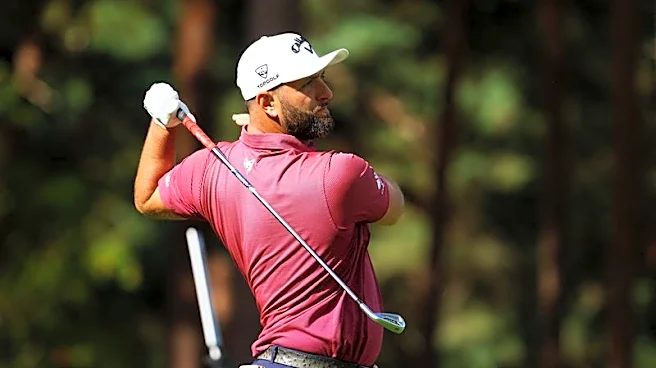
Rahm has provided the biggest blow, with his lawyer telling the bankruptcy court that the Spaniard regarded the terms offered for LIV 2.0 as unacceptable. Other departures have gathered pace, while Bryson DeChambeau, one of LIV’s most valuable remaining attractions, has yet to make a public commitment to LIV 2.0.
What has any of that got to do with Scotland?
Potentially quite a lot. Seven LIV players competed in July’s Genesis Scottish Open at the Renaissance Club in East Lothian, including Rahm, Tyrrell Hatton, Tom McKibbin, Meronk, Puig, Victor Perez and Laurie Canter. Their DP World Tour status provided a route into the event.
That route could now be closing for those who choose to remain with LIV. On October 12, the DP World Tour said players who sign up for LIV’s 2027 season will not be eligible for DP World Tour membership next year, forcing players to choose between the two circuits.
That matters in Scotland because the Scottish Open is jointly sanctioned by the DP World Tour and the US-based PGA Tour, LIV's principal established rival after the breakaway circuit launched in 2022. The complication is that several of those LIV players are now reconsidering where they will play.
And the Dunhill Links?

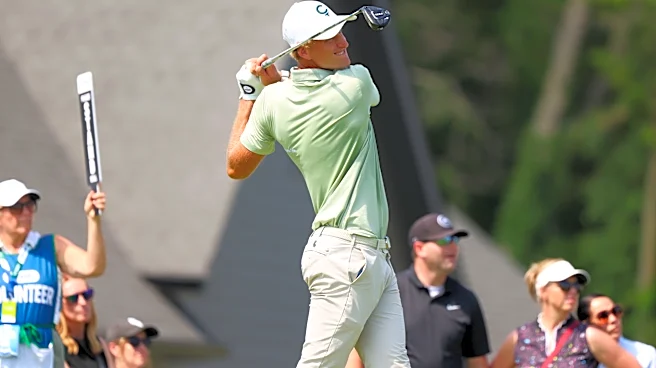
Probably an even better example. Meronk won this month’s Alfred Dunhill Links Championship, played across the Old Course at St Andrews, Carnoustie and Kingsbarns. The Pole finished 20 under par, two shots ahead of Casey Jarvis and Niklas Nørgaard, to win his fifth DP World Tour title and secure his tour status for 2027.
Within weeks, he had decided he would not be part of LIV 2.0, with his Dunhill victory having secured his place on the DP World Tour for 2027.
His case illustrates why the consequences for Scotland are not necessarily negative. A golfer leaving LIV does not automatically disappear from Scottish fairways. If anything, playing a fuller DP World Tour schedule could potentially provide more opportunities to appear here.
Could LIV's problems actually be good news for Scottish tournaments?
Conceivably, although much depends on where the leading players go next.
There is already precedent for a golfer leaving LIV and concentrating on the DP World Tour. Patrick Reed declined a new LIV contract at the beginning of this year and has subsequently competed extensively on the European circuit, winning twice in 2026 as he seeks a route back to the PGA Tour.
That creates an intriguing possibility for the Scottish Open and Dunhill Links. If the upheaval at LIV sends more leading players towards the DP World Tour, Scottish events could find themselves with a bigger pool of familiar names to draw upon, rather than a smaller one.
There remains plenty of uncertainty. LIV is still trying to assemble a viable roster for 2027, while players must weigh up the financial attractions of its revamped model against opportunities elsewhere.
But Scotland has already developed an interesting position in golf’s long-running civil war. The Scottish Open brought LIV and PGA Tour players into the same field, while the Dunhill has offered another route into DP World Tour competition.
The irony, then, is that LIV spent four years pulling some of golf’s biggest names away from the established tours. Its present difficulties could now help send some of them back. Scotland could be one of the places where that change becomes most visible.
Kristy Dorsey is a correspondent for the Scottish Herald, part of USA Today Co.
This article originally appeared on Golfweek: Why LIV Golf’s collapse could be a boon for this European country