






This is the third column in a new series designed to help golfers travel better. Golfweek already provides the ultimate in golf course evaluations and ratings, but Traveling Under Par aims to provide you with everything you need to know for the time between leaving home and reaching the first tee.
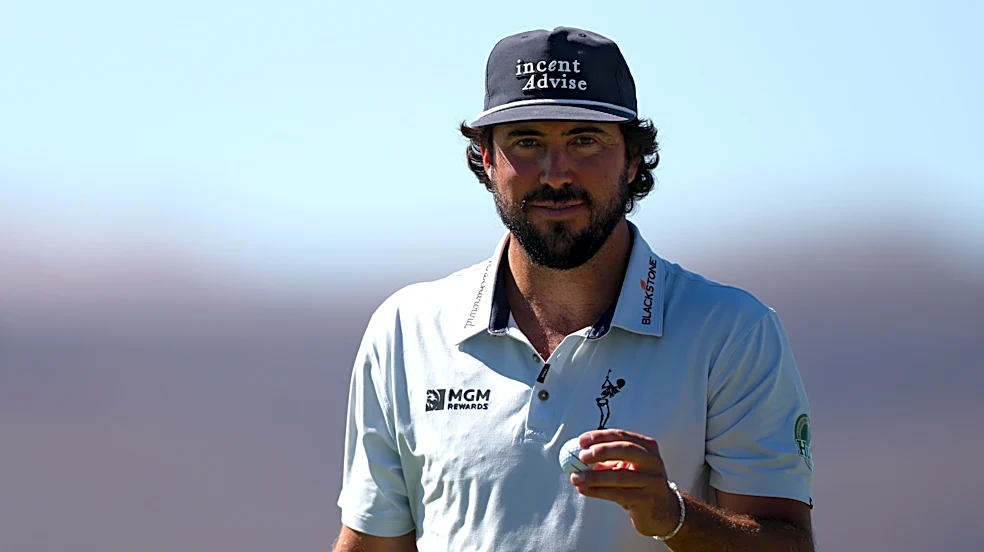
Aldrich Potgieter has a gift I envy almost as much as his ability to hit a golf ball 330 yards.
He can sleep on airplanes. Not the brief, chin-falls-then-you-snap-upright sleep that always ends when a beverage cart clips your elbow. The South African recently told me during a conversation in Scottsdale, Arizona, that he often falls asleep before dinner is served on his flight and wakes up when the crew announces the plane’s descent.

For someone who regularly
flies between the United States and South Africa, that’s like a superpower.
Potgieter, who won the PGA Tour’s 2025 Rocket Classic and led the Tour in average driving distance at 330.7 yards last season, told me his flights home to South Africa from Atlanta typically involve 14 to 16 hours on the long leg alone. One stretched to about 17 hours. Then there is a connecting flight, because the airport near his home in George requires a connection through Cape Town or Johannesburg.
Hearing him talk about those flights makes a connection through Charlotte seem like a trip to the mailbox.
After writing about packing for a golf vacation and choosing a travel bag, I wanted to hear how someone who travels for his livelihood handles long journeys. What I took away from our chat was a refreshingly uncomplicated approach, starting with something golfers planning an ambitious overseas itinerary should consider before booking their first tee time.
Give yourself some time.
Your body doesn’t follow the itinerary
Potgieter can sleep through most of an intercontinental flight, but that doesn’t mean he steps off the airplane fully adjusted to the local clock.
Coming to the United States, he said, is easier. He gets sleepy around 4 or 5 in the afternoon and has to make himself stay awake. Going from the United States back to South Africa presents the opposite problem.
“You want to go to bed when it’s five in the morning or something like that,” he said, laughing at the idea even though there’s nothting funny about it. “You’ve got to know you’re gonna have to take two or three days to get used to [the time change] and then be okay with that.”
That struck me as the most useful thing he said. When we go on golf trips, we usually schedule aggressively. If you travel across a continent or over an ocean, you naturally want to squeeze in as much golf as you can and enjoy as many other things at your destination as possible.
But, if a Tour winner who makes the journey regularly expects to need time, the rest of us who are not professional athletes should consider leaving some room in our schedule, too. For an overseas trip, make the first day easy and think about saving the round of golf you’ve spent years dreaming about for the second day.
Pack for the laundry, not the calendar

Potgieter’s packing habits are extremely practical. He folds his clothes instead of rolling them, arranging things around the edges of his bag to keep them from moving around.
There is no elaborate tournament wardrobe laid out before departure. What he wears each day comes down to what is clean and which pants and shirts work together. Being on the road for a month or a month and a half, he packs about 10 or 12 shirts and does laundry along the way.
That is a useful reminder for golfers staring at a suitcase before a long trip. Every additional day away doesn’t have to mean another complete outfit. We’ve all seen that plastic laundry bag hanging in the hotel closet. It’s not a crime to plan on using it and getting some shirts and pants washed while you are out one day on a long trip. In reality, access to laundry can do more for your packing efficiency than another compression cube.
As for ironing, Potgieter offered an answer that probably won’t appear in an apparel advertisement.
“I’m too lazy.”
Bring what earns its place
Potgieter flies commercial. “I haven’t made it to that stage yet,” he said when I asked about private flying.
His accompanying technology includes noise-canceling headphones, an iPad and a TrackMan, which for a Tour pro falls into the work-equipment category. He also takes advantage of a service offered to PGA Tour pros that transports golf equipment and bags between Tour stops.
All the same, the lesson to learn is that you want to bring the things you use, plan to wash what gets dirty and allow yourself time to feel human after crossing an ocean.
We will never have Potgieter’s ball speed, but his approach to handling long trips is something every golfer can have.
David Dusek is a senior writer at Golfweek covering equipment and technology.
This article originally appeared on Golfweek: Aldrich Potgieter, the PGA Tour's longest hitter, is a smart traveler too