
Prior to COVID and LIV Golf, the Presidents Cup was billed as one of golf’s premier charitable events, with players competing for pride and directing event-generated funds to causes they supported. But that model has evolved.
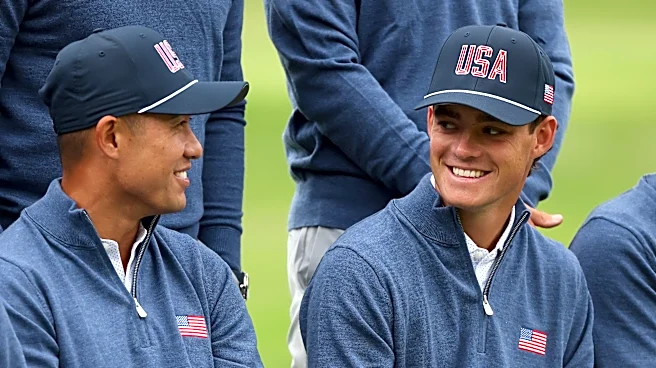
With the Cup being contested at Medinah Country Club outside Chicago this week, every player on the U.S. and International teams, along with captains and assistant captains, will receive a $250,000 stipend. This marks the third consecutive Presidents Cup in which competitors have been compensated, pushing total event-related payments above $25 million since the policy was introduced in 2022.
The PGA Tour, which operates the Presidents Cup, did not compensate participants during the event’s first 13 editions, dating back to
its inception in 1994. Instead, players, captains and assistants were previously allocated funds that were required to be distributed to charities of their choosing. From 2011 through 2019, that amount was $150,000 per participant.
The $250,000 stipend that players receive now can be used at their discretion, whether for charitable donations, foundation work, travel expenses or other priorities.
“As part of the Tour’s overall total compensation program, distributions for the Presidents Cup have been adjusted to reflect the changing landscape of charitable giving, allowing players and captains the flexibility to support their respective foundations or personal charitable priorities,” the PGA Tour said in a statement.
The shift represented a significant change for an event that historically highlighted its charitable impact. Previous media guides detailed where players directed their donations, from Tiger Woods’ foundation to causes supported by Ernie Els, Fred Couples, Mike Weir and others. Today, players are no longer required to disclose how they use the stipend.
The Tour maintains that the Presidents Cup’s charitable mission remains intact. Since 1994, the event has generated more than $56 million for charity, benefiting hundreds of organizations around the world. Since 2022, the Tour has also guaranteed at least $1 million in charitable contributions to the host community.
Many players have continued to direct much of their stipends toward charitable causes. Tony Finau used Presidents Cup money to support literacy and educational initiatives through the Tony Finau Foundation. Jason Day pledged his entire stipend to the Brighter Days Foundation, while Stewart Cink supported healthcare and ministry causes through his family foundation.
Still, the move reflects a broader evolution in professional golf’s financial landscape. Introduced during the rise of LIV Golf and increasing player leverage, the stipend model mirrors ongoing debates about compensation in team competitions.

The issue remains a sensitive one. Asked during the 2024 Presidents Cup whether players should be compensated for representing their teams, Xander Schauffele called it “a grenade” of a question, while Max Homa said he could understand both sides of the argument.
At its core, however, the Presidents Cup remains what it has always been: a competition between the United States and the best international players outside Europe.
Whether the stipend is viewed as player compensation, a charitable vehicle or some combination of the two, it highlights how the economics of elite golf have changed since the Presidents Cup debuted more than three decades ago. As 24 players tee it up at Medinah this week, the competition will still be played for pride and international bragging rights, but no longer strictly for charity alone.
Tim Schmitt is the managing editor of Golfweek and the golf coordinator for the USA Today Network. Golfweek's Adam Schupak contributed reporting to this story.
This article originally appeared on Golfweek: Presidents Cup players are getting paid to play. Here's how much