





For all the penalty strokes that have been dished out over the past two seasons, the LPGA has gotten – slower.
“The data told us we were heading in the wrong direction,” wrote LPGA player president Vicki Goetz-Ackerman in a memo sent to players and caddies on Tuesday.
While the median round times of threesomes was flat between 2025 and 2026 across nine different tournaments, twosomes were seven minutes slower this season (from 3:55 to 4:02). The total number of holes timed (over the course of 15 events) increased by 12 percent. And number of penalty strokes dished out also increased from seven to nine. Even those in contention were not spared.
This fall, the Pace of Play committee met to discuss what could be done. When the more aggressive 2027
Pace of Play Policy was unveiled on Tuesday night at an LPGA player meeting, many in the room clapped.
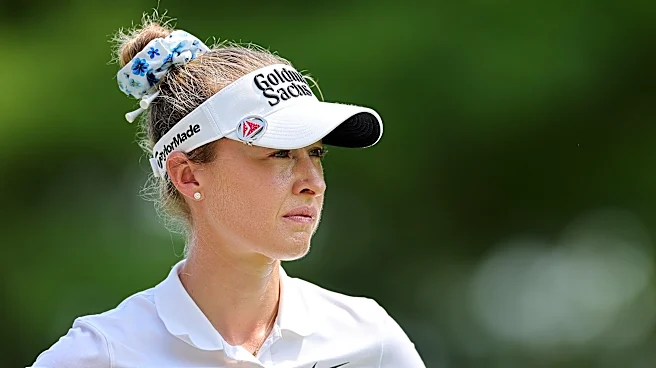
“I'm a big fan,” said speedy world No. 1 Nelly Korda, adding, “no one wants to be out here for five-plus hours. No player wants to. Nobody wants to watch it. I think we're just moving in the right direction.”
That direction includes a bigger hit to the wallet.

In 2026, players who were 1-5 seconds over time allotment received a $5,000 fine on the third occurrence. Now, there are no warnings. It’s a fine on the first offense. (First occurrence, $2,000; second occurrence, $4,000; third occurrence, $8,000).
This season, those who were 6-15 seconds over, received a 1-stroke penalty. Now, it’s the penalty stroke, plus a fine. Those who are 16+ seconds over in 2027 will receive a 2-stroke penalty and a fine.
Where the fines really increased, however, is in the repeat offender category. In 2026, those who were timed between 40-49 holes received a $5,000 fine, and it escalated from there.
In 2027, players who have been timed an aggregate of 35 holes over the course of a season will receive a $35,000 fine, and it goes up from there (36-40 +$1,000 per hole; 41-45, +$2,000 per hole, etc.).
In addition, the tour has shaved 10 seconds off the excessive shot time limit, going from 70 seconds to 60 seconds.
Players who are currently serving on the POP committee include Allisen Corpuz, Lindy Duncan, Sofia Garcia, Jennifer Kupcho and Riley Smyth.
“I think it’s great,” said veteran player Alison Lee. “I think it will make the LPGA a lot of money, and I think with how this is structured, it will actually force slow players to be more mindful about how much time they’re taking.”
While the pace was quicker in 2025 when the initial changes were put into effect, the fact that things either flatlined or got worse, means the subject will be talked about more going forward.
Pace of play has long been an issue on the LPGA, but it reached a pinnacle in 2024 at The Annika, when they missed the TV window by nearly an hour on Saturday. For two rounds, play spilled over into the next day without an interruption in play.
The tour cut the field for the Annika from 120 to 108 in 2025.
To help educate, the rules team will host Pace of Play seminars and one-on-one training sessions in 2027. It’s now mandatory that players who were timed on 25 holes or more in 2026 attend a pace-of-play meeting.
Goetz-Ackerman's letter stated that the policy's changes were designed to change behavior and culture, not to penalize or fine individuals.
“These revisions reflect our North Star,” Goetz-Ackerman wrote, “to create a better player experience, enhance our product and address the No. 1 complaint we hear from our fans, our pace of play.”
Beth Ann Nichols is a senior writer for Golfweek covering the LPGA and all things women's golf. Follow her on X/Twitter (@GolfweekNichols).
This article originally appeared on Golfweek: What's the cost of slow play? LPGA stiffens fines, penalties for 2027 season