






Golf has officially reached a new high-water mark.
And this time, Tiger Woods isn't the only reason. More Americans are playing golf than at any point in history. But the game's latest surge isn't just happening on the golf course. It's happening in garages, sports bars, indoor simulators and entertainment venues across the country.
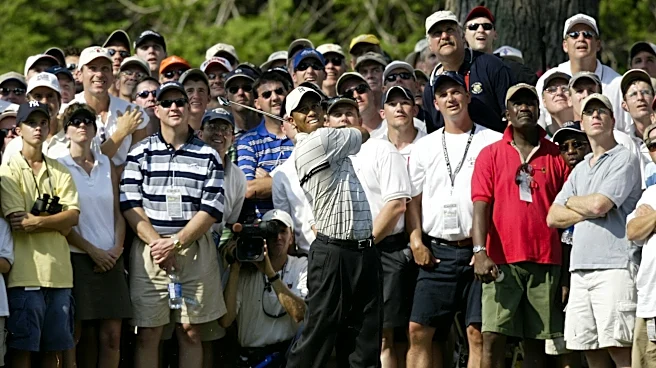
An estimated 30.8 million Americans played golf on a traditional golf course in 2026, according to research from the National Golf Foundation (NGF). That's an increase of 1.7 million players over the previous year and enough to surpass the sport's previous record of 30.6 million, established in 2003 during the height of the Tiger phenomenon.
Think about that for a moment.
More than two decades after Woods helped transform
golf into a mainstream sporting obsession, the game has reached another milestone. Only this time, it has done so under a very different set of circumstances.

The 1.7 million net increase represents the second-largest one-year gain in golf participation on record. Since 2019, before the pandemic fundamentally changed how Americans spent their leisure time, the number of on-course golfers has climbed by 6.5 million, a remarkable 27 percent increase.
Golf isn't simply recovering. It's expanding.
And the most interesting part of the story may be where people are playing. The golf landscape of 2026 looks considerably different from the one that existed in 2003.
Back then, the United States had more than 2,000 additional golf courses compared with today. The economy was strong, Tiger was dominating the sport, and social media hadn't yet become the all-consuming competitor for people's attention that it is now.
Golf had more places to play, but fewer ways to experience the game. Today, the sport is setting participation records despite having fewer traditional golf facilities and competing with an extraordinary range of entertainment options.
The game has also become more accessible in ways that would have been difficult to imagine during the original Tiger boom. You no longer need to reserve a tee time, find three playing partners or commit five hours to enjoy golf.
You can grab a bucket of balls at a driving range, rent a simulator bay with friends, visit a golf entertainment venue or work on your swing in your own garage. Golf has expanded beyond the fairways, and the numbers tell the story.
While traditional golf participation reached an all-time high, off-course golf established a record of its own.
An estimated 39.6 million Americans engaged with golf away from traditional courses in 2026, visiting driving ranges, indoor simulator facilities and golf entertainment venues.
This category has established a new participation record every year since the NGF began tracking it in 2014. Growth has moderated from the early years, largely because fewer large-scale golf entertainment venues have opened recently. But one segment continues to spread: golf simulators.

They're appearing in commercial entertainment facilities, country clubs, public golf courses, private homes and even garages. For some, they're a convenient way to practice. For others, they're an alternative to the traditional golf experience. And for an increasing number of people, they're simply a fun way to spend an evening with friends.
That audience barely existed during the 2003 participation peak. At the time, off-course golf largely meant hitting balls at a driving range. The NGF estimates that only 5 million to 6 million Americans participated exclusively in range-based golf. Today, the off-course universe is nearly eight times larger.
The definition of a golfer has also changed, and so has the business of golf. Perhaps the most revealing development is the growing number of people who participate in both versions of the game.
They're known as the "Dualies."
These are golfers who enjoy traditional green-grass golf but also participate in off-course golf activities. More than two-thirds of all on-course golfers now fall into this category. Their numbers have increased 42 percent since 2019 and 11 percent since 2024.
That's an important distinction because Dualies aren't simply casual visitors who occasionally pick up a club. They're among the most engaged participants in the sport. Compared with other golfers, they play more frequently and spend more money on the game. In other words, they're helping fuel both sides of the golf economy.
The traditional golf course remains the centerpiece of the sport, but the simulator, driving range and entertainment venue are increasingly becoming part of the same golf-centric lifestyle. And that's a significant shift for an industry that historically defined participation almost exclusively by rounds played on a golf course.
Add traditional and off-course participation together, and the numbers become even more impressive. A combined 49.5 million Americans participated in golf in 2026, another all-time high.
That's nearly 50 million people engaging with the game in one form or another. It's also a much broader audience than the one that existed during the Tiger Woods boom.

Some are dedicated players chasing lower handicaps. Others are occasional golfers who enjoy a weekend round. Some may never set foot on a traditional golf course, preferring the convenience and social atmosphere of a simulator or entertainment venue. But they're all part of the same expanding golf ecosystem.
For golf operators, equipment manufacturers, instructors, retailers and developers, that creates opportunities well beyond the traditional tee sheet. It also suggests that the future of the game may depend as much on attracting new participants to alternative golf experiences as it does on getting more people onto traditional courses.
The challenge will be converting that enthusiasm into long-term participation while keeping the game accessible, affordable and enjoyable.
There was a time when golf's growth seemed tied almost entirely to one extraordinary player. Tiger Woods inspired a generation, brought new attention to the sport and helped propel participation to record levels in 2003. Today, the game has reached an even higher peak without the same singular catalyst.
Instead, golf is benefiting from a combination of factors: increased interest in outdoor recreation, pandemic-era participation gains that have endured, technology, entertainment-driven venues and a broader definition of what it means to play the game.
The traditional round of golf isn't going anywhere. If anything, the record 30.8 million on-course participants demonstrate that its appeal remains remarkably strong.
But golf is no longer confined to 18 holes, a scorecard and a tee time. It's a driving range after work, a simulator on a rainy afternoon, a night out with friends or a weekend round with family. The game has found more ways to fit into people's lives, and millions of Americans have responded. Nearly 50 million participants later, golf has reached a new high-water mark.
The remarkable thing isn't just that the sport has broken its record. It's that there are now more ways than ever to be part of it.
Golf is booming again. And this time, the entire golf universe is along for the ride.
Adam Schupak is a senior writer for Golfweek, covering the PGA Tour.
This article originally appeared on Golfweek: More Americans are playing golf than ever before. Here's why