


The 2028 PGA Tour season can’t get here soon enough.
That’s my takeaway from seeing the new eligibility criteria for membership to the Championship and Challenger Series, the Tour’s new two-tiered competitive system, which was approved on Monday by the Tour’s two boards and officially introduced on Tuesday.
Actually, I’m stoked for 2027 because the jockeying for position to earn status on the top tier – the Championship Series – gets underway next season and the stakes have never been higher. Would you rather play every week for a minimum purse of $20 million against the best of the best or $4 million against the rest of the best?
The knee-jerk reaction has been to point out how LIV Golf forced the Tour’s hand to raise purses significantly, which
is true, but it’s difficult to imagine these sweeping changes to the Tour’s competitive model being implemented without the threat of a renegade tour with deep pockets coming along.
This is the fruit born of a civil war that has been tough but some might say necessary, and installed a new leader in Rolapp, who came into the sport from the outside and sensed there was a better way. The Future Competitions Committee was his first act as the Tour’s CEO.
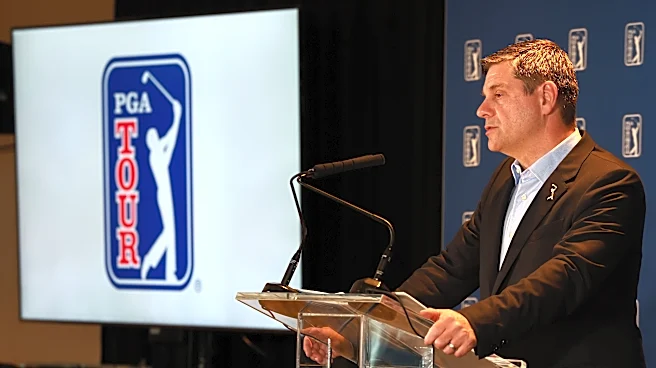
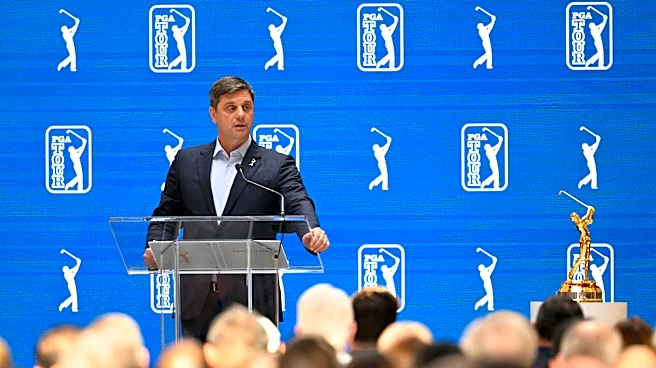
“From the beginning, we set out to preserve the meritocracy of our sport and build a competitive model that rewards excellence and ensures a clear path for top performers at each stage of their career. The board has approved an eligibility structure that will do just that,” he said on Tuesday morning in his opening remarks of a virtual press conference.

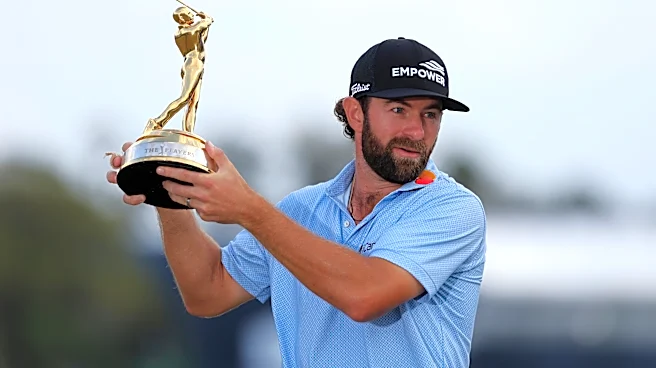
The Tour should be better off with a points system that is easier to understand – that was a low bar to cover – and rewards wins, top finishes and restores the importance of making the cut. Delving into the details was labor intensive because each change has consequences. Rolapp noted that the players devoted time and energy into the process. Patrick Cantlay, a player director on the board, confirmed last month that he had abstained from the previous board vote in June that approved the two-tiered system because he wanted to see how the details were resolved. That is understandable. When Rolapp was asked if anyone opposed or abstained from the vote on Monday, he said he didn’t believe it was appropriate to share those meeting details.
“But we clearly had the support we needed,” he said.
Rolapp conceded that getting to this point was never a straight line. There were “fits and starts” and “tension in the process,” but added, “I'm convinced any good process is going to have tension."
“Sometimes the golf aspect of it leaned up against the commercial aspect of it or the practicality of how you get all this done. So it was a very honest dialogue," he added. "I don't think it's perfect. But I think it's a huge improvement, and I think we'll continue to innovate as the years go on because we'll be smarter after the '28 season and smarter after the '29 and we'll continue to try to get better.”
The Tour needs stability after spending the last five-plus years, some might say more, being reactive. Rolapp has come in and been proactive in seeing a problem and fixing it, but he’s also willing to admit it likely will need some fine-tuning. Walker Cup teen stars Miles Russell and Tyler Watts may have a slower path to the Championship Series after the PGA Tour U Accelerated grads were given Challenger Series status rather than Championship Series status extended to the player who stays four years in college and is No. 1 in PGA Tour U.
And there’s still some backroom negotiating to do with the DP World Tour to iron out where the European circuit fits into the ecosystem and Korn Ferry Tour criteria to be approved in November but the heavy-lifting is done and it appears to have been well vetted. Now, it is time to secure the final four Championship Series events – Rolapp confirmed final bids are due by the end of the month – and start nailing down the Challenger Series events for the second tier.
“For our players, there is now a clear understanding of the pathways available to them, both as we transition to the new competitive structure and for the future,” Rolapp said. “This provides a clear understanding of what is at stake each week and how players can earn their way into the highest level of competition.”
Is it perfect? No, Rolapp reiterated, but these changes in eligibility were long overdue and have made the Tour stronger going forward and given fans more opportunities to see the best duke it out with both promotion and relegation built into the equation. It doesn't feel half-baked like the elevated or signature events that were crafted to keep players from jumping to LIV.
This time, there are real consequences for bad play and fewer safety nets. All it took was an existential threat from LIV and a lawsuit to deplete the Tour’s reserves but the result is the Tour’s competitive model may be better for it.
This article originally appeared on Golfweek: PGA Tour's competitive model overhaul is the best thing to come from LIV | Opinion