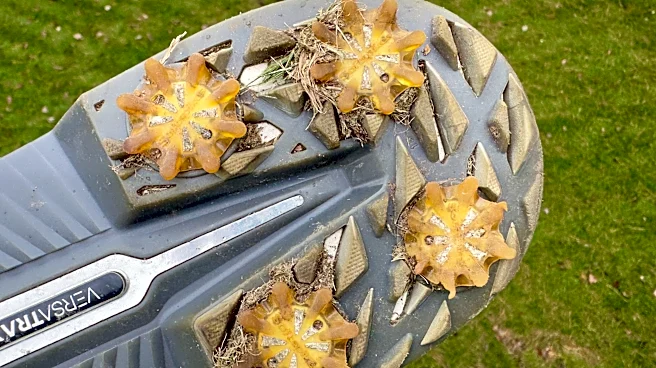








A November round in the Northeast or Midwest can ask a lot of your golf shoes. The fairways are soft, there’s mud and wet leaves in the rough, and the slope you barely noticed in July now feels a lot steeper. If your shoes are slipping, turning them over can reveal the problem — a season’s worth of wear on the spikes.
Thankfully, this is a problem you can solve yourself, and it’s not expensive.

While spikeless shoes have grown in popularity over the last several years, they have a massive shortcoming that has no solution. the little knobs and ridges that provide grip are part of the outsole, and when they wear down with use, they can’t be replaced. When you reach the point where they no longer provide enough traction to keep you grounded when you swing
and stable when you walk on hills and wet grass, you can’t play in them anymore.
On the other hand, shoes with replaceable spikes, as long as the rest of the shoe is in good shape, allow you to swap out the worn cleats and get the traction back. That means, if you take care of them, you can enjoy well-made spiked golf shoes season after season after season.
But how often should you change your spikes?
Manufacturers of cleats will tell you to change the spikes in your shoes every 15 to 20 rounds, which means a once-a-week golfer should probably swap spikes twice a year.
That said, cleats can wear unevenly, so look at the heel and forefoot on each shoe and check to see if specific areas are getting worn flat or have broken or missing pieces. If you find a few, replace those cleats before your next round. If most of them look tired, change the whole set.
However, make sure you buy the proper spikes for your shoes, because just as you can’t put a round peg in a square hole, shoes require different types of spikes. For example, most Adidas shoes use PINS System spikes, while FootJoy and Nike shoes use Fast Twist 3.0 spikes.
Look up your exact shoe model in the manufacturer’s replacement guide to be sure.

Once that’s worked out, remove the old cleats in your shoes by pressing down on the spike and turning it counterclockwise. If it’s too slippery, use a wrench or try a cleat-removal tool, which you can buy in most pro shops.
Once the old cleat is out, brush the mud and grit out of the socket with a brush or an old toothbrush.
Put the new spike in the socket and turn it clockwise, by hand, until it snaps and locks in place. Some cleat systems require more than one click, so read the instructions on the box.
If a cleat goes in crooked or won’t lock in, back it out and check for grit in the shoe.
Give each new spike a quick wiggle and twist when you’re done to be sure everything is secured.
That’s it, you’re done.
Spikeless shoes are great when conditions are dry or when you need the lightest shoe possible, but for durability and long-term value, golf shoes with replaceable spikes are still tough to beat.
David Dusek is a senior Golfweek writer covering golf equipment and technology.
This article originally appeared on Golfweek: How often should you replace golf shoe spikes? Here’s what experts recommend