








Most of the time, when the U.S. Golf Association makes news, it involves the U.S. Open, the U.S. Women’s Open or something related to the distance debate or the proposed golf ball rollback. But the organization’s work goes deeper than championship trophies and debates about how far a driver should hit the ball. The USGA supports things like turfgrass research, helps courses manage resources and actively preserves the game’s history.
Many recreational golfers, however, interact with the USGA most often through its Golf Handicap and Information Network. You know it as GHIN. It’s the system where you post the 82 you were happy with, the 94 you would rather forget and check whether your buddy really deserves three shots in your weekend match.
Today,
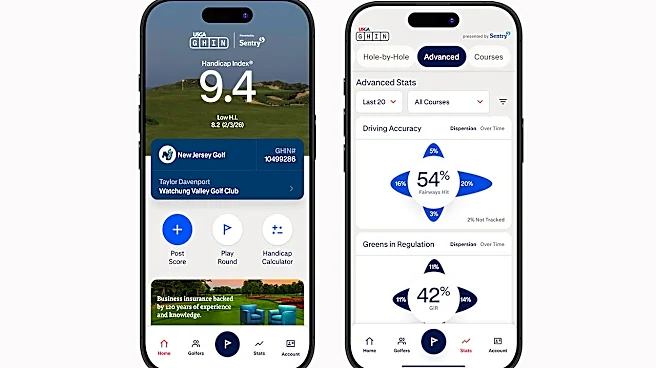
with the release of a redesigned GHIN app being announced today, the USGA wants GHIN to become a bigger part of those everyday golf experiences.

That principle guided a redesign informed by golfer interviews, research and a summer beta involving about 1,000 frequent users. The team preserved familiar features while simplifying navigation, round setup and score posting.
The larger goal is to give golfers reasons to use GHIN before, during and after playing.
“We really want to move to that true kind of everyday playing companion,” said Tom Padula, the USGA’s managing director of GHIN.
Behind only the able to easily post scores, the USGA’s research revealed that biggest golfer-driven priority for the app was better statistics and insights. A new Stats section turns existing scoring information into clearer views of Handicap Index progress, hole-by-hole performance, putting results and course-specific scoring patterns.

“People love to look at their own data and talk about their own golf games,” Padula said.
Knowing you shot 87 is one thing. Seeing that 72 percent of your drives miss the fairway to the right or that 54 percent of your approach shots come up short gives you something to work on, and entering hole-by-hole scores and shot information as you play using the GHIN app makes information like that possible.
That information also helps the people administering the game. Padula said the USGA, regional golf associations and clubs use scoring data to evaluate course ratings, review how handicap strokes are allocated among holes and monitor how the World Handicap System is working.
So, if there is a silver lining to your double bogey on the fifth hole, take heart in knowing that your score will help administrators assess whether the system reflects how golfers actually play.

The redesigned GHIN Apple Watch experience gives all users distances to the middle of greens, while players with a watch that has enhanced GPS receive front, middle and back yardages, plus distances to hazards and layup areas.
A forthcoming offseason feature, targeted for late October, will let golfers save scores and statistics outside their area’s active posting season. For golfers in the Northeast and Midwest, those rounds will not affect their Handicap Index, but the course performance data will be added and counted in their stats.
Another development is Rules AI, currently being tested with about 700,000 golfers. Users can ask rules questions inside GHIN, with broader availability targeted for April 2027.
GHIN is available for iOS and Android. New users can download GHIN and sign up for a Handicap Index through a golf association membership. A 30-day trial lets golfers without an Index explore progress tracking.
David Dusek is a Golfweek senior writer covering golf equipment and technology.
This article originally appeared on Golfweek: USGA updates GHIN app to help golfers understand their games