
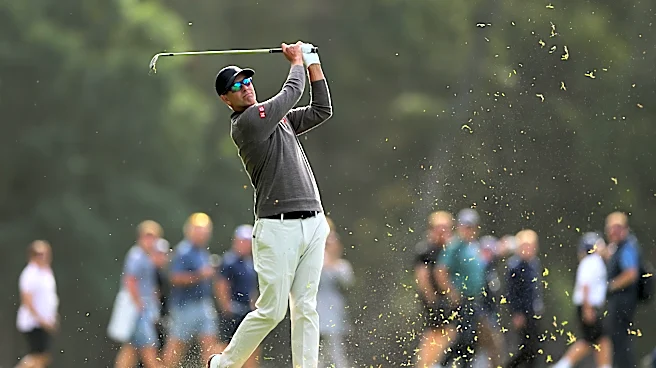
As a schoolboy, growing up in Melbourne, Australia, Geoff Ogilvy doodled golf holes in the margins of his notebooks. He wasn't planning a career in golf-course architecture. He simply liked golf, and when he drew, he drew golf holes.
As captain of the International Team at the 16th playing of the Presidents Cup, Ogilvy, 49, is trying to draw up a plan for his team to do something never done before: win the Cup on U.S. soil. It’s an unenviable task, but he’s got at least one thing going for him — he gets to do it on a stage that he helped reimagine.

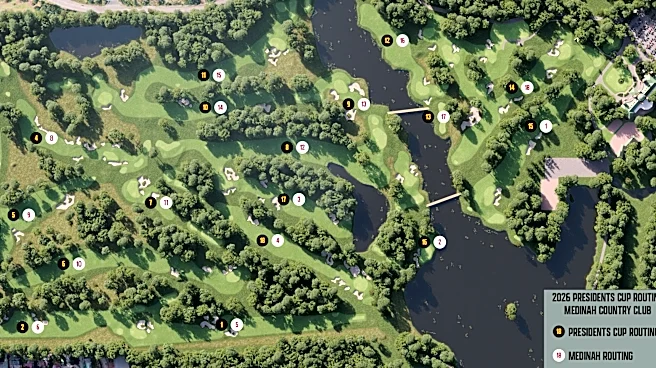
During COVID, Ogilvy and his design team — Ogilvy, Cocking and Mead (OCM) — were invited to imagine what Medinah No. 3, a course with championship pedigree and located 25 miles west of Chicago, could
be if nothing were considered sacred. During lockdown in Australia, they developed a new routing without even walking the property. This week, he will walk a course he helped reinvent, surrounded by players who will see it differently than he did. He will have to prepare them for the questions he'd helped put into the ground. And that could be the International Team’s secret weapon.
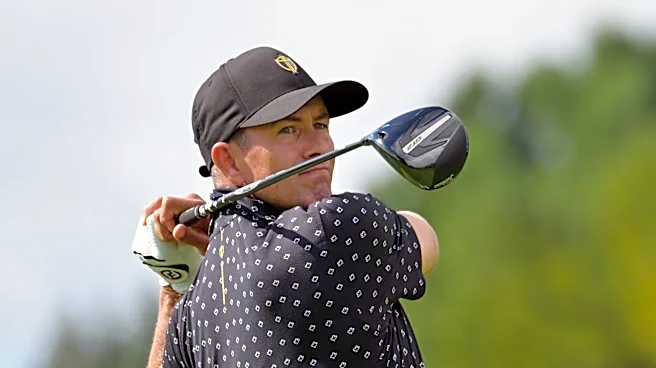
Long before his name became attached to some of the world’s most famous golf courses, Ogilvy became a champion golfer, the winner of eight titles on the PGA Tour. He won the 2006 U.S. Open at Winged Foot without shooting a single round under par — the last player to accomplish the feat — as future Hall of Famers Jim Furyk, Padraig Harrington, Colin Montgomerie and finally Phil Mickelson took turns falling to pieces. During his playing career, Ogilvy developed another reputation as one of golf’s deep thinkers. He could explain strategy, architecture and the subtleties of a golf hole with the same precision he brought to his short game. His fellow Aussie Adam Scott noticed.
“I just heard him bitch about every course we played and why a bunker was in the wrong place,” Scott recalled. “I heard it for years playing practice rounds with him everywhere we went.”
So, it was no surprise that in 2010, Ogilvy joined a pair of Australians in forming the course design firm OCM. It was an unusual partnership. Ashley Mead had an engineering background. Mike Cocking brought an artistic eye.
Ogilvy brought the perspective of someone who had spent years competing at the highest level of professional golf. Three different ways of seeing the same piece of land. And that became their superpower and a differentiator.
Ogilvy brought something difficult to teach – a keen eye for shot values. He understood what a hole looked like from the tee, where a player felt comfortable, where he felt threatened, and where a decision became unavoidable. He knew that a golf course did not need to be difficult simply for the sake of being difficult, something he learned from his globetrotting, playing at the great cathedrals of the game, including in St. Andrews, Scotland.
"Hard isn't necessarily good and easy isn't necessarily bad," he said. "The Old Course, in a lot of ways, you could argue it's the best and most important course in the world, and who cares what they shoot?"

Part of his design philosophy for making courses tough for the pros but playable for members was shaped during a visit to Pinehurst Resort in North Carolina. Ogilvy remembers being seated in the Carolina Hotel having a beer with a friend when they struck up a conversation with a couple of snowbirds from the northeast who wintered there. Ogilvy asked them to name their favorite course in the Sand Hills. They simultaneously answered Pinehurst No. 2. Ogilvy was stunned by the response. “I find that to be one of the hardest courses in the world,” Ogilvy said.
The couple called the Donald Ross masterpiece, which had been restored in 2010-11 and hosted U.S. Opens in 2014 and 2024, the easiest course around because they could pull putter and run the ball on the ground to the saucer-cup greens. Elsewhere, they were stymied by thick rough and deep bunkers that required a lob wedge.
“That was a bit of a light bulb moment,” Ogilvy said.
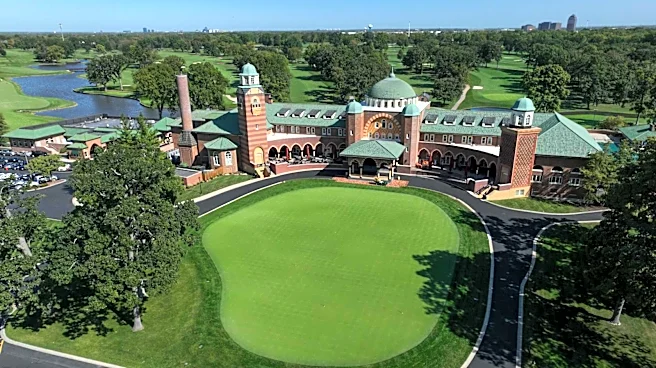
Medinah Country Club was originally built by Tom Bendelow and opened in 1928. Roger Packard (1986) and Rees Jones (2006, 2009) had tweaked it in previous years, and it already had a mythology. Millions of television viewers had seen the property during some of golf's biggest moments. This week, Medinah No. 3 will become the only club in the country to have hosted a U.S. Open, a PGA Championship, a Ryder Cup and a Presidents Cup. Tiger Woods won here twice and who can forget the 2012 Ryder Cup, A.K.A. The Miracle at Medinah?
But the course had developed a problem. In the 2019 BMW Championship, Justin Thomas shot 25 under par. The professionals had figured out ways around the defenses. At the same time, the average golfer found the course known for narrow fairways and acres of juicy rough, punishing. It had become caught between two worlds: too difficult for many members and not difficult enough for the world's best players.
Medinah wanted more than cosmetic changes; it wanted a transformation. OCM gave its proposal over Zoom with Cocking and Mead having never stepped foot on property. Ogilvy had one advantage: he had played Medinah. He had competed there in the 2006 PGA Championship in a grouping with Tiger Woods and Phil Mickelson – the most memorable one of his career – and knew the course from the inside.
OCM won the assignment despite almost never getting a chance to make its pitch. The architect who presented before them had seemingly won the room over. Minds were made up. What was the point of doing another interview? Good thing Medinah’s superintendent convinced them to take the meeting because OCM’s proposal wowed them even more.
With nothing off limits, the team decided to blow up the final six holes. OCM rerouted them to bring Lake Kadijah dramatically into the strategy and visual experience. It was bold. It was risky. Ogilvy knew what was at stake for OCM.
“It was a humbling job to get,” he said, “but also quite scary for one of America's most famous golf courses to sort of throw us the keys and say, ' Make this as good as you can.' ”
Medinah reopened in 2024. The members love it. One of those board members who supported the aforementioned other architect even texted Cocking to tell him he had been dead wrong.
But the other part of the test is still coming this week with the pros.
“I can’t wait to play Medinah,” Scott said at the Tour Championship a few weeks ago. “People are telling me there are Royal Melbourne vibes at Medinah. I can’t imagine it.” After playing it three times, he didn't hesitate to voice his approval of OCM's work. "I feel very comfortable out there at this course. I feel like I understand what it’s asking of you," he said, adding. “It would be a special week for us to play well and put that feather in his cap that he designed the golf course and won the Cup here.”
Ogilvy is a familiar face for the International side, three times as a player and three more as a vice captain. Now he is going to lead an international team around a golf course he helped reinvent. Could that make a difference in the International Team ending its slide? It hasn’t won the Presidents Cup since 1998, a span of 10 defeats and one tie.
For years, Ogilvy thought he was simply a golfer who loved golf courses. He eventually realized he was something else. He was a golfer who wanted to build them. And now, he and his design partners are no longer wondering whether they might someday get to work on the world's great courses. They are. And that boy who doodled golf holes in the margins of his school assignments? He is finally getting to draw them for real.

Others have taken notice of his work. Among them is two-time Masters champion Ben Crenshaw, who, alongside longtime design partner Bill Coore, has become one of the most respected figures in modern golf course architecture. Crenshaw believes Ogilvy's future in the field is exceptionally bright, and he also recognizes many of the influences that have helped shape his approach.
"On top of being a wonderful player, Geoff is very pensive. He's a deep thinker," Crenshaw said. "He's got two good guys working for him and I think that he's getting his feet wet in the right directions. He's very good. And he’s great to talk to. Of course, where he comes from, he has seen some of the world's best golf courses.
"I'm a huge lover of the Australian courses. I mean, they are some of the best. Royal Melbourne and Kingston Heath are way up there in my book."
Adam Schupak is a senior writer for Golfweek, covering the PGA Tour. Golfweek editor Tim Schmitt contributed to this post.
This article originally appeared on Golfweek: Can Geoff Ogilvy use his course design skills to win Presidents Cup?