




The road home was familiar. The Indiana night was quiet, and most people would have been thinking about crawling into bed.
But Adam Schenk had something else on his mind.
Driving north on Highway 41 from Indianapolis International Airport, Schenk was about 15 minutes from his home in Vincennes when an idea about his golf swing took hold. Rather than heading straight home, he kept driving toward his golf barn.
It was late. He was tired. But his mind was racing, and he knew there was only one way to quiet it.
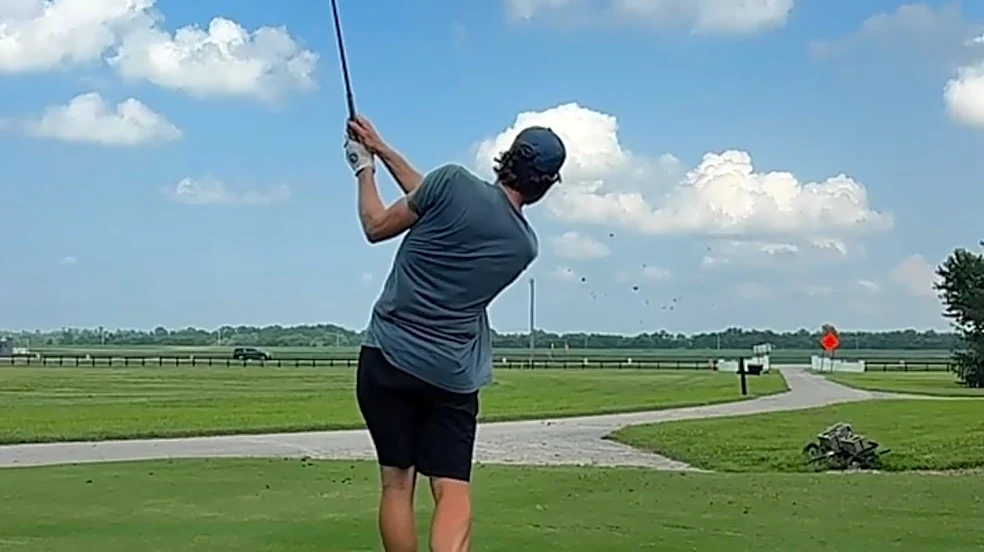
Schenk pulled his car inside the 5,000-square-foot facility, opened the door to its lone hitting bay and started firing balls into the night. For the next 20 or 30 minutes, he tested the idea, chasing a feeling and trying to determine whether
the latest piece of the puzzle might finally fit.
"If I don't stop there and try to go to sleep, I'm going to be thinking about it for probably a couple hours," he reasoned.

That impulse has driven Schenk for as long as he can remember.
He fell in love with golf on his family's farm in southern Indiana. The Schenks operated 1,500 acres of farmland, growing corn, soybeans, wheat and grass. Their family business, Schenk Sod, traces its roots to 1925 and shifted its focus to turfgrass in 1988. They cultivated "the finest sod in Indiana," the company web site claims: Zoysia, fescue and bluegrass in the rich sandy loam soil.
For Schenk, the farm provided something few aspiring golfers ever have: endless space.
Out in front of the family property sat an eight-acre field of Zoysia grass that served as his personal driving range. It was a place where he could hit balls for hours, experiment without consequence and dream as big as he wanted.
"It's a little slice of heaven," Schenk said.
The description says as much about Schenk as it does the farm. Golf has never been solely about competition or earning a living. For him, it has always been both a challenge and a refuge, a place where he could disappear for hours in pursuit of improvement.
"Just being able to get away from everything, like taking the four-wheeler and going back where you'd almost get lost and have to take 10 extra minutes to find your way back to where you came from," he said.

The farm taught patience. It gave him room to experiment and showed him that progress often comes from working through a problem alone until something finally clicks. Those lessons followed him from southern Indiana to Purdue University and eventually to the PGA Tour.
"I called myself a 75th-percentile Big Ten golfer. I was pretty good, but not something that screams playing 10+ years in a row now on the PGA Tour somehow," Schenk said. "I always tell my coach (Rob Bradley, current men's golf coach at the University of South Carolina) if he wouldn't have showed up (at Purdue), I would be sod farming right now, which wouldn't be the worst thing in the world."
Professional golf rarely delivers instant gratification. For every breakthrough, there are missed cuts, disappointing rounds and long stretches when the answers seem out of reach. Schenk knows that reality as well as anyone. On cold winter days, he'd hit balls for 10 minutes, retreat to his car to blast the heater, then head back outside and do it again. Other nights, he'd stand in the barn pounding shots into the darkness. He didn't need to see the ball flight to know a swing thought wasn't working.
"I guess I'll try again tomorrow," he remembered telling himself. Then he'd shut the door, go home and return the next day ready to start over.

Schenk and his wife, Kourtney, moved to northeast Florida early in his career so he could practice year-round. After starting a family, however, they returned to Indiana to be closer to relatives. Today, much of the family remains on the farm. Schenk's grandmother lives there, as do his parents. His uncle is nearby, and his sister and her family built a home on the property about a year ago.
About eight years ago, Schenk decided to transform one of the barns on the acreage his father gifted to him into what he called "his little playground."
Roughly 60 percent of the project is complete. The finished portion is heated and cooled, with a hitting bay that opens to allow shots to fly as far as 350 yards. There's also a gym, which Schenk admits he's only used a handful of times, and an office where, he joked, he pretends to do work.
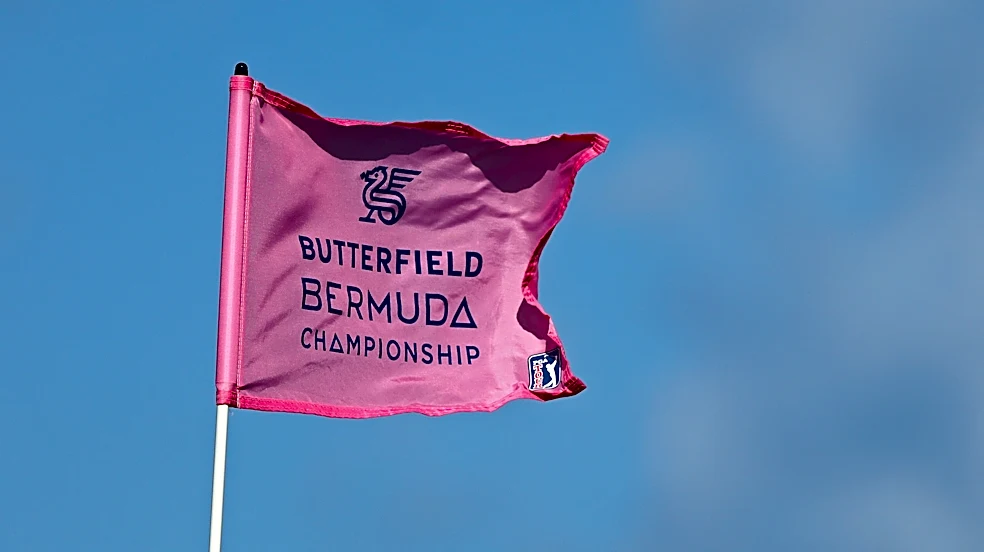
By the time he arrived at the 2025 Butterfield Bermuda Championship at Port Royal Golf Club in Southampton, Schenk had made 242 PGA Tour starts without a victory.
The breakthrough came in No. 243.

At age 33, Schenk claimed his first PGA Tour title, prevailing in difficult weather conditions while using an unconventional one-handed putting grip. He played the front nine in 9 under for the week without making a bogey, turning an extraordinary stretch of golf into the defining accomplishment of his career.
The victory was the culmination of years of work. It was also a reminder that success rarely arrives on schedule. Sometimes it takes 243 starts. Sometimes it takes one more swing adjustment, one more range session or one more late-night stop at the golf barn.
Even after his breakthrough, the search hasn't ended. Schenk planned to complete the remaining portion of the Golf Barn with part of the winner's check worth $1.08 million. A year later, the project remains unfinished.
So does the work.
After a frustrating season in which he entered the week ranked 163rd in the FedEx Cup Fall standings, with one top-25 finish and 16 missed cuts in 24 starts, Schenk is still searching for answers.
"If I ever play good again, which I think I will, I'm going to put a little chipping and putting studio in," he said.
The comment was part joke and part promise.
For Schenk, the road to success has always led back to the same place: a patch of grass, a bucket of balls and the quiet satisfaction of chasing something he can't quite leave alone. His first PGA Tour victory may have come on a windswept course in Bermuda, but its roots stretch back to a farm in southern Indiana, where a young golfer learned that persistence often matters more than certainty.
A little slice of heaven, indeed.
Adam Schupak is a Golfweek senior writer covering the PGA Tour.
This article originally appeared on Golfweek: Digging it out of the sod: The farm-built persistence behind Adam Schenk's PGA Tour journey