




The cracks in LIV Golf's foundation became impossible to ignore when CEO Scott O'Neil acknowledged the league's Saudi funding was guaranteed only through the 2026 season.
Weeks later, Saudi Arabia's Public Investment Fund confirmed it would no longer bankroll the breakaway circuit beyond that point. The decision set in motion the collapse of a golf league that spent nearly $6 billion in four-and-a-half years but never developed a sustainable business model capable of surviving without its sole financial backer.
LIV Golf failed because it never solved the basic question that faces every sports league: how to generate enough revenue to support itself. While the circuit found pockets of success in Australia and South Africa, it never attracted a substantial
American television audience, major sponsorship portfolio or consistent commercial revenue stream. As long as the PIF funded the losses, that wasn't a problem. Once that support disappeared, LIV's business model collapsed with it.
The funding concerns eventually manifested themselves in LIV's product on the course.
Koepka, Reed started the LIV Golf exodus

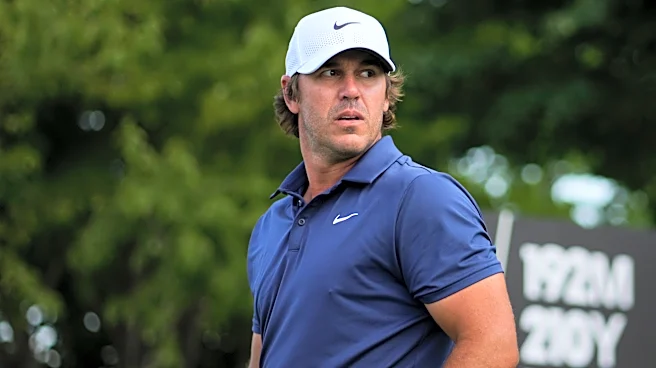
Perhaps the first crack came when Brooks Koepka and Patrick Reed decided to leave LIV before this season. Koepka, one of two players to win a major while playing for LIV, announced his intentions to return to the PGA Tour, taking advantage of a special offer from PGA Tour CEO Brian Rolapp that applied to only four players. Reed, who took a different path on the DP World Tour, was also a big loss for the league.
There were no major signings this offseason, and LIV's roster was weaker than the previous year for the first time in its history.
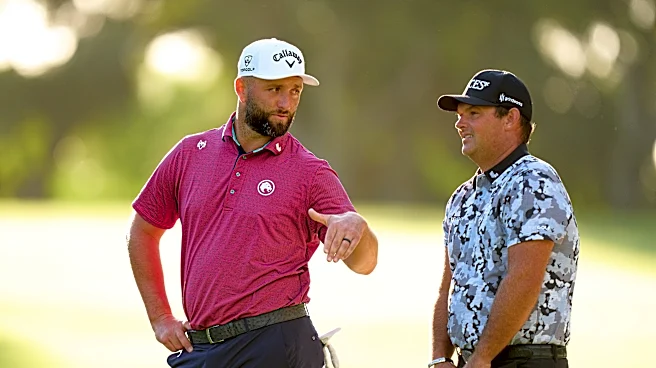
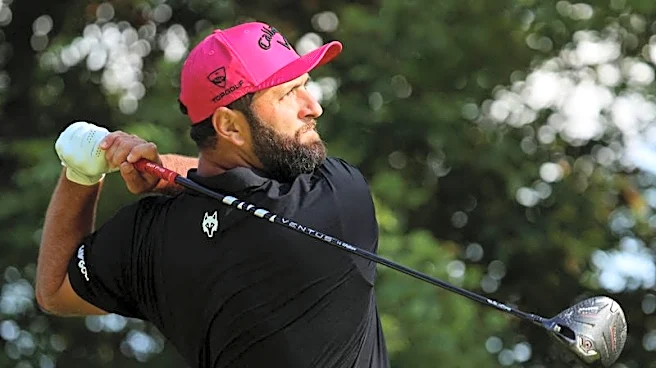
Meanwhile, the league still lacked the sponsorship and media revenue needed to offset those costs. Yet the massive guaranteed player contracts, like those of Jon Rahm and Bryson DeChambeau, among others, needed to be paid. The $30 million purses added up.
O'Neil took over for Greg Norman, a boisterous first CEO who wasn't afraid to boast about LIV to anyone who would listen. O'Neil, from a business background, immediately went to work and tried to court major brands into sponsorship opportunities. He did negotiate a TV deal with FOX in the U.S., though its viewership numbers lagged behind even amateur and college events. The television agreement provided exposure but little evidence that LIV was becoming financially self-sustaining.
O'Neil said LIV was in 'best shape' in April

Bankruptcy court filings later revealed O'Neil received more than $13.6 million in payroll, bonuses, benefits, retention payments and expense reimbursements from Sept. 12, 2025, through Aug. 28, 2026, according to recent bankruptcy court documents.
After the Masters, O'Neil admitted he was going to "work like crazy" to keep LIV going. In an interview that aired during the LIV Mexico tournament, O'Neil declared, “LIV Golf is in the best shape it’s ever been in its history, period, end of sentence,” while at the same time stating that future funding was to be determined.
A week later, the tournament in Louisiana was postponed, with O'Neil saying it didn't have to do with lack of funding. Two days later, PIF turned off the money faucet, and the league began swirling around the drain. Primary LIV backer Yasir Al-Rumayyan shared a new five-year strategic plan that reprioritized the kingdom’s domestic spending and reduced its international investments. One of those investments was LIV.
LIV Golf's restructuring came with questions

O'Neil helped the league restructure, as the push for an alternative source of funding began. The league hired an investment bank to help secure financing. But the questions to players about their future also began. One player, Thomas Pieters, even said he was ready to retire if the league ceased operations, which didn't happen until the end of the year.
A tech company sued LIV due to more than $1 million in unpaid invoices and lost revenue. Around the same time, the league officially canceled its season-ending Team Championship, but there was also news that O'Neil has secured an investor for LIV 2.0, as it was coined.
That partner turned out to be BC Partners, the private-capital firm that promised LIV $300 million for the 2027 season if it could garner enough player commitments.
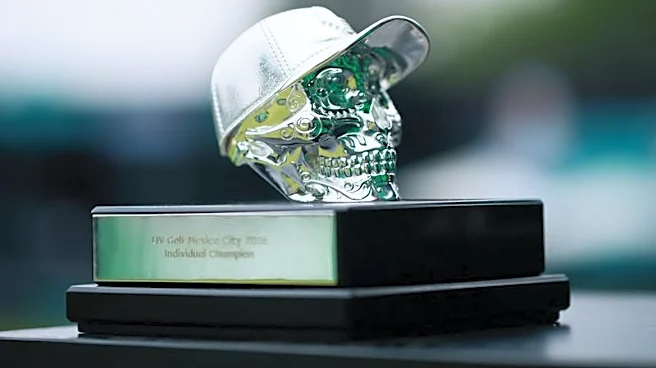
Prize money for the season-ending individual championship in Indianapolis was cut in half, and shortly after the season ended, LIV laid off a majority of its workforce and scaled back operations as it prepared to file for bankruptcy.
That filing came in early September, but O'Neil and those with knowledge of LIV's business plan remained adamant the league was progressing toward its next iteration, which would have featured smaller purses, fields and a 10-event schedule.
BC Partners repeatedly extended its deadline for player commitments as LIV fought to keep the project alive. Only four players publicly committed to LIV 2.0, but reports state at least 30 players, with a group of 10 more, were interested in LIV 2.0 but did not have their demands met in terms of contracts and compensation, the ultimate death knell.
Once Rahm left LIV Golf, others followed

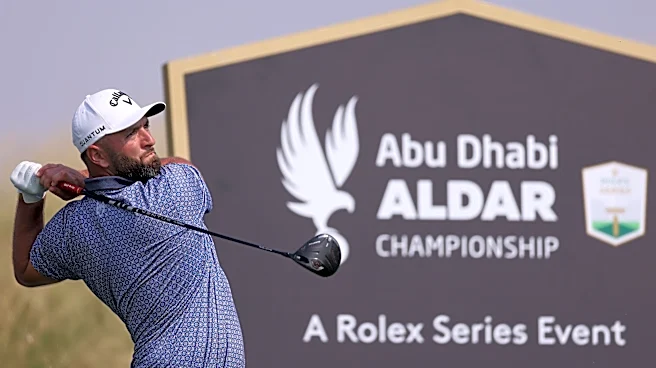
Rahm eventually announced he was leaving, and reports of additional departures followed as confidence in LIV's future evaporated.
The Oct. 30 deadline came and passed, and there was no news until Wednesday, when reports surfaced that LIV was officially shutting down and would liquidate the remainder of its assets. That was confirmed Thursday in court.
Even in its obituary, O'Neil kept the same tone that LIV Golf transformed the game, continuing to pound his chest even as the ship became fully submerged. That was not uncommon for Norman, O'Neil and even the players during the duration of the league, but there was not much substance to any of the chest beating throughout LIV's lifespan.
LIV Golf succeeded in changing professional golf. PGA Tour purses increased. Team golf concepts gained traction. The economics of elite golf shifted forever.
But LIV never succeeded in building a business that could stand on its own. The league was born from unprecedented financial backing, yet it died for the same reason many sports startups fail. It spent far more money than it could ever reasonably expect to make.
Nearly $6 billion later, LIV Golf learned the lesson every sports league eventually faces: attention can be bought, but sustainability cannot.
Cameron Jourdan is an assistant editor of Golfweek, covering college and amateur golf, the PGA Tour and plenty more. Follow Cameron on X/Twitter (@Cam_Jourdan) or Instagram (@GolfweekJourdan).
This article originally appeared on Golfweek: Why did LIV Golf fail? Inside the nearly $6 billion experiment gone wrong