


ST. SIMONS ISLAND, Ga. – For years, longtime Sea Island instructor Jack Lumpkin carried around a list of places where he believed the Seaside Course could be lengthened.
“Whenever anybody would listen, he'd take us out there and show us, ‘You should back this tee up,’” Davis Love III recalled.
Lumpkin passed away several years ago, but his vision has finally become reality.
Ahead of this week's RSM Classic, Sea Island unveiled a multi-million-dollar restoration of its famed Seaside Course led by Love Golf Design, headed by Love, his brother, Mark, and lead architect Scott Sherman, in collaboration with MacCurrach Golf Construction.
The project was designed to honor the course's architectural heritage while enhancing playability for resort guests
and adding subtle challenge for tournament competitors.
Originally designed by Harry Colt and Charles Alison in 1929, the Seaside Course underwent a major renovation in 1999 when Tom Fazio combined nine holes from the original Alison layout and nine from a Joe Lee-designed course to create an entirely new 18-hole design.
The latest restoration included a complete turf replacement, infrastructure upgrades, dune restoration and a series of strategic refinements throughout the property.
“We used historic pictures and Google Earth as a guide to restore Tom Fazio's original vision,” Love said.
Among the changes are new back tees on Nos. 5, 6, 7, 9, 11, 13, 15 and 16, adding roughly 150 yards to the par-70 layout, which now stretches to 7,157 yards. Many of those additions trace directly to suggestions Lumpkin championed for years.
The project also included installation of a new irrigation system. The greens remain TifEagle Bermudagrass, while the collars, approaches, tees, fairways and rough were converted to Platinum Paspalum, a grass variety prized for its salt tolerance in coastal environments.
Some of the most significant architectural changes came on the back nine.
At the par-4 10th hole, the green was moved approximately 20 yards farther from the tee and lowered about two feet, with its original contours preserved through digital scanning technology.
The par-4 15th also received a substantial makeover. A new back tee lengthened the hole, while the green was shifted closer to the water and lowered slightly. The left greenside bunker was eliminated, creating a wider approach area between the water hazard and the lone bunker on the right.
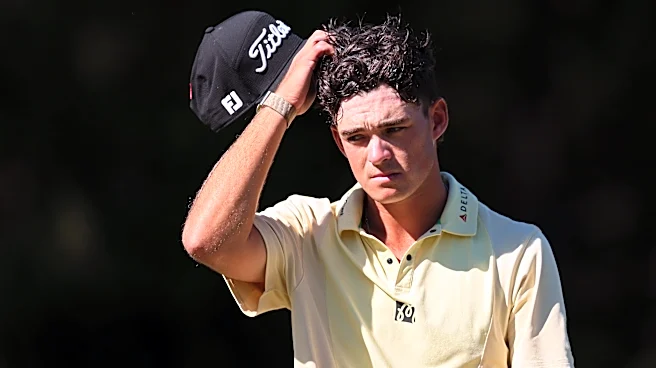
“I think the second shot on 15 is way more exciting and consequential than it was before,” said Maverick McNealy, whose lone career win on the PGA Tour thus far came at the 2024 RSM Classic.

I think there's going to be a lot more variance in score because of the water bringing in on the left," said veteran Tour pro Keith Mitchell, a local resident. "I think you'll still see some eagles and birdies, but I think you'll start to see some higher scores as well."
Despite the extensive scope of the project, the objective was not to dramatically alter one of the PGA Tour's most recognizable venues.
“I think every golf course that Davis touches is fantastic. The stuff he did at Plantation is amazing. The changes he made at Sawgrass, at Harbour Town are fantastic,” McNealy said. “We were saying in the locker room if you hadn't played here in six years, you might not know there's much of a difference.”
That sentiment may be the ultimate measure of success for the restoration: a course that looks much the same to players and fans, but one that now more closely reflects both Fazio's original intent and Lumpkin's long-held vision.
Adam Schupak is a senior writer for Golfweek, covering the PGA Tour.
This article originally appeared on Golfweek: How a restoration added challenge to Sea Island without changing its soul