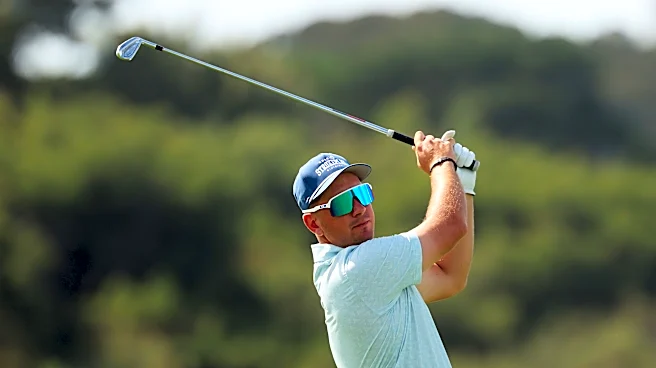





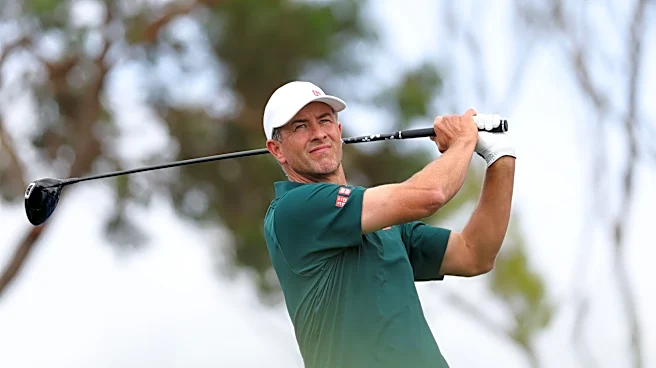

Lucas Herbert is still playing golf — this week at the BMW Australia PGA Championship — so he isn't worried about what's happening with LIV Golf's legal proceedings, but he also isn’t counting on seeing all the money the league still owes him.
“You’re probably foolish to think you’re going to get much of it,” he told Fox Sports Australia on Friday.
“Anything from this point is going to be a bonus,” Herbert continued. “It’s a long drawn out process with mostly lawyers winning out of the whole battle. I’ve accepted that and moved on. The reality is I made a lot of money at the same time as I’m owed a lot.”
Herbert didn’t say exactly how much he is owed, but his comments provide another glimpse at the fallout from LIV’s demise after a turbulent final
year that included the loss of its Saudi backing, a bankruptcy filing and, ultimately, liquidation.
“As great as a time I had on the LIV tour, I had many legal issues along the way, which drew a lot of energy out of me,” Herbert said. “I’ve played this game a few times now and I’m going to expect not very much and hopefully be pleasantly surprised, rather than the other way around.”

LIV’s problems became impossible to ignore when CEO Scott O’Neil acknowledged that funding from Saudi Arabia’s Public Investment Fund was guaranteed only through the 2026 season. PIF later declined to continue funding a league that had spent nearly $6 billion in less than five years without developing enough television, sponsorship and commercial revenue to support itself.
The problems weren’t just financial, according to Herbert.
“I’ve got no problem saying we were poorly communicated with as players throughout the season,” he said.
“A lot of times mainstream media, or media outlets outside of LIV, knew more about what was going on than we did, which was pretty tough to deal with. It was a bit of a contributing factor as to why very few guys were interested in going around again in 2.0.”
By then, LIV was already losing some of the players who had helped give the league credibility. Brooks Koepka and Patrick Reed left before the season, and LIV failed to counter those departures with another wave of major signings.
Meanwhile, the financial pressure continued. LIV hired an investment bank as O’Neil worked to find outside financing. A technology company later sued LIV over more than $1 million in unpaid invoices and lost revenue.
The league eventually found a potential partner in BC Partners, which offered $300 million in funding for a scaled-down LIV 2.0 if the league could secure enough commitments from players.
It never happened.
After the season, LIV laid off much of its workforce and scaled back operations before filing for bankruptcy in early September. The proposed second act was supposed to feature smaller purses, smaller fields and a 10-event schedule, but players remained reluctant to commit.
Herbert said the uncertainty took its toll.
“It was a tough off-season to have everyone having an opinion on what your livelihood and career and future looks like when you don’t have control over (it) yourself,” Herbert said. “It’s one thing for people to have their opinions on your poor play, but it felt people at times took pride in seeing everything we tried to build at LIV fail.”
Once Jon Rahm decided to leave, more departures followed and confidence in LIV 2.0 evaporated. The league eventually shut down and moved to liquidate its remaining assets.
For Herbert, that leaves an uncertain wait to see how much of the money he says he is owed will ever arrive.
But despite the legal battles, poor communication and the collapse of the league, Herbert isn’t backing away from his original decision.
“I’m still very happy with the decision I made,” Herbert said. “It doesn’t look like I’m in a great position right now, but time will tell.”
Tim Schmitt is the managing editor of Golfweek.
This article originally appeared on Golfweek: Lucas Herbert rips LIV Golf communication, says collapsed league owes him ‘a lot’