

Calling any game a must-win in September usually feels like an overreaction. The Tampa Bay Buccaneers are only two weeks into a 17-game season, but Sunday's matchup with the Minnesota Vikings is starting to feel like an exception.
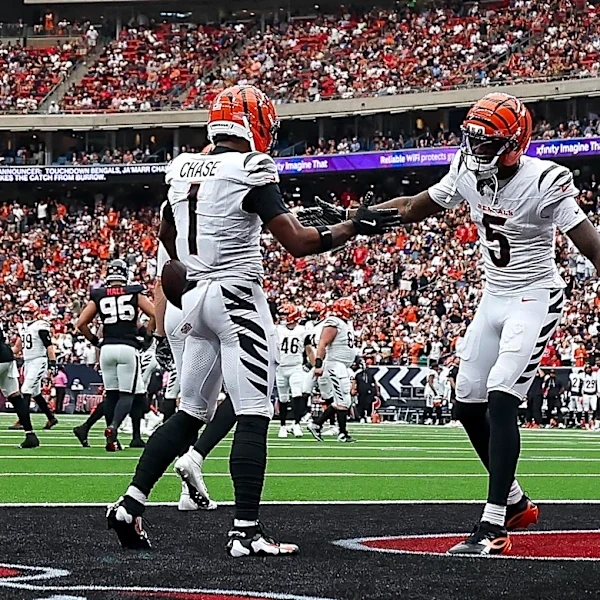
Tampa Bay is 0-2 for the first time since 2014 after dropping a pair of games that were there for the taking. Four lost fumbles helped turn Week 1 into a 33-27 loss to Cincinnati, and the Bucs followed that by falling 23-19 to Cleveland at home despite reaching the Browns' 28-yard line with an opportunity to win late in the fourth quarter.
The troubling part is that this isn't confined to a rough two-week stretch. Tampa Bay started last season 6-2 before stumbling to a 2-7 finish and missing the playoffs at 8-9. Tack
on the first two games of 2026, and Todd Bowles' team has won just twice in its last 11 games.
Close losses can only provide so much consolation when they keep happening. The Bucs could reasonably be 1-1 right now, and there were opportunities to grind out wins in both games. Instead, turnovers, missed opportunities, and breakdowns in crucial situations have Tampa Bay searching for its first victory.
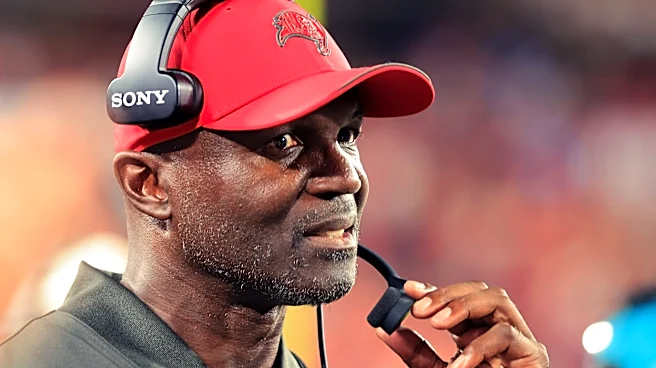
Some of that responsibility has to land on Bowles. He isn't simply the head coach overseeing the entire operation. He's also running the defense, and Tampa Bay has had too many moments through two games where players appear confused before the snap or coverage responsibilities get crossed up. When two defenders wind up accounting for the same player, and another receiver is left open, the issue goes beyond losing an individual matchup.
Those miscues become harder to dismiss when they're accompanied by losses. Bowles acknowledged the added urgency surrounding the team's winless start this week, describing the pursuit of that first victory as creating a "different kind of urgency." Tampa Bay had opened each of his previous four seasons as head coach with at least two victories before suffering its first loss.
Offensively, the Bucs are dealing with a different kind of problem. Mike Evans gave Baker Mayfield an established option he could trust when Tampa Bay desperately needed a conversion last season. Chris Godwin, Emeka Egbuka and the rest of the receiving corps have produced through two weeks, but that same dependable answer on critical third and fourth downs hasn't emerged yet.
Finding one against Minnesota won't be easy. Brian Flores' defense has blitzed on 79.3% of its defensive snaps through two games, the highest rate in the NFL, and the Vikings have already produced eight sacks. Minnesota enters Sunday at 2-0 after opening the season with a 39-22 win over Green Bay before suffocating Chicago in a 9-3 victory.
While the Vikings' defense poses a serious challenge, their offense could provide Tampa Bay with some opportunities. Kyler Murray has cleared concussion protocol and will return to the starting lineup, but Minnesota's backfield is dealing with several injuries. Jordan Mason is already on injured reserve, Aaron Jones didn't practice Wednesday because of a knee injury, and DeeJay Dallas was limited by a toe injury.
A depleted backfield could put more responsibility on Murray and Minnesota's passing game. That's an opportunity for a Tampa Bay secondary that looked like a potential weakness during the preseason but has performed better than expected through two games. The concern hasn't been so much the Bucs' corners losing one-on-one matchups as the communication and coverage breakdowns around them.
Cleaning that up becomes even more important because the consequences of another loss are substantial. Only four teams since 1990 have reached the postseason after opening 0-3, and Tampa Bay hasn't made the playoffs after an 0-2 start since the strike-shortened 1982 season. Six teams over the past two seasons have recovered from 0-2 to reach the postseason, so the Bucs still have a realistic path forward right now.
That path becomes considerably more difficult with another loss. Minnesota isn't the end of a challenging stretch, either, with Green Bay coming to Raymond James Stadium next before Tampa Bay travels to Dallas for a Thursday night matchup. Pittsburgh follows in Week 6, giving the Bucs little room to wait around for everything to finally click.
Falling to 0-3 wouldn't mathematically eliminate Tampa Bay from anything, and there would still be 14 games left to change the direction of the season. A 2-9 record over the team's last 11 games, however, would become 2-10 with another home loss, and at that point it becomes increasingly difficult to characterize what's happening as nothing more than a slow start.
The scrutiny surrounding Bowles would intensify as well. Last season's 6-2 start ended without a playoff appearance, and the Bucs haven't stopped losing since. When the head coach is also responsible for a defense that shows communication and coverage issues, there aren't many places for the questions to go other than to his direction.
Sunday doesn't require Tampa Bay to suddenly look like a finished product. What it does require is a team capable of protecting the football, eliminating preventable mistakes, and finishing a game when the opportunity is there. The Bucs have had chances to do that twice already and walked away empty-handed both times.
There is still plenty of season left, but there isn't unlimited time to figure things out. With a 0-2 record, a 2-9 stretch hanging over them, and one of the NFL's most aggressive defenses coming to Raymond James Stadium, the Bucs have reached their first real pressure point of the season.
Week 3 might not technically be a must-win game, but for Bowles and the Buccaneers, it sure feels like one.
This article originally appeared on Bucs Wire: Week 3 suddenly becomes a must-win game for Bucs