

The Tampa Bay Buccaneers knew replacing Mike Evans would not be as simple as finding another receiver to take his snaps. Over two games of the 2026 season, that problem is already starting to show up in how the offense operates.
Tampa Bay is 0-2 after losses to the Cincinnati Bengals and Cleveland Browns, and Evans' absence is not the only reason for the slow start. Still, the passing game has lacked the same obvious receiving presence Baker Mayfield had when Evans was on the field. There are plenty of capable options in the offense, but nobody has clearly become the player Mayfield can consistently lean on when Tampa Bay absolutely needs a play.
Evans' final season with the Buccaneers was interrupted by injuries, making his 2025 production harder
to judge based solely on the final totals. He missed three games with a hamstring strain and later missed six more after suffering a fractured collarbone in Week 7 against Detroit. Even with those interruptions, his role when healthy remained clear. Evans was still a receiver who commanded attention, threatened defenses vertically, and gave Mayfield a trusted option along the boundary, in the red zone, and in contested situations.
The security blanket role has not clearly transferred to anyone else on the Buccaneers offense. Emeka Egbuka, Chris Godwin Jr., Ted Hurst III, Cade Otton and Bucky Irving have all been involved through the first two weeks, but the targets have been spread across the offense instead of consistently flowing through one receiver. That does not mean Tampa Bay lacks receiving talent. Godwin remains a reliable part of the offense, Egbuka has made plays early in the season, and Hurst has already earned meaningful opportunities as a rookie. The bigger issue is that none of them has fully replaced what Evans meant to Mayfield within the structure of the passing game.
Week 1 against Cincinnati offered an early example of this. Irving finished with seven receptions for 48 yards, while Egbuka led the wide receivers with five catches for 63 yards. Getting a running back involved in the passing game is not a problem in itself, but when so much of the offense flows through backs, tight ends, and underneath routes, it can show how different the passing attack looks without a proven outside target demanding the football.
Even still, Mayfield is willing to push the ball downfield. The problem is that those opportunities have not consistently turned into completions or explosive plays through the first two games. At the same time, Tampa Bay has leaned heavily on quick throws, screens and short-area options, creating an offense that can sometimes feel split between manufactured touches underneath and lower-percentage shots down the field.
That is where Evans used to give the offense something different. He could stretch the field, win along the sideline, and still give Mayfield a player he trusted when the coverage was tight. Defenses had to account for him before the snap, and even when Evans was not getting the ball, his presence could affect how the rest of the offense was defended.
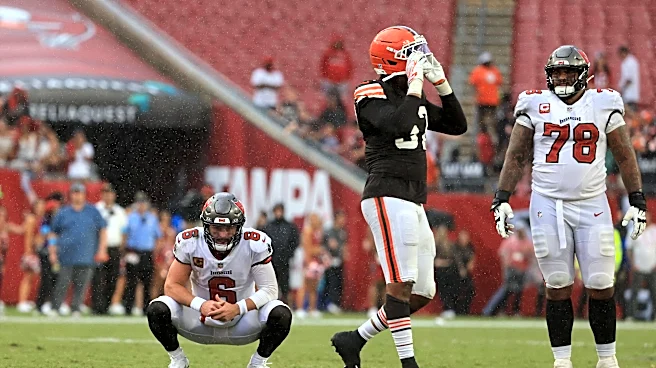
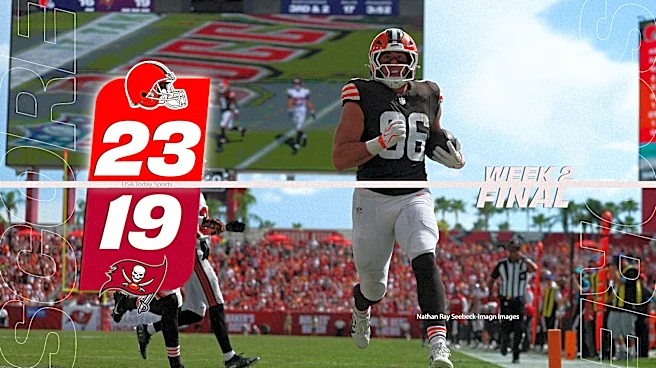
The importance of that type of wideout became especially noticeable late in the Week 2 loss to Cleveland. Tampa Bay had one final chance to take the lead after falling behind 23-19, and Mayfield moved the offense into scoring position. After the weather delay, he connected with Hurst to move the ball closer before later giving the rookie another opportunity in the end zone. Hurst could not finish the catch, and Tampa Bay's final fourth-down attempt went toward Egbuka, with Mayfield's pass landing out of reach.
For years, Tampa Bay had a receiver who could become the obvious option even when the defense knew where the ball might be going. Mayfield did not always need Evans to be wide open. He could trust him to compete at the catch point, use his size near the boundary, and give the offense a chance in difficult situations.
That does not mean Egbuka is failing to live up to expectations or that Godwin can no longer produce. Egbuka has already found the end zone this season, including a five-yard touchdown against Cleveland, while Godwin helped spark that same scoring drive with a 24-yard gain. Hurst has also earned Mayfield's trust quickly enough to receive important late-game opportunities. The point is not that Tampa Bay's current receivers are playing poorly; it is that none of them has yet become the same type of dependable focal point Evans was for Mayfield.
The Buccaneers were never going to replace Evans with one player. His combination of size, longevity, production, and chemistry with Mayfield made that unrealistic from the start. What Tampa Bay does need, however, is for someone in this receiving corps to become the player Mayfield can repeatedly turn to when the offense stalls or the game comes down to one possession.
Two games is still a smaller sample size, and there is plenty of time for that role to develop with a player on this offense. Egbuka could grow into a larger part of the offense, Hurst could continue earning opportunities, and Godwin remains capable of having big games. Through an 0-2 start, though, the early returns suggest the Buccaneers have been able to redistribute Evans' targets much more easily than they have been able to replace his presence.
This article originally appeared on Bucs Wire: How much do the Buccaneers miss Mike Evans?