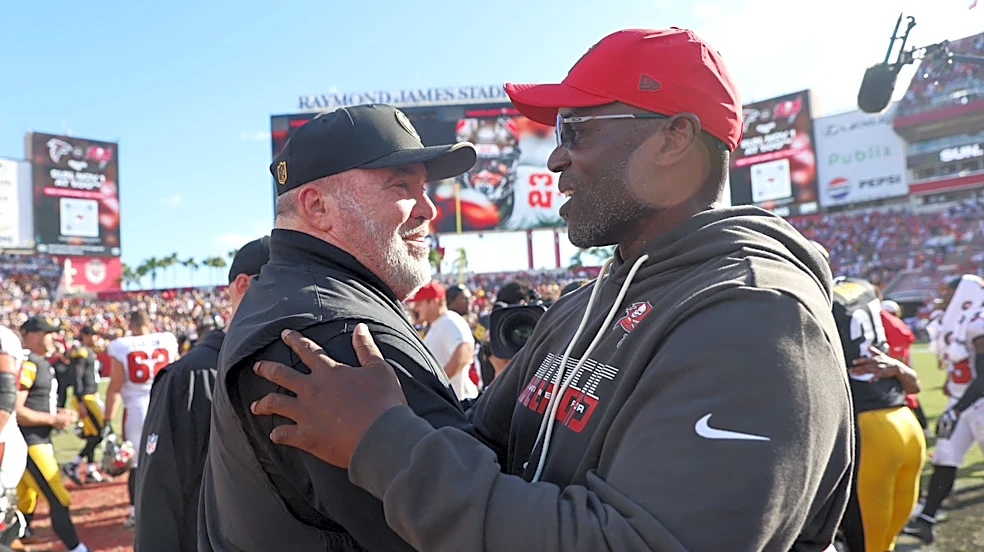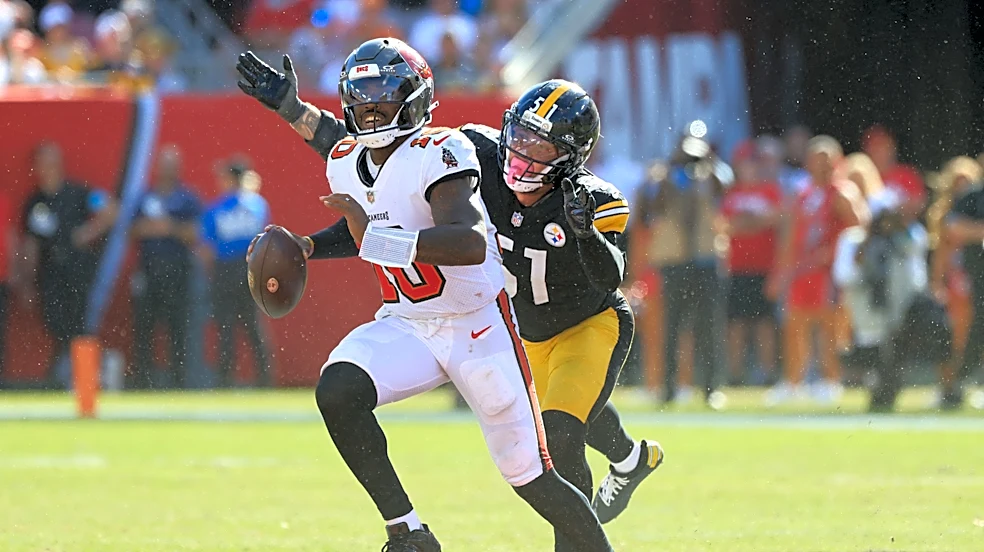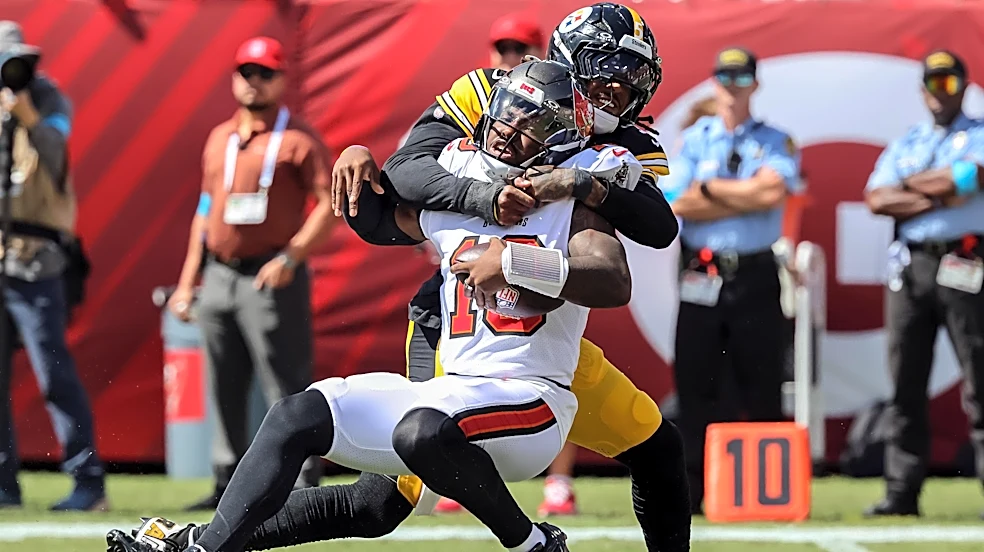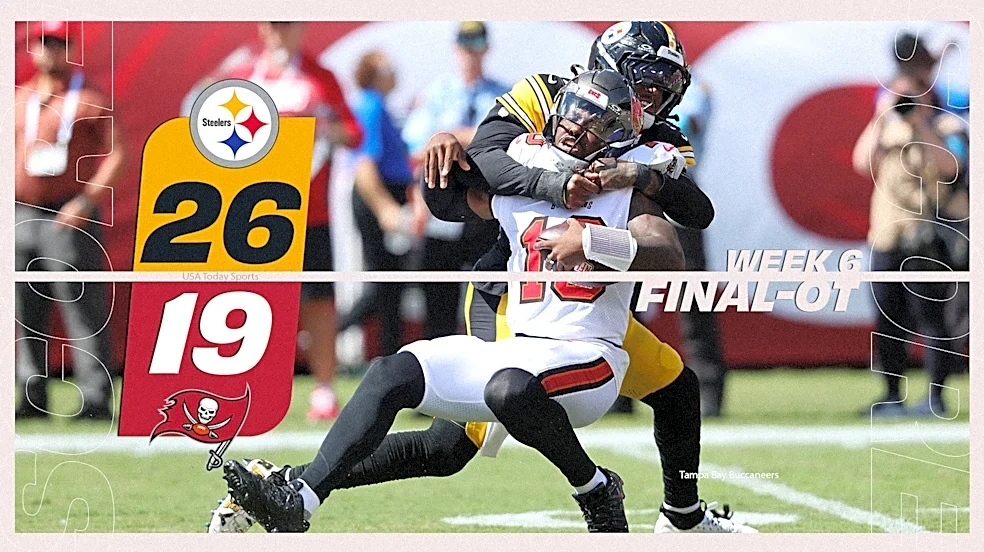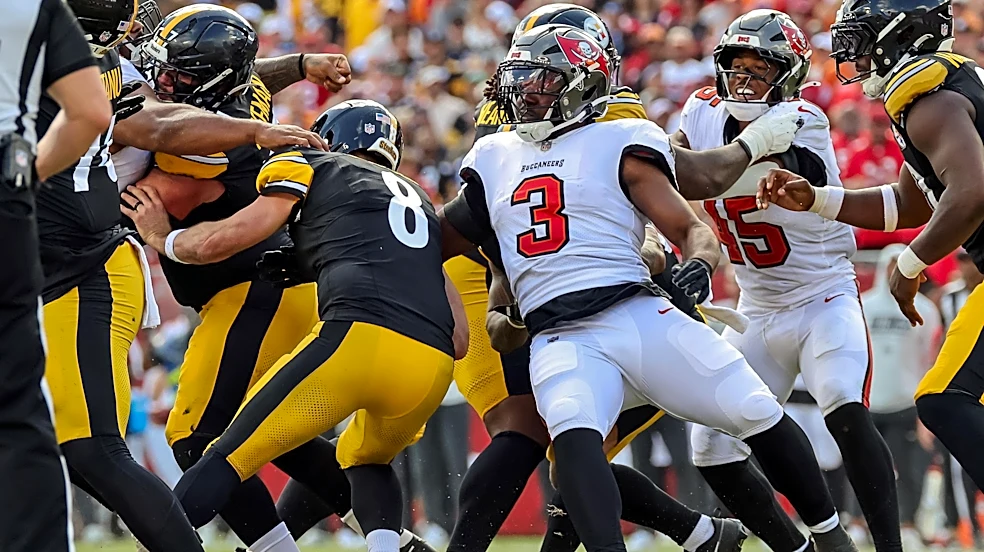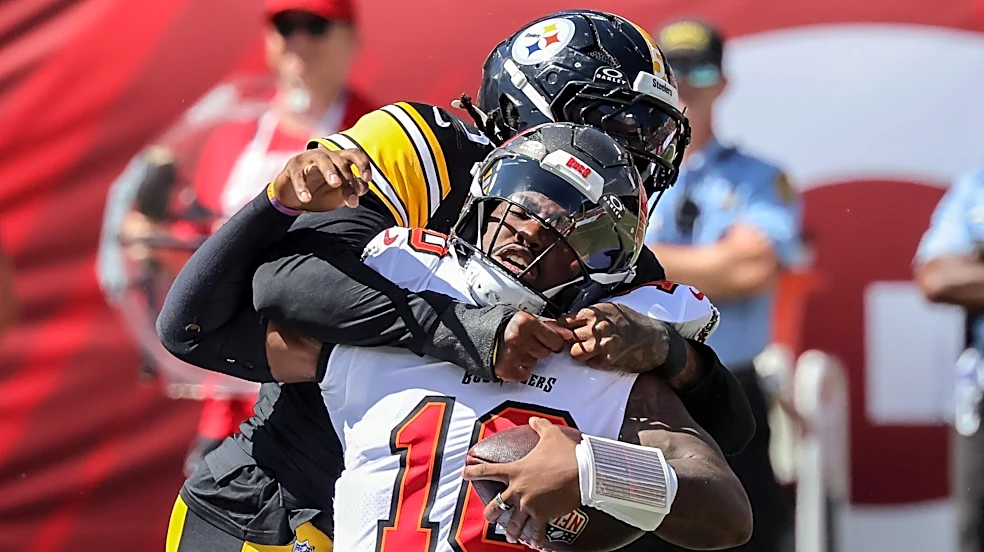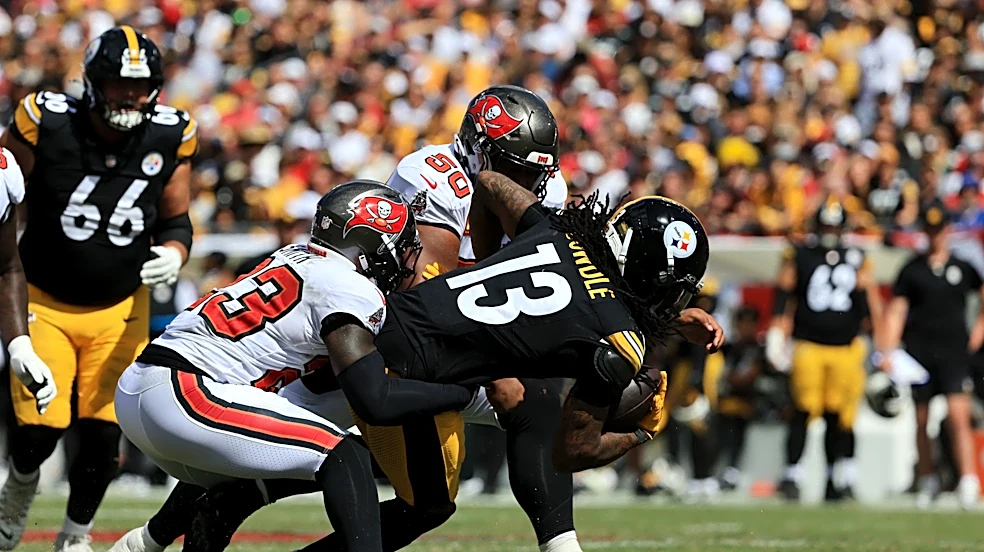


The Tampa Bay Buccaneers had strong individual performances against the Pittsburgh Steelers, but they weren't enough to prevent a 26-19 overtime loss. Tampa Bay led 16-3 entering the fourth quarter before Pittsburgh erased the deficit and won in overtime, dropping the Buccaneers to 1-5.
The Week 6 Pro Football Focus grades highlight players who stood out, along with areas where Tampa Bay continued to struggle. However, the grades are only one part of evaluating a performance. Playing time, individual matchups, execution, and the situations in which plays occurred all deserve consideration, particularly in a game where the Buccaneers controlled much of the first three quarters before falling apart late.
Buccaneers' top five offensive PFF grades
Source: Pro Football Focus, Week 6.
Bauer
Sharp finished with Tampa Bay's highest offensive grade, though he earned his 88.4 on just four snaps. The rookie tight end caught his only target for 21 yards, one of the few explosive plays the Buccaneers generated against Pittsburgh. It's an encouraging contribution, but four snaps aren't enough to draw sweeping conclusions about his overall performance or suggest he should immediately have a larger role.
Ted Hurst III provided one of the few consistent downfield options for Jalon Daniels, finishing with three receptions for 40 yards on six targets. Two of those catches came on Tampa Bay's final possession in regulation. His 22-yard reception moved the Buccaneers into Pittsburgh territory, and after Daniels took a five-yard sack, Hurst added a 13-yard catch to set up Chase McLaughlin's 53-yard field goal that forced overtime.
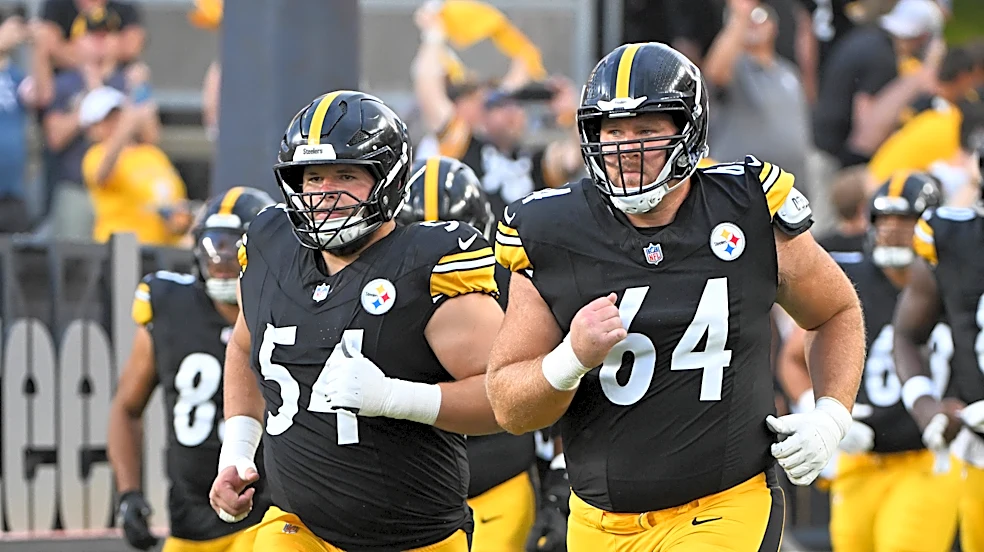
Barton, Goedeke and Wirfs all finished among Tampa Bay's five highest-rated offensive players, yet Daniels was sacked five times for 42 yards. PFF credited Wirfs with five pressures allowed, including one sack, while Goedeke allowed two pressures and Barton surrendered one.
Cody Mauch actually earned Tampa Bay's highest pass-blocking grade among its starting offensive linemen at 80.9, allowing just one pressure. The overall grades reflect more than pass protection, including run blocking and penalties.
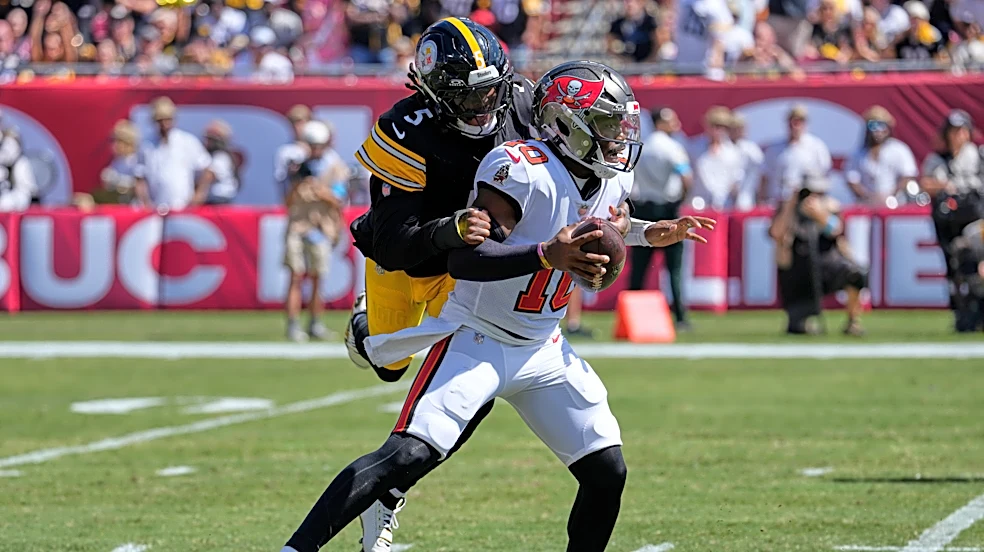
Those numbers, however, don't erase the problems that showed up throughout the game. Pittsburgh repeatedly disrupted Tampa Bay's offense, and the protection failed at some of the worst possible moments. Jalen Ramsey came off the edge untouched on fourth down in overtime, sacking Daniels for an 11-yard loss to end the game.
The Buccaneers also failed to establish the run, leaving Daniels in obvious passing situations against an aggressive Steelers defense. Some individual offensive linemen held up better than others, but the offense never found a reliable answer to Pittsburgh's pressure.
Buccaneers' top five defensive PFF grades
Source: Pro Football Focus, Week 6.
David Walker continues to make a strong case for more playing time with each passing week. The young edge rusher finished with two sacks and five total pressures on just 19 pass-rush snaps, for a 26.3% pressure rate.
He got his first sack in the third quarter when he worked inside, beat his blocker, and reached Aaron Rodgers. Later in the fourth quarter, Walker won on the outside edge for a nine-yard sack that forced Pittsburgh to attempt a 58-yard field goal. Chris Boswell made the kick to tie the game, but Walker had done his part by making an already difficult attempt even longer.
Walker played only 28 defensive snaps, roughly 35% of Tampa Bay's defensive workload. Through six weeks, he has recorded four sacks and 14 pressures on 99 defensive snaps, according to the PFF data. That level of production doesn't guarantee the same results with increased playing time, but it's difficult to ignore what he's accomplishing in a rotational role.
Christian Rozeboom finished just behind Walker with an 81.6 overall grade, including an 80.8 run-defense grade. He played 25 defensive snaps and finished with four combined tackles and a pass breakup. That breakup came on a third-down pass intended for Jaylen Warren early in the second quarter, forcing Pittsburgh to punt.
Zyon McCollum earned a 70.4 overall grade while playing all 79 defensive snaps. PFF credited him with allowing five receptions for 38 yards on seven targets, and he finished with nine tackles and one assist. McCollum's coverage was key to Tampa Bay's early defensive success, particularly as the Buccaneers kept Pittsburgh from creating consistent explosive plays.
Al-Quadin Muhammad earned a 69.3 grade while recording a sack and a batted pass in 21 defensive snaps. Tykee Smith rounded out the top five with a 69.1 grade, adding nine tackles and an assist.
The Buccaneers also received encouraging performances from rookies Rueben Bain Jr. and Keionte Scott, who each recorded a sack. A'Shawn Robinson added an interception, and Tampa Bay finished with five sacks against Rodgers. Those plays helped the defense control the game for much of the afternoon, but Pittsburgh eventually moved the ball through shorter passes and runs.
The grades don't tell the entire story
Jalon Daniels finished with a 39.9 overall offensive grade and a 36.7 passing grade. He completed 22 of 43 passes for 164 yards, one touchdown and two interceptions, while PFF credited him with two turnover-worthy plays and no big-time throws.
The rookie quarterback showed the athleticism that makes him dangerous outside the pocket, rushing for 39 yards on four attempts and extending several drives with his legs. His fourth-down scramble in overtime was one of the few moments Tampa Bay found to overcome Pittsburgh's pressure.
However, Daniels also missed a few passing opportunities. His ball placement was inconsistent, particularly on throws intended for Emeka Egbuka, and his two fourth-quarter interceptions put the defense in difficult situations. Former Buccaneers cornerback Jamel Dean made the second interception, giving Pittsburgh possession at Tampa Bay's three-yard line with less than two minutes remaining.
Egbuka caught seven passes for 48 yards and a touchdown on 16 targets. He earned a 61.6 overall PFF grade, but several inaccurate throws and a passing attack that struggled to create downfield opportunities limited his production. Despite Daniels attempting 43 passes, Tampa Bay's longest completion went for just 22 yards.
Bucky Irving also had a difficult afternoon, finishing with a 53.4 overall grade and a 56.4 rushing grade. He carried the ball 19 times for 46 yards, averaging 2.4 yards per attempt. PFF credited him with 55 yards after contact and three missed tackles forced, suggesting he often had to fight through defenders before he could build momentum.
That wasn't entirely Irving's responsibility because Tampa Bay's offensive line struggled to consistently create running lanes, and the play-calling did little to offset Pittsburgh's aggressive defense. The Buccaneers continued leaning on Irving despite limited production, and the lack of a dependable rushing attack put even more pressure on Daniels to carry the offense.
Defensively, Alex Anzalone finished with the team's lowest overall grade at 32.9, including a 38.2 coverage grade. Vita Vea also received a relatively low 51.4 overall grade despite generating four pressures.
The Buccaneers held the Steelers to three points through three quarters. However, tackling problems and an inability to consistently defend short passes became increasingly noticeable as the game progressed. Pittsburgh's 12-play, 70-yard overtime touchdown drive exposed those issues, with Rodgers repeatedly finding opportunities to move the chains.
Tampa Bay's Week 6 grades show that the roster has players capable of making an impact, particularly along the defensive front. Walker continues to produce with limited opportunities, while younger contributors such as Bain and Scott are beginning to establish themselves.
The larger concern is how those individual performances fit into the overall product. The defense built a 13-point lead, but the offense couldn't sustain drives or capitalize on its opportunities. When Pittsburgh adjusted and started moving the football, Tampa Bay had no effective response.
At 1-5, the Buccaneers need to look beyond individual performances. The team's offensive approach, protection adjustments, backfield usage, and late-game defensive execution all deserve scrutiny. A handful of strong PFF grades won't solve those issues, no matter how encouraging the individual performances might be.
This article originally appeared on Bucs Wire: Buccaneers Week 6 PFF grades reveal standout performers vs. Steelers