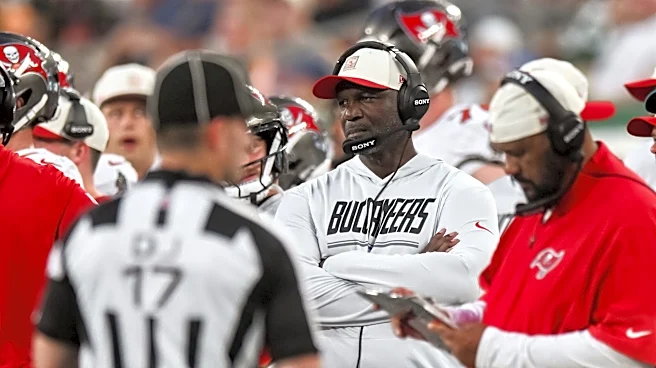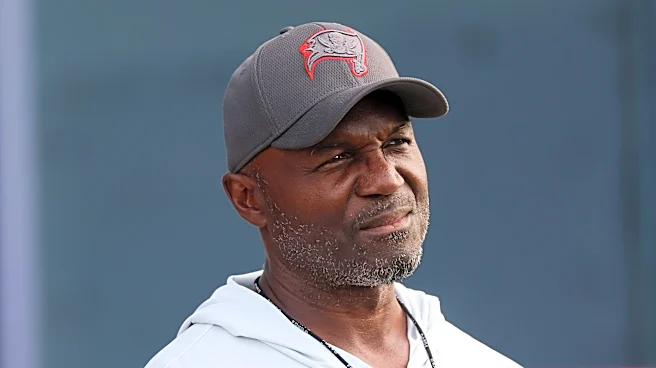

The Buccaneers have had a difficult time slowing down opposing tight ends, but Todd Bowles does not necessarily see it that way. When asked about Tampa Bay's recent struggles covering the position, Bowles pushed back on the idea that it has been a consistent problem for his defense.
Through the first two games this season, Browns rookie Harold Fannin Jr. caught five passes for 54 yards, while Cincinnati's Mike Gesicki finished with five catches for 78 yards and a touchdown. Gesicki also led the Bengals in receiving. Over the last 10 tight ends Tampa Bay has faced, several have put together productive games. Kyle Pitts had the biggest performance with 11 catches for 166 yards and three touchdowns. Greg Dulcich caught five passes for 58 yards and a touchdown,
while Tommy Tremble finished with three catches for 38 yards and a score. Tight ends caught 100 of 131 targets against Tampa Bay during the 2025 season, a catch rate of more than 76 percent. They also scored 12 touchdowns against the Bucs, with only Cincinnati allowing more touchdowns to the position.
That followed a 2024 season in which opposing tight ends also completed more than 76 percent of their targets against Tampa Bay. There are obviously different circumstances behind each performance. Coverage responsibilities change depending on the opponent, and a completion to a tight end does not automatically mean a linebacker or safety was beaten in man coverage. Bowles remains the defensive play caller, and his scheme frequently asks linebackers and safeties to handle responsibilities in the middle of the field. When opposing tight ends continue producing there, it becomes something worth watching regardless of how the individual plays happen. That will be especially important against Minnesota and T.J. Hockenson. Bowles may not believe Tampa Bay has a tight end problem, but the Bucs have another opportunity this week to prove his point. Until they do, the numbers will keep the conversation alive.
This article originally appeared on Bucs Wire: Todd Bowles denies struggles covering tight ends