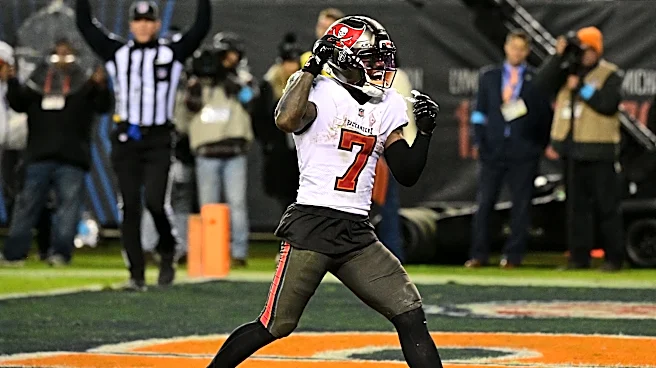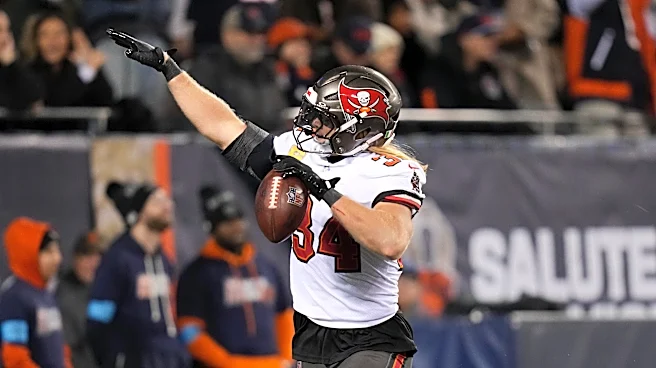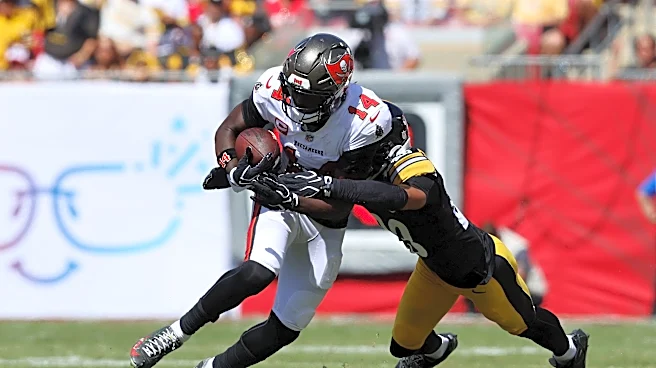


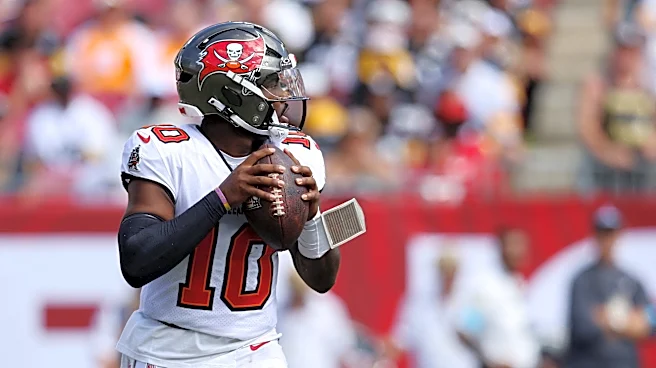
The Tampa Bay Buccaneers entered their Week 10 bye with 1,423 passing yards and six touchdowns through nine games. Their struggles have been difficult to ignore, especially with the running game producing 1,475 yards during that same stretch. Injuries have played a significant role, but the lack of consistent downfield production has exposed problems that go beyond quarterback availability.
Tampa Bay has capable receiving options, but the offense has struggled to get them into positions where they can consistently threaten opposing defenses.
Injuries and inexperience at quarterback
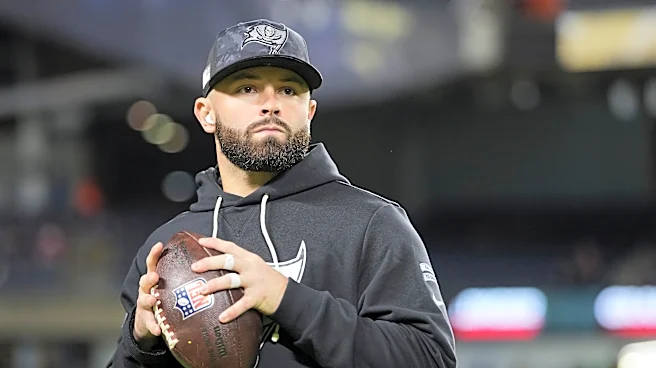
Baker Mayfield has dealt with injuries to his right thumb and foot, disrupting his season and forcing Tampa Bay to rely on undrafted rookie Jalon Daniels.
According to the Buccaneers' official statistics, Mayfield
has completed 60.6% of his passes for 922 yards, three touchdowns, and four interceptions. Daniels has thrown for 501 yards, three touchdowns and five interceptions while completing 61.2% of his attempts.
Daniels has shown mobility, but there is a considerable difference between having the athletic ability to extend plays and consistently operating an NFL passing attack. Mayfield's injuries have created additional challenges, leaving Tampa Bay without dependable continuity at the position.
The receiving corps lacks a consistent deep threat
Mike Evans' departure left the Buccaneers without an established vertical receiving threat. Emeka Egbuka has 31 receptions for 278 yards, while Chris Godwin has 29 catches for 259 yards. Both can move the chains, but neither has consistently provided the downfield production Tampa Bay needs.
Jalen McMillan's knee injury has further limited the receiving rotation, taking another potential option away from an offense already searching for explosive plays.
Tez Johnson has been the exception, averaging 23.1 yards per reception on 11 catches for 254 yards. His ability to create chunk plays is encouraging, but those opportunities have not been frequent enough to change the passing attack's overall production.
What happened to Ted Hurst III?
Rookie Ted Hurst III has 11 receptions for 168 yards and a touchdown, averaging 15.3 yards per catch. Those numbers suggest he can contribute downfield, making his reduced involvement against Chicago particularly noticeable.
According to the Week 9 snap-count breakdown, Hurst played just one of Tampa Bay's 68 offensive snaps against the Bears after participating in 42% of the offense's plays against Atlanta the previous week.
Hurst's lone target against Chicago went incomplete. His disappearing workload raises questions about how Tampa Bay plans to use a receiver who has demonstrated some ability to produce longer gains. The coaching staff has not publicly confirmed why his role was reduced so dramatically.
Cade Otton is better suited for a complementary role
Cade Otton has 23 receptions for 211 yards, averaging 9.2 yards per catch. He remains a useful underneath target and a dependable option when the Buccaneers need shorter completions.
However, Otton is better suited as a complementary receiving tight end than the centerpiece of the passing attack. He can be a valuable TE2 without necessarily offering the production expected from a featured TE1. That limitation becomes more apparent when the receiving corps is struggling to stretch the field.
What needs to change?
Getting Mayfield healthy would help stabilize the offense, but it will not solve every problem. Tampa Bay needs more consistent execution, better use of its available receiving talent, and a willingness to challenge defenses downfield.
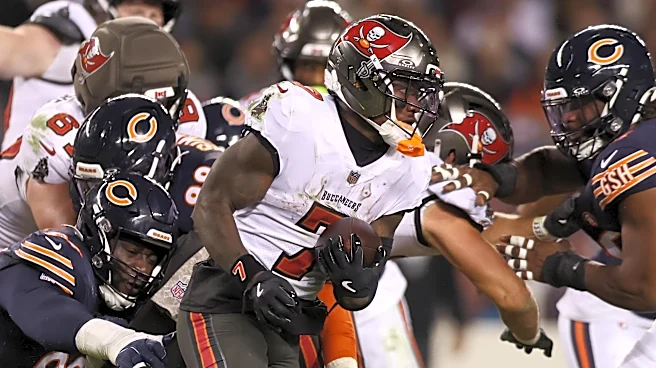
The running game has become the Buccaneers' most reliable offensive weapon. Until the passing attack can complement it, defenses have little reason to stop concentrating on slowing Bucky Irving and forcing Tampa Bay to win through the air.
This article originally appeared on Bucs Wire: What to make of the Bucs' passing attack after 10 weeks