

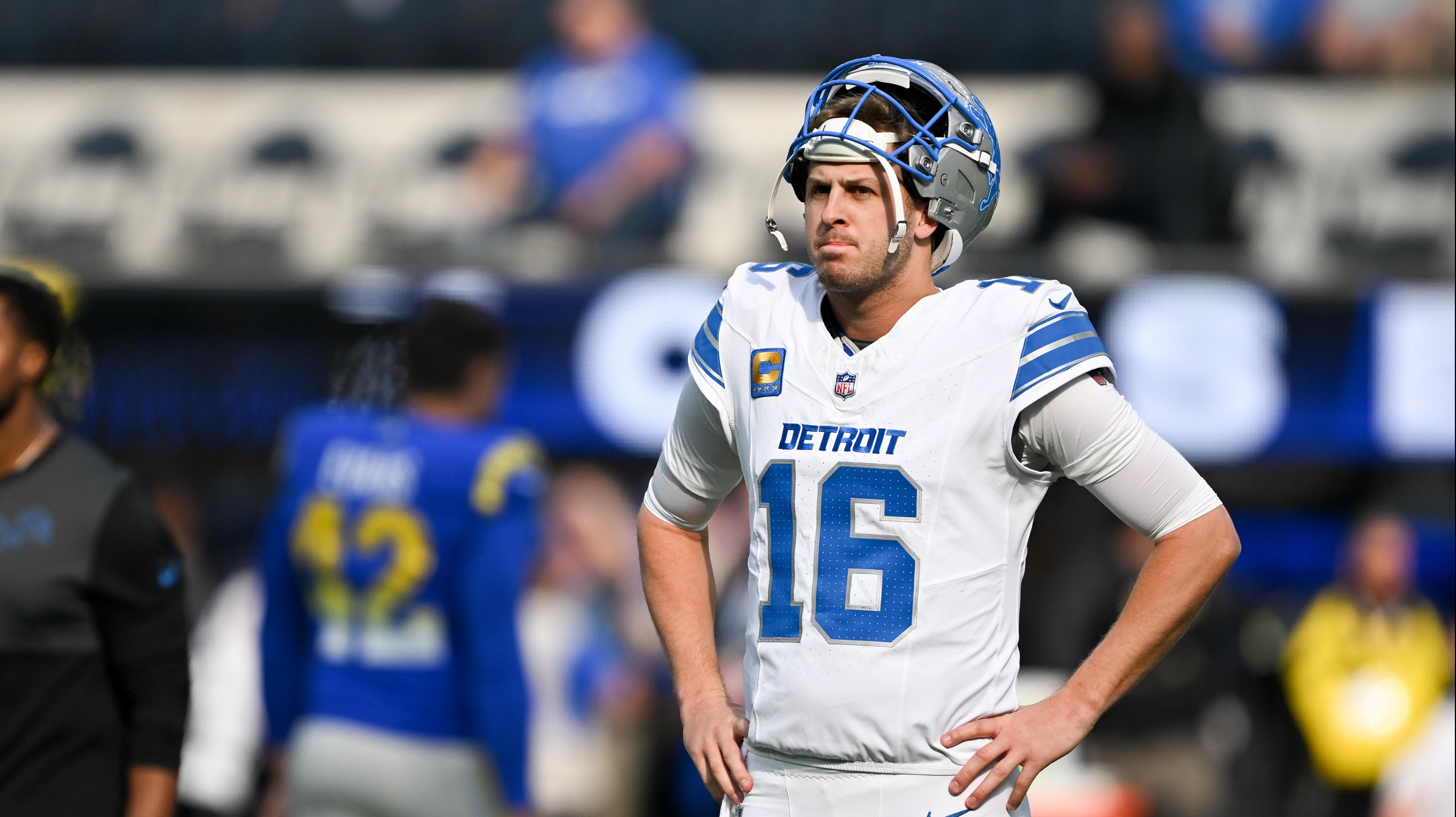
The Tampa Bay Buccaneers fell to 3-7 following Sunday's 31-21 loss to the Detroit Lions, and the final score doesn't fully capture how frustrating the afternoon was. Tampa Bay had opportunities to take control of the game but repeatedly undermined itself with penalties, poor execution, and communication problems. The Buccaneers fought back to within three points late in the third quarter before Detroit scored 14 unanswered points in the fourth.
Individual performances were worth recognizing, particularly from rookie receiver Ted Hurst III and running back Bucky Irving. However, the Buccaneers struggled to put together a complete performance against a Detroit team that capitalized on their mistakes.
Here is how each position group graded out following
the loss.
Quarterback: B-
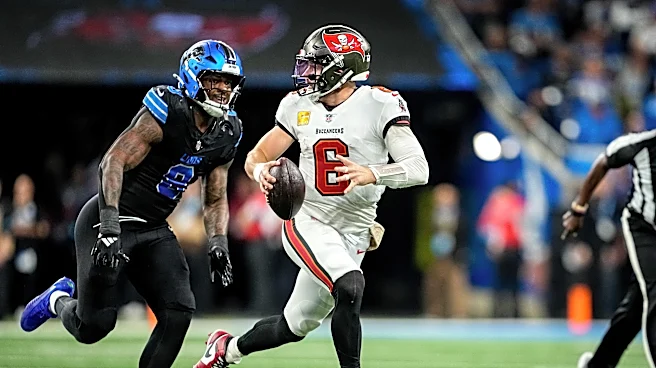
Baker Mayfield finished 20-of-33 passing for 187 yards and two touchdowns without throwing an interception. He also rushed for 36 yards on six attempts, showing his willingness to extend plays despite taking significant punishment throughout the afternoon. Mayfield was sacked four times and fumbled on Tampa Bay's opening possession, although the Buccaneers recovered.
Mayfield deserves credit for his toughness and several impressive throws, including the 23-yard touchdown to Ted Hurst before halftime. However, he occasionally created additional pressure by leaving the pocket early, and his second touchdown came with the outcome essentially decided. His individual effort was encouraging, but the passing offense lacked consistency when Tampa Bay needed it most.
Running backs: B
Bucky Irving finished with 68 rushing yards and a touchdown on 18 carries while adding three receptions for 32 yards. His 3.8 yards per carry doesn't fully reflect his performance, especially given the contact he absorbed and how hard Tampa Bay had to create running lanes.
Irving demonstrated excellent balance, patience, and agility while repeatedly fighting through defenders for additional yardage. Luke Goedeke's holding penalty erased his apparent 80-yard touchdown run, eliminating what could have been the offense's biggest play. Kenny Gainwell also contributed 16 rushing yards and four receptions for 43 yards. The production wasn't overwhelming, but the running backs made the most of several difficult situations.
Wide receivers: C+
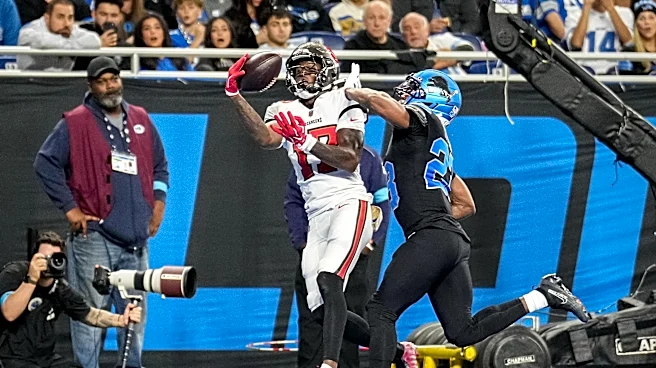
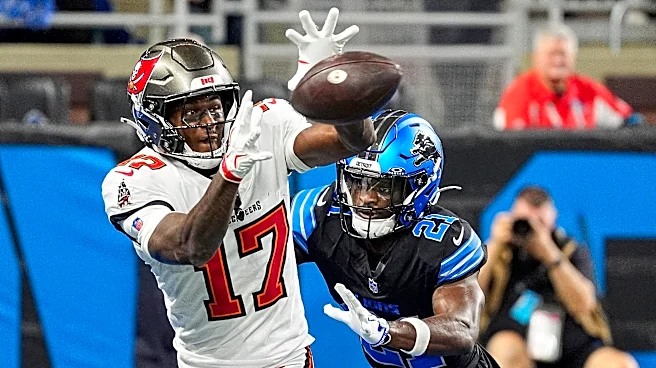
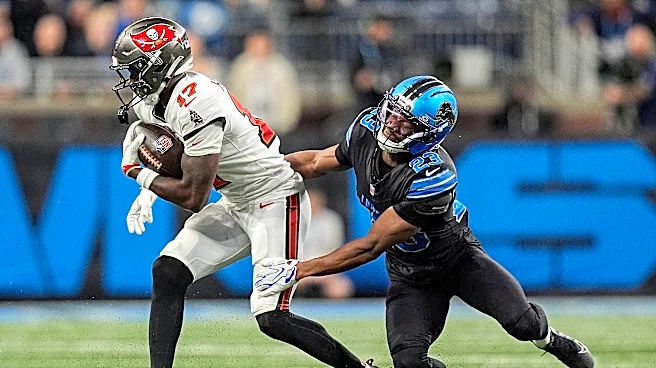
Ted Hurst provided the biggest positive for Tampa Bay's receiving corps, catching five passes for 56 yards and two touchdowns. His 23-yard scoring reception before halftime was one of the Buccaneers' best offensive plays, and his second touchdown capped an encouraging individual performance.
The rest of the group struggled to make an impact. Chris Godwin finished with three receptions for 13 yards, Emeka Egbuka caught two passes for 18 yards on five targets, and Tez Johnson added two receptions for 17 yards. Egbuka's limited production was particularly disappointing considering his importance to the offense. Hurst deserves recognition, but the group collectively needed to produce more.
Tight ends: C-
Cade Otton caught one pass for eight yards on three targets, while Brandon Sharp failed to record a reception on his lone target. Tampa Bay received little production from the position through the passing game, limiting Mayfield's options when Detroit applied pressure.
Otton contributed as a blocker, particularly on Tampa Bay's screen passes, but the tight ends were largely absent as receiving threats. The Buccaneers need more consistent involvement from the position, especially when their offense is struggling to move the ball through conventional passing concepts.
Offensive line: D+
Tampa Bay allowed four sacks for 33 yards and struggled to protect against Detroit's defensive front. The offensive line also failed to create enough movement on consecutive short-yardage attempts during the first quarter, resulting in a turnover on downs.
The most damaging mistake came when Goedeke's holding penalty erased Irving's apparent 80-yard touchdown run. Mayfield occasionally contributed to the pressure by extending plays or leaving the pocket early, so the offensive line shouldn't absorb all the blame. However, the protection breakdowns and inability to consistently win at the line of scrimmage made this one of Tampa Bay's weakest units.
Defensive line: C+
Tampa Bay's defensive front produced some encouraging moments, particularly from David Walker and Vita Vea. Walker recorded the Buccaneers' only sack, bringing Jared Goff down for a two-yard loss early in the fourth quarter. He also contributed two tackles for loss and two quarterback hits despite playing just 19 defensive snaps.
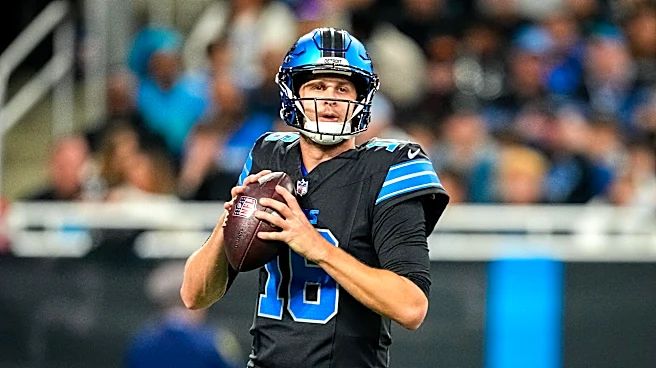
Vea disrupted Detroit's opening possession with strong run support and a pass breakup, but the Buccaneers struggled to generate consistent pressure all afternoon. Goff finished with 279 passing yards and two touchdowns while taking just one sack. Detroit also found success running the football when it needed to close out the game, leaving the defensive front with a mixed performance.
Linebackers: C
Jeremiah Trotter Jr. led Tampa Bay with 14 combined tackles, while Alex Anzalone added seven. The linebackers were involved throughout the afternoon, but Detroit repeatedly found openings across the middle of Tampa Bay's zone coverage. The coverage difficulties weren't limited to the linebackers, although the unit was part of a defense that struggled to consistently close passing lanes.
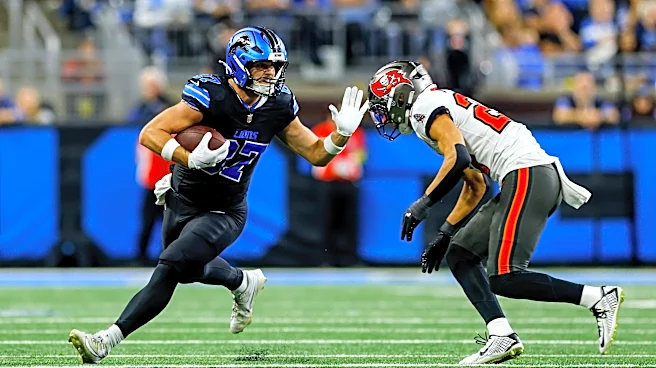
Detroit's tight ends were particularly effective, with Sam LaPorta, Brock Wright and Tyler Conklin combining for six receptions and 122 yards. Trotter also committed a costly 15-yard facemask penalty during Detroit's fourth-quarter touchdown drive. Tampa Bay made some important stops, but the linebackers and surrounding coverage needed to do more to disrupt Goff's passing options.
Secondary: D+
Tampa Bay entered the game without Antoine Winfield Jr. and quickly encountered additional problems when Jacob Parrish suffered an injury during Detroit's first touchdown drive. Benjamin Morrison took on a larger role before also being ruled out later in the game, forcing another personnel adjustment. Kevin Knowles II subsequently contributed at outside cornerback, playing 20 defensive snaps.
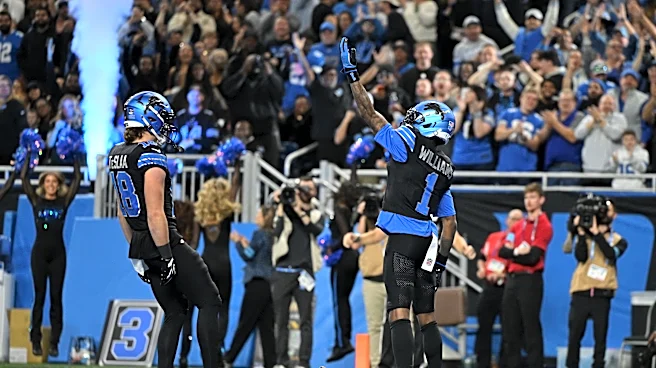
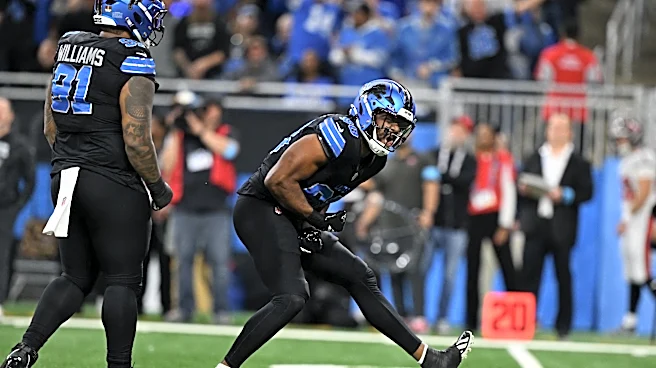
The injuries created a difficult situation, but Detroit capitalized on opportunities downfield. Jameson Williams finished with four receptions for 93 yards, including a 57-yard touchdown, while Amon-Ra St. Brown added another score. Morrison appeared involved in coverage on both touchdowns, although the exact defensive responsibilities remain unclear. His later absence was officially reported as an injury-related game status, so it would be unfair to suggest he was benched for his performance. The circumstances deserve consideration, but the secondary still surrendered too many important completions.
Special teams: C
Chase McLaughlin converted all three extra-point attempts, while Riley Dixon averaged 49.3 yards on four punts, placing two inside Detroit's 20-yard line. Walker also delivered an excellent coverage tackle early in the game, providing one of Tampa Bay's better special teams moments.
However, Walker was also flagged for a false start on the punt unit during the second quarter, costing Tampa Bay five yards before Dixon's next attempt. The Buccaneers failed to generate a meaningful return that could change the game's momentum. There were solid individual contributions, particularly from McLaughlin and Dixon, but the unit's overall performance was fairly ordinary.
Coaching: D
The Buccaneers finished with eight penalties for 58 yards, including two delay-of-game penalties, and repeatedly struggled to get organized before the snap. Ford Field's crowd was loud all afternoon, and Tampa Bay appeared to struggle in that environment. Whether the problems stemmed from late play calls, poor communication in the huddle, or misaligned personnel, the offense consistently found itself rushing against the play clock.
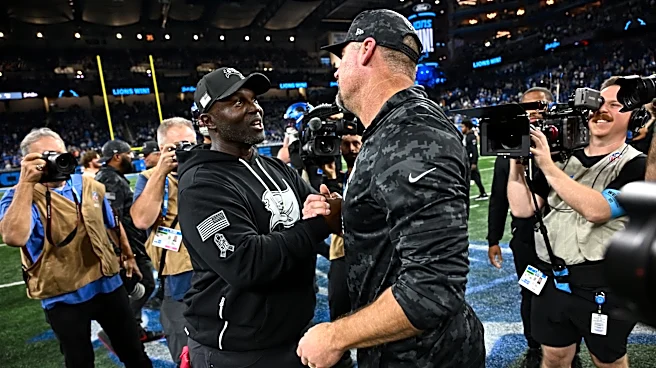
Todd Bowles' decision to go for it on fourth-and-1 early in the game deserves scrutiny. Being aggressive against a talented Detroit team has value, and Bowles was clearly trying to establish an approach that could put pressure on the Lions. However, with the game still scoreless and Chase McLaughlin available, taking the field goal would have been reasonable. Tampa Bay instead turned the ball over on downs after Irving was stopped behind the line of scrimmage.
The more concerning sequence came late in the fourth quarter. Facing fourth-and-14, the Buccaneers hurried the snap rather than using a timeout to organize the offense. Mayfield was sacked for a nine-yard loss, giving Detroit possession at Tampa Bay's 34-yard line. The Lions eventually scored another touchdown, extending their lead to 31-14. Whether a timeout would have changed the result is impossible to know, but the repeated pre-snap confusion made the decision to rush into such an important play difficult to defend.
Tampa Bay showed enough individual talent to stay competitive, but recurring mistakes and communication problems were hard to overlook. The Buccaneers have seven games remaining,
This article originally appeared on Bucs Wire: Buccaneers grades: Costly mistakes define Week 11 loss to Lions