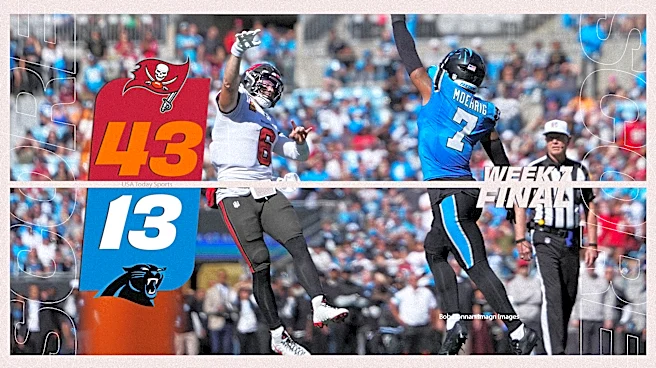




The Tampa Bay Buccaneers entered Week 7 needing answers after a 1-5 start, and Sunday's 43-13 victory over the Carolina Panthers gave them something they hadn't shown consistently through the first six games: an offense with a clear identity and a defense capable of taking over a game. Tampa Bay controlled its first NFC South matchup of the season from the opening possession, relying on a relentless rushing attack, timely defensive pressure, and four takeaways to deliver its most complete performance of the year.
The Buccaneers scored 26 points in the second quarter alone, taking a 33-6 lead into halftime while allowing Baker Mayfield to settle back into the offense following a three-game absence with a thumb injury. Offensive coordinator Zach
Robinson avoided unnecessary risks, the running backs consistently found openings, and Tampa Bay's defense made Carolina pay for its mistakes. It was exactly the complementary football the Buccaneers had been missing, and it came at a time when they desperately needed a win.
Zach Robinson finally commits to what works
Tampa Bay's offensive struggles haven't been limited to quarterback play this season. Inconsistent blocking, questionable play selection, and an inability to establish the running game have repeatedly put the offense in difficult situations. Against Carolina, Robinson recognized what was working early and kept attacking the Panthers, rather than abandoning the ground game for unnecessary passing attempts.
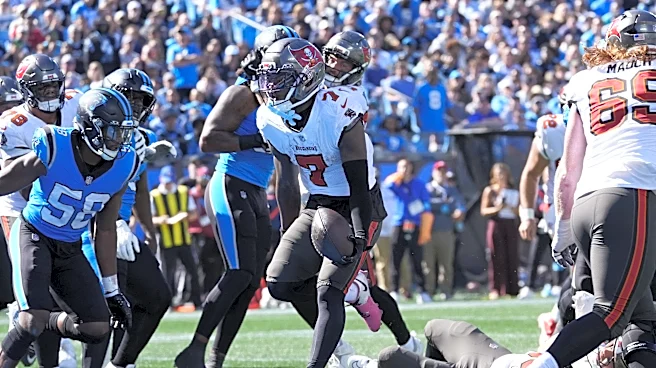
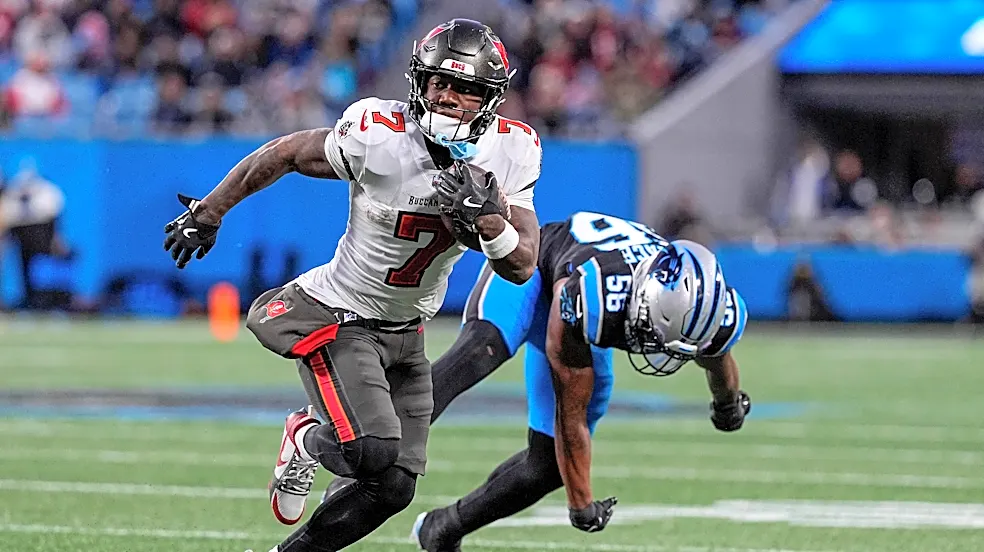
The Buccaneers finished with 258 rushing yards and three touchdowns on 49 carries, averaging 5.3 yards per attempt while recording 17 rushing first downs compared with just three through the air. Bucky Irving led the way with 106 yards and two touchdowns on 24 carries, consistently identifying running lanes and making decisive cuts to reach the second level. Kenneth Gainwell added 88 yards on 14 attempts, while Sean Tucker broke free for a 46-yard touchdown in the fourth quarter.
The offensive line deserves a lot of credit, especially with starting right tackle Luke Goedeke unavailable. Tampa Bay created running lanes throughout the afternoon, letting its backs attack openings without constantly having to evade defenders behind the line of scrimmage. The Buccaneers also controlled the ball for 35:57, limiting Carolina's opportunities while keeping their defense rested.
Robinson's approach wasn't complicated, but it didn't need to be. Tampa Bay repeatedly found success on the ground, especially when its backs could identify seams and accelerate through them. Instead of manufacturing a passing attack that wasn't necessary, Robinson trusted his offensive line and running backs to dictate the pace. That commitment was a welcome change from the offensive inconsistency that had defined much of the season.
Baker Mayfield manages the game without unnecessary risks
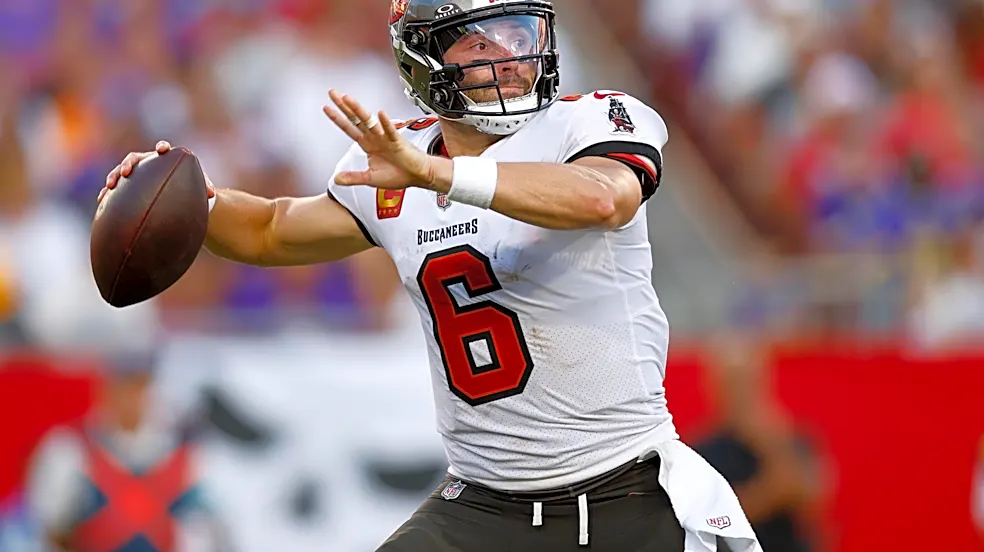
Mayfield's return was one of the biggest storylines entering Sunday's matchup, especially after the Buccaneers struggled offensively during his three-game absence. With his throwing thumb still recovering and Emeka Egbuka unavailable, Tampa Bay needed its veteran quarterback to manage the offense rather than carry it.
Mayfield completed seven of 11 passes for 64 yards and a touchdown, finishing with a 109.7 passer rating while avoiding interceptions. His lone touchdown came just before halftime, when he escaped pressure and found Tez Johnson for a 14-yard score that extended Tampa Bay's lead to 33-6. The completion also marked the 200th touchdown pass of Mayfield's NFL career.
The most encouraging part of Mayfield's performance wasn't his passing total. He looked comfortable running the offense, made the available throws, and didn't put the ball in danger. Tampa Bay also kept him from being sacked, an important development given the offensive line's earlier-season struggles and the injury that kept him sidelined.
There will be games when Mayfield needs to throw far more than 11 passes, particularly against opponents that can slow down the run. However, Sunday's performance showed that Tampa Bay can win without placing the entire offensive burden on its quarterback. As Mayfield gets healthier and the receiving corps returns to full strength, Robinson should have more opportunities to expand the passing game without abandoning the foundation established against Carolina.
Yaya Diaby leads a defense that capitalizes on pressure
Yaya Diaby entered Sunday's matchup without a sack through the first six games, but that changed against Carolina. The Buccaneers' edge rusher recorded three sacks, repeatedly collapsing the pocket and making life difficult for Bryce Young as Tampa Bay's defensive front controlled the line of scrimmage.
Diaby's performance was particularly impressive because he consistently disrupted Carolina's protection. His ability to generate pressure forced Young into uncomfortable situations, while Vita Vea and Al-Quadin Muhammad helped fuel a defensive effort that produced five sacks.
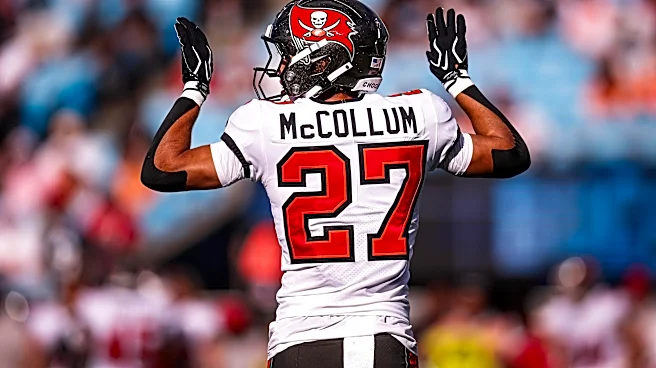
The secondary capitalized on that pressure. Zyon McCollum intercepted Young in the second quarter, and Tykee Smith added another interception in the third. Jacob Parrish and Keionte Scott also made plays in coverage, helping Tampa Bay challenge throws and prevent Carolina from consistently generating explosive opportunities.
Carolina converted six of its 11 third-down attempts, so the Buccaneers weren't perfect at getting off the field. However, their ability to create negative plays and force turnovers kept those conversions from turning into sustained scoring opportunities. Tampa Bay's defenders were frequently in position to contest passes, and the pressure from the defensive front created opportunities throughout the secondary.
Diaby was the clear individual standout, but the entire unit deserves recognition. Even without Antoine Winfield Jr., Tampa Bay played aggressively and maintained its assignments, showing continued improvement in a defense that has gradually become more effective as the season has progressed.
Four takeaways and special teams turn the game into a blowout
The Buccaneers' defense didn't just force Carolina into mistakes; it turned those mistakes into points. Tampa Bay generated four takeaways, including a second-quarter strip-sack by Muhammad that Calijah Kancey recovered and returned 32 yards for a touchdown. The defensive score extended the Buccaneers' lead to 17-0 and added to an already difficult afternoon for Carolina.
Special teams also played an important role in the Week 7 win. Ko Kieft recovered a muffed punt, giving Tampa Bay excellent field position and eventually leading to a short field goal. Later, Smith blocked Carolina's extra-point attempt after Young threw a 50-yard touchdown pass to Darren Waller, and McCollum returned the blocked kick for two points.
Those plays changed the game by letting Tampa Bay build its advantage without relying solely on sustained offensive drives. The Buccaneers scored 26 points in the second quarter, and by halftime, Carolina faced a 27-point deficit with little indication that it could consistently stop Tampa Bay's rushing attack or protect its quarterback.
The Buccaneers finished with 20 points off turnovers, demonstrating how effectively they capitalized on Carolina's mistakes. That kind of execution had been missing during Tampa Bay's difficult start, when offensive struggles and missed opportunities repeatedly prevented the team from maintaining momentum.
Tampa Bay has a blueprint, but consistency remains the challenge
The Buccaneers improved to 2-5 with Sunday's victory, and while one dominant performance doesn't erase six weeks of offensive frustration, it provides a much clearer direction moving forward. Robinson established the running game, Mayfield protected the football, and the defense generated the kind of pressure and takeaways that can change a game before the opposing offense has an opportunity to respond.
The challenge now is determining whether Tampa Bay can reproduce that execution against opponents that offer more resistance. Carolina struggled to contain Irving and Gainwell, letting the Buccaneers dictate the pace without relying on Mayfield's arm. Atlanta may present different challenges in Week 8, and the passing game will eventually need to contribute more consistently if Tampa Bay hopes to climb back into the NFC South race.
Still, the Buccaneers accomplished exactly what they needed Sunday. They protected an injured quarterback, committed to a productive rushing attack, and played aggressively on defense without allowing turnovers or offensive mistakes to undermine their performance. For a team that had struggled to find consistency through six games, a 30-point divisional win offered more than another promising stretch of football: a complete performance worth building on.
This article originally appeared on Bucs Wire: Buccaneers run wild as defense overwhelms Panthers in Week 7