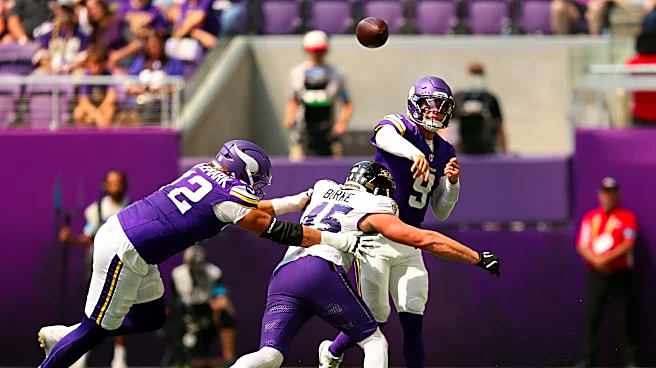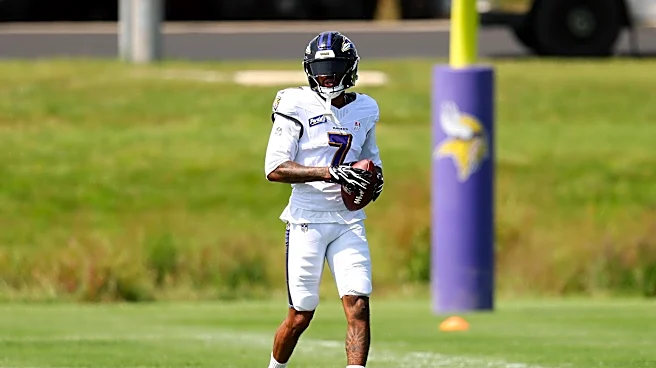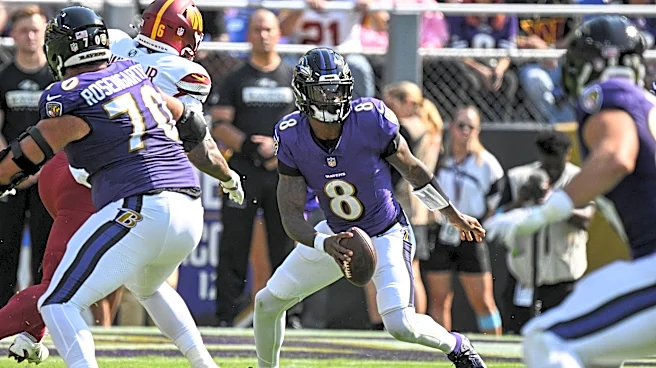


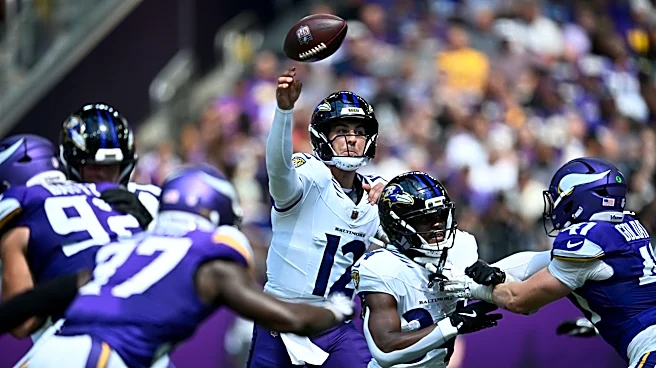
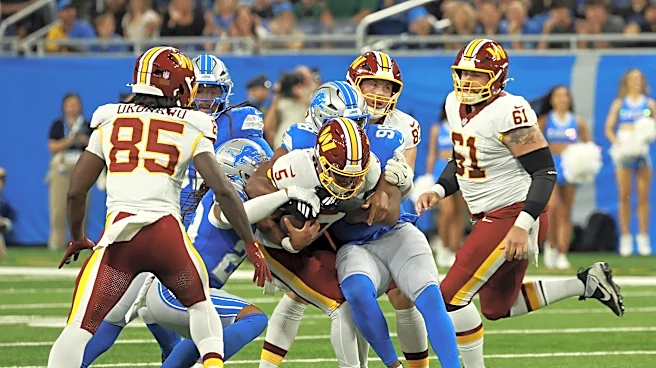
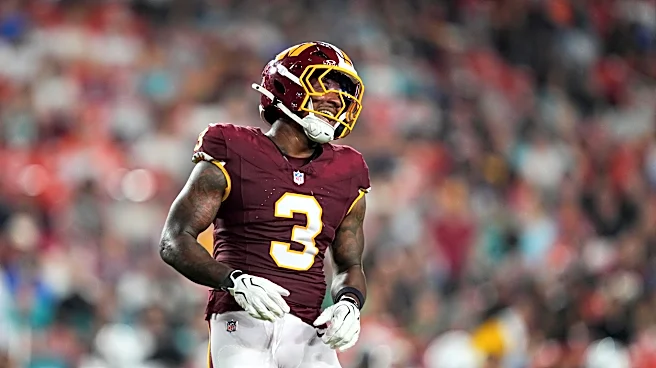
The Baltimore Ravens will host the Washington Commandersfor a joint practice Wednesday at the Under Armour Performance Center, providing both teams with one final opportunity to evaluate their starters against an unfamiliar opponent. The teams will meet again Friday night at M&T Bank Stadium in their preseason finale. Most of Baltimore’s established players are unlikely to participate extensively in that game, making Wednesday’s controlled session one of their most important remaining evaluations.
The main attraction will be Lamar Jackson and Baltimore’s starting offense against Washington’s available defensive starters. The Ravens will also receive another opportunity to evaluate their center competition, young receivers and crowded defensive depth
chart.
Here are 10 storylines to follow during Ravens-Commanders joint practice.
1. Baltimore’s starting offense against Washington’s defense
Jackson, Derrick Henry, Zay Flowers, Rashod Bateman, Mark Andrews and the starting offensive line should receive meaningful work against Washington’s first-team defense. That makes Wednesday more valuable than a traditional preseason game. Coaches can script third-down, red-zone, two-minute, and backed-up possessions while protecting quarterbacks from live contact.
Washington is installing a new system under first-year defensive coordinator Daronte Jones. The group features Daron Payne, Tim Settle and Javon Kinlaw along the defensive front, with Frankie Luvu at linebacker and Mike Sainristil, Amik Robertson, Nick Cross and Quan Martin in the secondary.
Washington has been without several potential starters for portions of camp. Former Ravens edge rusher Odafe Oweh and cornerback Trey Amos have missed extended time, making their participation worth monitoring.
Regardless of who is available, this represents Baltimore’s final opportunity to run its starting offense against another team before Week 1.
2. Lamar Jackson’s command of Declan Doyle’s offense
Baltimore has spent the summer emphasizing timing, footwork and disciplined progressions without limiting Jackson’s ability to create when plays break down.
Washington will provide another defensive structure for Jackson to diagnose. Jones arrived after serving as Minnesota’s defensive pass game coordinator, and his background is rooted in coverage variety and secondary movement.
Jackson’s statistics will matter less than the operation. Baltimore needs clean communication, proper protection calls, and efficient execution before the snap. How quickly Jackson identifies pressure and gets the offense into the correct answers will provide a better evaluation than a handful of completed passes.
The session should also test how effectively the Ravens balance their designed passing concepts with Jackson’s off-script ability.
3. Jovaughn Gwyn and Ethan Pocic against Washington’s interior
The starting center competition remains Baltimore’s most significant offensive question following Danny Pinter’s season-ending patellar tendon injury.
Gwyn is listed with the first unit alongside Pocic, with the Ravens continuing to distribute opportunities between them. Wednesday should provide both centers with their most difficult remaining assignment.
Washington can attack the interior with Payne, Settle, Kinlaw and Charles Omenihu. Payne, in particular, possesses the strength and quickness to disrupt the pocket or collapse a running lane before it develops.
The Ravens need more than adequate blocking from their center. The winner must communicate protections, handle line adjustments and establish a reliable exchange with Jackson.
The performance of rookie right guard Vega Ioane will also be important. Baltimore needs its new-look interior line to hold up against one of the more physical defensive fronts it has faced this summer.
4. Derrick Henry and the Ravens’ rushing attack
Henry has not needed snaps in preseason games, but joint practices allow Baltimore to evaluate its rushing attack without exposing him to unnecessary contact.
Washington’s front will test the communication and physicality of Baltimore’s offensive line. Luvu is an aggressive downhill linebacker, while rookie Sonny Styles has brought size and athleticism to Washington’s second level.
Henry’s presence also affects everything that follows. If Baltimore creates movement at the line of scrimmage, the play-action game should produce opportunities for Flowers, Bateman and Andrews.
Adam Randall can also continue strengthening his position behind Henry and Justice Hill. The rookie has moved ahead of Rasheen Ali in the competition for the third running back role, but special teams and pass protection remain important parts of that evaluation.
5. Zay Flowers and Rashod Bateman against Washington’s corners
Flowers and Bateman should receive several opportunities against Washington’s starting secondary.
Sainristil can match up against receivers from the slot, while Robertson brings experience and physicality. Rasul Douglas could receive increased work if Amos remains unavailable.
Flowers’ quickness will test Washington’s ability to communicate through motion and route combinations. Bateman should provide a different challenge on the outside with his route running and ability to win at the intermediate level.
Baltimore will also want to see how Andrews and Durham Smythe fare against Washington’s linebackers and safeties. The Ravens possess enough variety at the skill positions to force the Commanders into difficult personnel decisions.
6. Ja’Kobi Lane and Baltimore’s young receivers
Lane has continued strengthening his case for the No. 3 receiver role behind Flowers and Bateman. His size gives Jackson a different type of target, particularly in the red zone and on contested throws.
The joint practice will provide Lane, Elijah Sarratt, Devontez Walker and LaJohntay Wester with another valuable test against defensive backs who have not studied their tendencies throughout camp.
Sarratt is competing for a place in the receiver rotation, while Walker must demonstrate greater consistency. Wester has already shown he can provide value as a receiver and return specialist.
Baltimore has several young pass catchers capable of earning roles. Wednesday can help determine which ones Doyle trusts beyond the scripted environment of a preseason game.
7. Baltimore’s pass rush against Washington’s offensive line
Washington enters the practice with substantial uncertainty along its offensive line.
Five-time Pro Bowl left tackle Laremy Tunsil suffered a torn triceps during training camp and is expected to miss an extended portion of the season. Brandon Coleman has shifted to left tackle, while Washington added veteran D.J. Humphries this week.
Baltimore can challenge that group with Trey Hendrickson, Mike Green, Tavius Robinson and rookie Zion Young. Hendrickson against Coleman would be one of the most important individual matchups of the practice.
The Ravens should also evaluate their younger rushers. Adisa Isaac has grown more confident since returning to the field, while undrafted rookie Ethan Burke has made a strong roster push with his preseason production.
Quarterbacks will not be hit during practice, leaving reporters and coaches responsible for determining whether a pressure would have resulted in a sack.
8. Jayden Daniels against Baltimore’s secondary
The matchup between Daniels and Baltimore’s defensive backfield should be one of the most entertaining periods.
Washington is installing a new offense under coordinator David Blough, with Daniels taking more snaps from under center and working through additional motion, play-action concepts and pre-snap checks.
Daniels has Terry McLaurin, Stefon Diggs, Treylon Burks and tight end Chig Okonkwo among his receiving options. That group will challenge Nate Wiggins, Marlon Humphrey, Chidobe Awuzie, Kyle Hamilton and Malaki Starks.
Wiggins against McLaurin offers a matchup between elite speed and developing coverage talent. Humphrey’s versatility could place him across from several receivers, while Hamilton and Starks must communicate through Washington’s movement and play-action concepts.
Daniels’ mobility will also test Baltimore’s pass-rush discipline. Losing rush-lane integrity against him can turn solid coverage into an explosive gain.
9. Trenton Simpson and Teddye Buchanan
Baltimore continues listing Simpson or Buchanan at weak-side linebacker next to Roquan Smith.
Simpson has delivered one of the strongest camps of his career, playing with improved confidence and awareness. Buchanan recently returned from the torn ACL that ended his rookie season and is still working back toward full game speed.
Washington’s offense should test both linebackers with play-action, quarterback movement and throws to running backs and tight ends.
The competition may not produce one permanent winner. Baltimore can use Simpson and Buchanan in different packages based on their strengths. Wednesday should reveal how close Buchanan is to handling an expanded workload and whether Simpson can carry his training camp improvement into another opponent period.
10. Final roster auditions without unnecessary incidents
For players near the bottom of the depth chart, Wednesday may be more important than Friday’s preseason game.
Joe Fagnano can continue building his case for Baltimore to keep three quarterbacks. Chandler Rivers, Aeneas Peebles, Isaac, Burke and several other young defenders will receive opportunities against Washington’s reserves.
The Ravens must balance those evaluations with the need to remain healthy and disciplined. Joint practices can become emotional when unfamiliar opponents replace teammates, but fights eliminate valuable repetitions and increase the risk of injury.
This article originally appeared on Ravens Wire: 10 storylines to watch for in Ravens-Commanders joint practice