
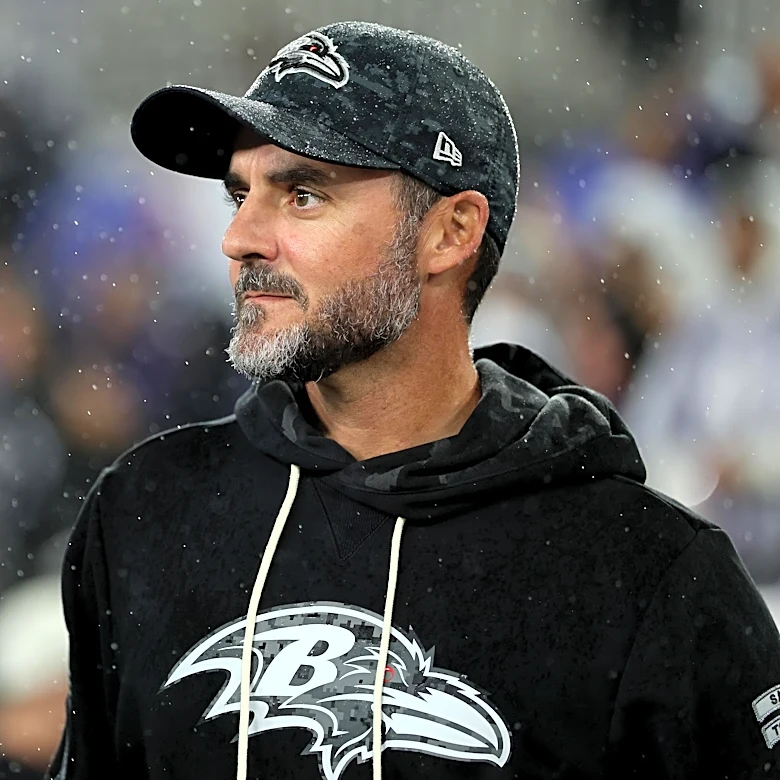



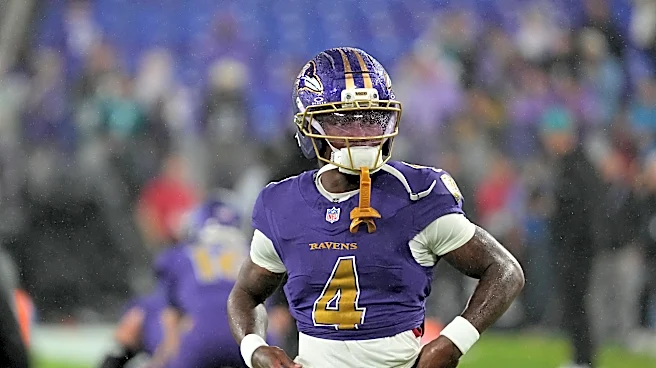
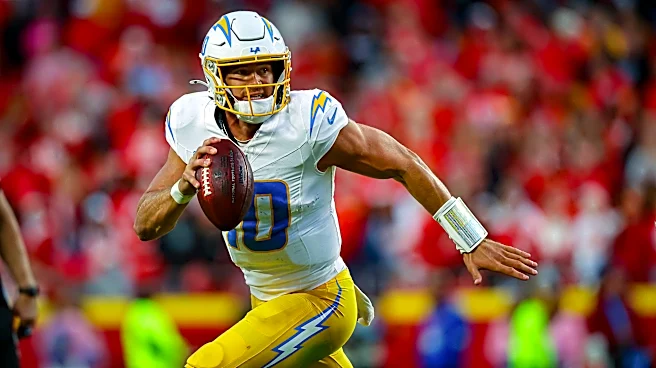
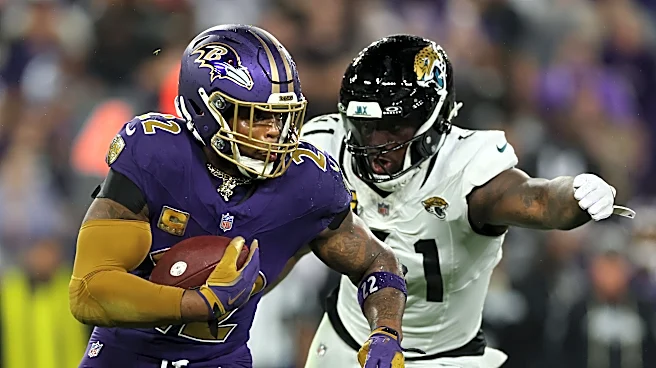
The best way to evaluate Baltimore’s offense Monday night will be to look beyond Jacoby Brissett’s final passing total and focus on the overall efficiency of Declan Doyle's unit.
A completion can reveal whether a receiver and quarterback recognized the same coverage. A short run can expose a missed block or demonstrate how effectively a defense filled the available lanes. With Baltimore introducing another starter at quarterback, those details will go a long way in determining whether a losing streak ends at M&T Bank Stadium.
Here is one specific thing to watch at each offensive position against the Chargers.
Quarterback: Does the ball arrive before the window closes?
Doyle described Brissett as an anticipation thrower, making his release timing worth monitoring. Is he throwing as Flowers or Bateman enters
the break, or waiting until the receiver is visibly open? Chargers cornerbacks Tarheeb Still, Cam Hart and Donte Jackson can close the space between recognition and delivery. Baltimore needs its routes and throws synchronized, particularly on intermediate attempts near the sideline.
Running back: How much work happens before contact?
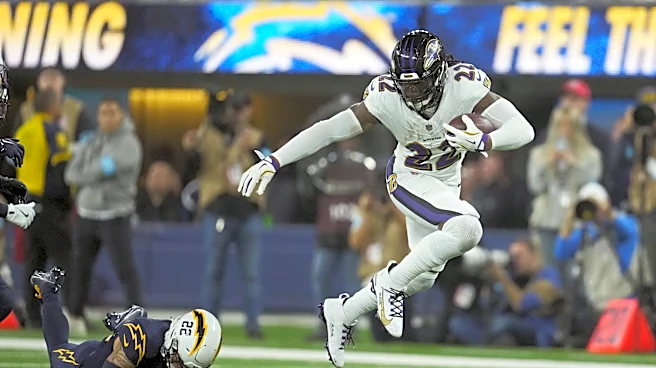
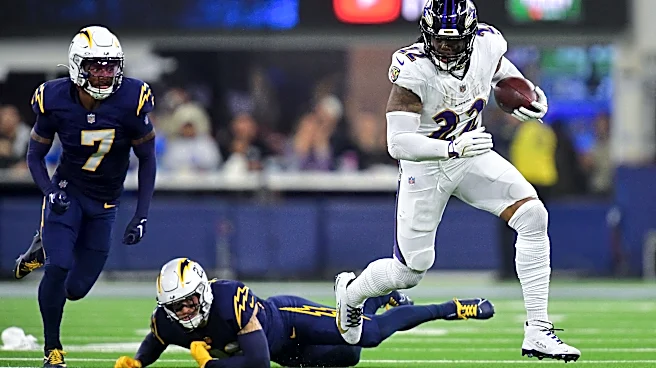
Henry’s yardage should be judged alongside the room available to him. Interior defenders Teair Tart, Dalvin Tomlinson and Jamaree Caldwell can force a runner to redirect before he reaches the line.
Watch whether Henry can press the intended gap and move forward or must repeatedly escape penetration. Hill’s carries can also reveal whether Baltimore is finding space through different formations rather than relying on broken tackles.
Wide receiver: Can players other than Flowers separate?
Flowers leads Baltimore with 43 catches for 614 yards and three touchdowns. The next question is whether Bateman, Devontez Walker or Ja’Kobi Lane can make Los Angeles defend the full group.
If the Chargers commit help toward Flowers, another receiver needs to provide a viable option. Separation on the opposite side can be more valuable than forcing additional targets toward Baltimore’s leading receiver.
Tight end: Does Andrews finish the difficult catches?
Doyle acknowledged Andrews had made contested catches in serious situations while also leaving plays he wanted back.
Watch the third-down and middle-of-the-field opportunities when Brissett needs a reliable target. A tight window is not necessarily a bad decision if Andrews has positioning, but those chances must become completions against linebackers and safeties closing quickly.
Offensive line: How are assignments exchanged?
Mack and Tuipulotu will command attention, but the communication between adjacent blockers also matters. A moving defensive front can test whether Jurgens, John Simpson and Vega Ioane recognize the same responsibility.
Watch for free rushers, late handoffs, and blockers turning toward the same defender. Clean exchanges would let Stanley and Rosengarten focus on their work outside instead of compensating for confusion inside.
This article originally appeared on Ravens Wire: Ravens-Chargers: One thing to watch at each offensive position