
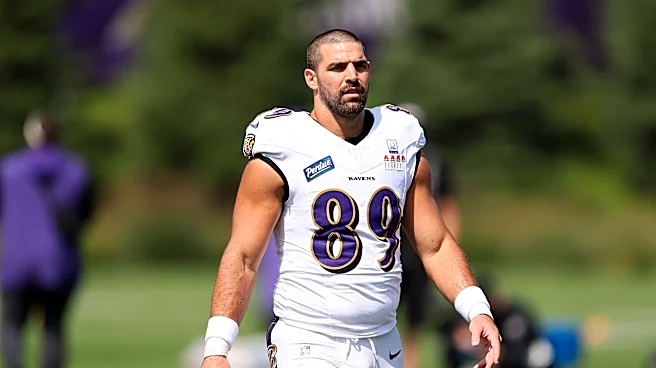
Some position changes take years to evaluate. Others begin revealing themselves much sooner. The Baltimore Ravens may be seeing the latter scenario play out by way of rookie tailback Adam Randall.
After playing only a single season at the position for the Clemson Tigers in 2025, the Ravens decided to invest a fifth-round pick, the 174th overall, to add him in the NFL draft last April. Ravens owner Steve Bisciotti personally selected him. A recommendation from his friend, Tigers head coach Dabo Swinney, helped fuel the decision. Fast forward to the present, and Randall's transition is progressing faster than many expected.
Adam Randall's unique background may be accelerating his development
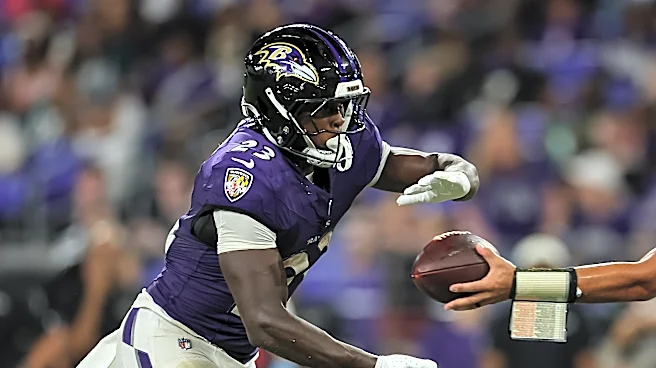
You wouldn't know this if your introduction to Adam Randall came during the Ravens' preseason finale. He was excellent, but
Baltimore's talented 6-foot-3, 232-pound stud hasn't played running back very long.
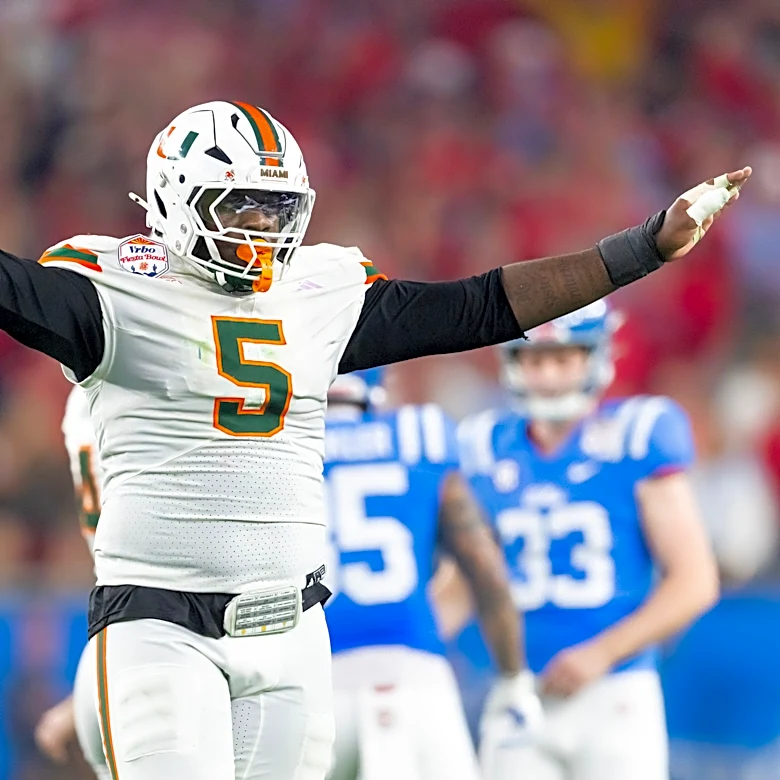
He spent most of his football life as a wide receiver. He enrolled early at Clemson in 2022 and immediately generated buzz before suffering a torn ACL during spring practice. He returned that same season (yes, from that same ACL tear). He'd eventually make his first career start later that season in the Orange Bowl.
His football journey took a dramatic turn in 2024 when Clemson began experimenting with him at running back. What started as an adjustment eventually became a permanent move. By 2025, Randall had fully embraced life in the backfield.
The results were encouraging. He rushed 168 times for 814 yards and 10 touchdowns during his final NCAA season. He added 36 receptions for 254 yards and three more scores. The production convinced Baltimore to invest a fifth-round pick in him during the 2026 NFL Draft.
Learning running back at the NFL level is difficult enough. Learning it after spending most of a career as a receiver presents an entirely different challenge. Running behind pads, reading blocks, understanding run fits, recognizing blitzes, and embracing the physical nature of the position all require significant development. Still, Randall's background may also provide advantages. He has obvious skills that many traditional running backs wish they possessed.
His receiving skills are obvious. Few running backs enter the league with his experience as a route runner and pass catcher. His size creates matchup issues, and his comfort operating in space gives offensive coaches flexibility when designing packages. What's becoming increasingly encouraging, however, is the progress he's showing in the areas that don't come naturally.
Randall looks more comfortable running through contact. He appears more decisive attacking rushing lanes. The physicality required to play the position full-time seems to be becoming part of his game rather than something he's merely learning to tolerate. He seems as though he's been playing the position at football's highest level much longer than he has.
It would seem the Ravens never drafted Randall with the expectation that he'd be a finished product. It would seem more that they drafted traits, upside, and a player whose best football might still be ahead of him. The fact that he only played running back for one full season at Clemson makes his developmental curve especially intriguing. Baltimore has long valued versatile offensive weapons.
If Randall continues to adapt to the finer points of the position while maintaining the receiving ability that helped define his collegiate career, the Ravens may eventually find themselves with more than a developmental project. They may have found a running back whose transition is arriving earlier than expected.
This article originally appeared on Ravens Wire: Ravens rookie Adam Randall is ahead of schedule at running back