


The Baltimore Ravens opened the Jesse Minter era with a 41-23 victory over the Indianapolis Colts, producing 506 yards while displaying impressive depth on both sides of the football. The morning after typically brings a cup of coffee and the team's playing-time (snap count) distribution at key spots. Baltimore ran 68 offensive plays and Anthony Weaver's unit logged 54 defensive snaps. Here is a position-by-position look at the unofficial snap counts and the analysis of playing time.
Ravens snap counts from Sunday’s win over Colts pic.twitter.com/RGGWAw05Pa
— Brian Wacker (@brianwacker1) September 14, 2026
Quarterback
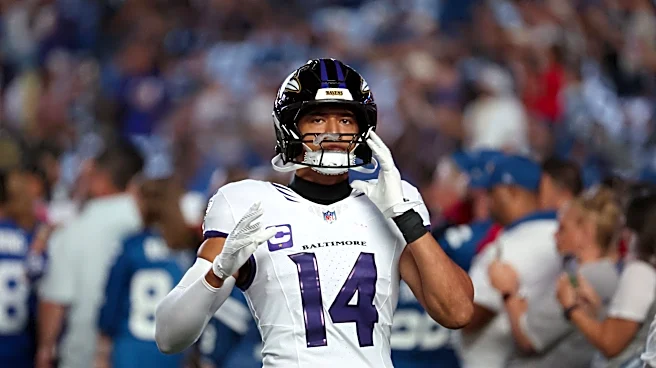
Lamar Jackson played all 68 offensive snaps, completing 17 of 25 passes for 324 yards and one touchdown. He added 43 yards and one touchdown on six carries.
Jackson produced his highest passing
total since October 2024 and repeatedly escaped pressure to extend possessions.
Running back
Derrick Henry played 37 snaps, accounting for only 54% of Baltimore’s offensive workload. He still carried 24 times for 144 yards and three touchdowns. Justice Hill played 31 snaps, giving the Ravens an almost even rotation based on playing time. Hill’s presence allowed Baltimore to manage Henry’s workload without limiting his touches or effectiveness. Henry became the first player in NFL history to record 26 games with at least 100 rushing yards and multiple rushing touchdowns.
Wide receiver
Rashod Bateman led Baltimore’s receivers with 53 snaps but had a quiet afternoon statistically.
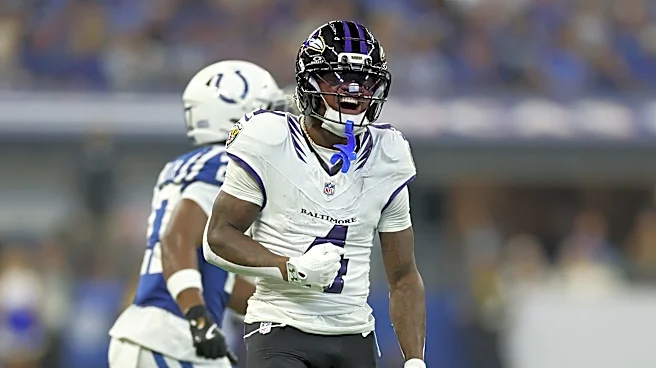
Zay Flowers produced five catches for a career-high 150 yards and one touchdown despite playing only 20 snaps before suffering a hamstring injury. He averaged 7.5 receiving yards for every offensive snap. Rookie Ja’Kobi Lane played 27 snaps before suffering a fractured wrist. He caught one pass for 11 yards on three targets.
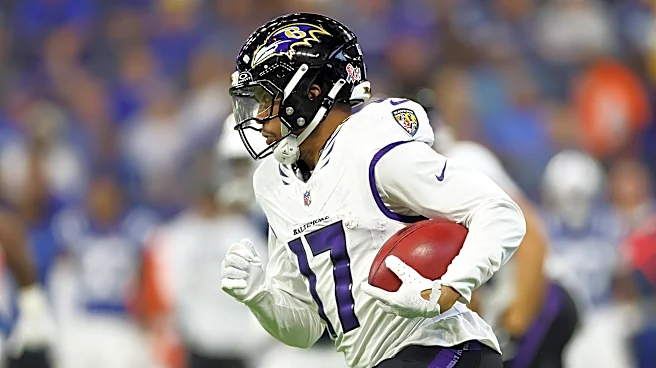
Chris Moore logged 25 offensive snaps after being elevated from the practice squad and produced a 53-yard reception. Moore also played 16 special-teams snaps. LaJohntay Wester played 20 offensive snaps and nine on special teams.
Tight end
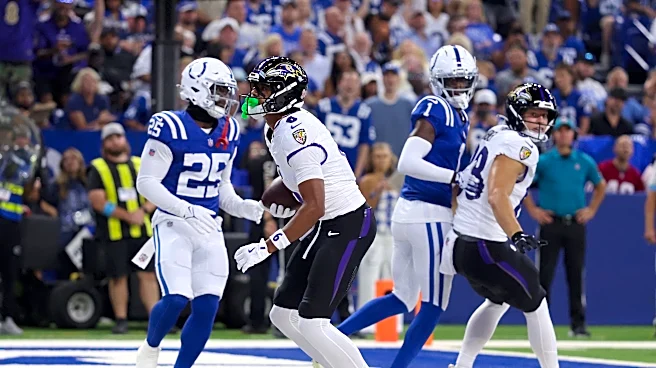
Mark Andrews led the group with 49 snaps, followed by Durham Smythe with 42 and rookie Matt Hibner with 23.
The distribution showed Baltimore’s commitment to heavier personnel groupings. Andrews played 72% of the offensive snaps, while Smythe appeared on 62%.
Hibner also handled nine special-teams snaps, giving him 32 total plays during his NFL debut.
Offensive line
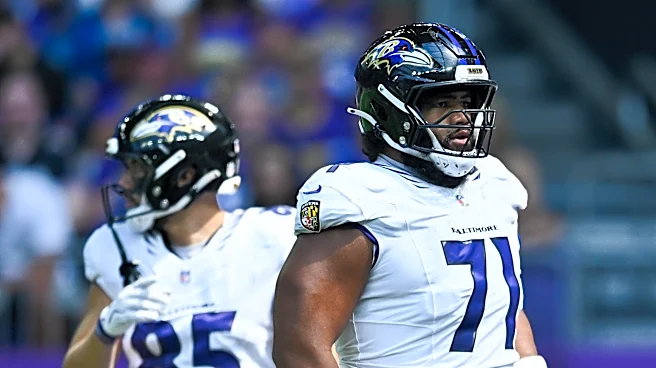
Jackson Simpson, Vega Ioane, Roger Rosengarten, Ronnie Stanley and Jovaughn Gwyn played all 68 offensive snaps.
The continuity helped Baltimore rush for 182 yards and average 7.4 yards per offensive play. The group experienced problems with penalties, however. Holding calls against Gwyn and Ioane erased significant gains, including Lane’s potential first NFL touchdown.
Rookie Carson Vinson received seven offensive snaps as an additional blocker. Andrew Vorhees appeared exclusively on special teams.
Defensive line
Travis Jones led Baltimore’s defensive linemen with 31 snaps. Calais Campbell played 29, followed by Broderick Washington with 21, John Jenkins with 13, Zion Young with 12 and Aeneas Peebles with 10.
Campbell’s 54% workload reflected Baltimore’s plan to manage the 40-year-old veteran without limiting his ability to influence the game.
The Ravens held Jonathan Taylor to a solid 98 yards on 19 carries and a fumble, although he scored twice.
Edge rushers
Tavius Robinson played 44 defensive snaps and recorded Baltimore’s first sack of the season. He also led the team with 17 special-teams snaps.
Trey Hendrickson handled 40 defensive snaps. According to Next Gen Stats, Baltimore generated a 58.6% pressure rate with Hendrickson on the field, compared with 20% when he was absent. Hendrickson generated eight pressures across 21 matchups against left tackle Bernhard Raimann.
Mike Green contributed 17 defensive snaps, while Young played 12.
Linebacker
Roquan Smith and Kyle Hamilton (defensive back)were among three Baltimore defenders to play all 54 defensive snaps. Smith led the Ravens with 11 tackles and intercepted Daniel Jones.
Trenton Simpson played 32 defensive snaps and 11 on special teams.
Cornerback
Nate Wiggins played every defensive snap, while Marlon Humphrey handled 48. Humphrey forced and recovered Taylor’s fumble, creating one of Baltimore’s two takeaways.
Keyon Martin played 23 defensive snaps and 16 on special teams. Chidobe Awuzie received six defensive snaps.
T.J. Tampa played five special-teams snaps before leaving with a knee injury.
Safety
Hamilton played all 54 defensive snaps and contributed pressure that helped create Smith’s interception.
Jaylinn Hawkins played 52 defensive snaps, while Malaki Starks played 54. Starks delivered Baltimore’s final defensive statement by sacking Jones on fourth down late in the fourth quarter.
Baltimore also used Hamilton and Starks for five offensive snaps apiece. Wiggins received four offensive plays as the Ravens incorporated defensive players into specialty personnel packages and at the end of the game.
Special teams
Robinson led Baltimore with 17 special-teams snaps, followed by Martin and Moore with 16 apiece.
Tyler Loop played 14 snaps and converted field goals from 57 and 45 yards. Punter Ryan Eckley and long snapper Matthew Moore each received 10 snaps.
Keondre Jackson and Jay Higgins played 24 special-teams snaps apiece, while Ethan Burke handled 21. Their workloads showed how Baltimore built the bottom of its roster around players who could contribute immediately in the kicking game.
This article originally appeared on Ravens Wire: Ravens snap counts vs. Colts: Breakdown, analysis from 41-23 win