
The Baltimore Ravens have completed their opening stretch of training camp practices, providing an extended look at Jesse Minter’s team, Declan Doyle’s offense and a retooled defense carrying championship expectations.
Lamar Jackson has looked comfortable while operating under center more frequently, rookie wide receiver Ja’Kobi Lane has become one of camp’s biggest stories and Nnamdi Madubuike has taken encouraging steps in his return from a serious neck injury. Baltimore is also evaluating a revamped offensive line and several new defensive pieces.
Here are 10 takeaways from the first week of Ravens training camp.
1. Lamar Jackson looks comfortable in the new offense
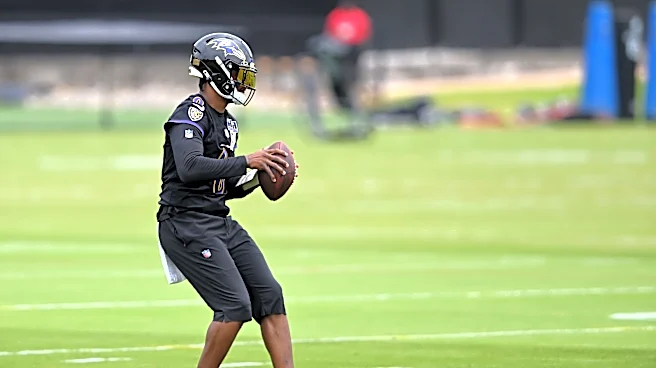
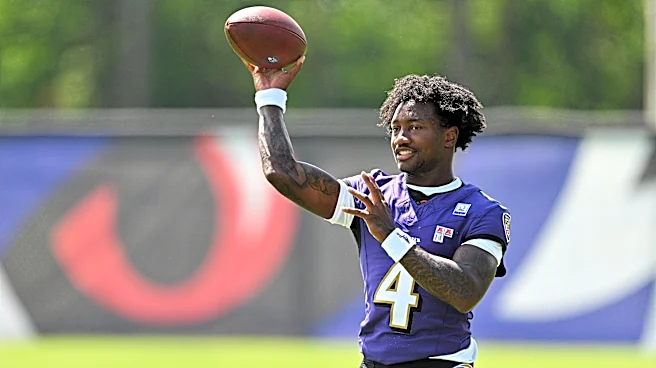
Jackson entered camp facing another offensive transition, but the two-time NFL MVP has looked comfortable operating Doyle’s system.
He has thrown accurately, created explosive plays and demonstrated increased control at the line of scrimmage.
One of the most noticeable changes has been Jackson’s increased work from under center. The Ravens want to pair those looks with Derrick Henry’s presence, creating more effective play-action opportunities and making it difficult for defenses to identify whether it's a run or a pass based on the quarterback’s alignment.
Jackson’s athleticism will remain central to Baltimore’s offense, but the early emphasis has been on expanding his command rather than reinventing his game. His comfort with the new presentation is an encouraging first step.
2. Declan Doyle is challenging Lamar Jackson in new ways
Doyle has brought new terminology, formations, motions and teaching methods to Baltimore. His offense is designed to give Jackson greater freedom to diagnose defenses and make adjustments before the snap.
The 30-year-old coordinator has repeatedly challenged Jackson during meetings, testing his retention and demanding precision with footwork, tempo and execution. Jackson has embraced that approach and described some of Doyle’s teaching methods as “mind-blowing.”
The offense will experience growing pains during installation, but the early relationship between Jackson and Doyle appears strong. Baltimore hired Doyle to modernize the presentation without abandoning the physical running game that best complements Jackson and Henry.
3. Derrick Henry remains the offense’s physical foundation
Doyle’s arrival will bring new concepts, but Baltimore has no intention of moving away from Henry. The veteran running back remains one of the NFL’s most imposing runners and the physical foundation of the Ravens’ offense.
Baltimore can use heavier formations and under-center play action to force defenders into difficult decisions. When linebackers step toward Henry, Jackson should have opportunities to attack openings behind them. If defenders hesitate, Henry can punish lighter boxes.
Henry has also made it clear that he would like Baltimore to be the final stop of his playing career, although he recently clarified that he is not contemplating retirement. His focus remains on preparing for another season and helping the Ravens pursue a championship.
4. Ja’Kobi Lane is becoming the talk of camp
Lane has quickly become Baltimore’s most exciting young player. The rookie receiver has repeatedly demonstrated his ability to make contested catches, snatch the football away from his frame and provide Jackson with a large target in the red zone.
The 6-foot-4 receiver has produced several highlight-reel receptions, including a deep connection with Jackson and a one-handed catch during a red-zone period. Offensive coordinator Declan Doyle compared Lane’s ability to secure the football to former New Orleans Saints star Michael Thomas and described the rookie as an easy target for quarterbacks.
Lane must continue developing as a route runner and prove he can handle physical NFL coverage. Still, his strong hands and catch radius allow him to earn an immediate role behind Zay Flowers and Rashod Bateman.
5. Baltimore’s offensive line has a different identity
The Ravens enter the season with a revamped offensive line and a new position coach in Dwayne Ledford. First-round pick Vega Ioane is expected to play an immediate role, while returning linemen are adjusting to Ledford’s demands for urgency, physicality and finish.
Ledford wants his linemen to attack the line of scrimmage quickly, play fast off the ball, and finish every rep around the ball carrier. That philosophy fits an offense built around Jackson’s versatility and Henry’s punishing running style.
Baltimore does not need the line to replicate last season’s group player for player. It needs the unit to develop chemistry, communicate effectively and establish a consistent physical identity before Week 1.
6. Ethan Pocic changed the center competition
The late addition of Pocic gave Baltimore an experienced candidate at its most unsettled offensive position. The former Cleveland Browns center has made 97 career starts and brings extensive knowledge of AFC North personnel and pressure packages.
Pocic is competing with Danny Pinter and Jovaughn Gwyn. His experience makes him the logical favorite, but the Ravens have not named a starter, and Ledford expects the evaluation to continue throughout training camp.
Baltimore is replacing Tyler Linderbaum’s elite movement ability with a different profile. Pocic offers size, experience and familiarity with the division, while Pinter and Gwyn provide competition and interior depth. Preseason games and joint practices should provide the most important tests.
7. Nnamdi Madubuike’s return is the best defensive development
Madubuike’s return to the practice field represents one of the most encouraging developments of Baltimore’s summer. The Pro Bowl defensive tackle suffered a season-ending neck injury during Week 2 of the 2025 season and underwent surgery in April.
Independent spine and cervical specialists cleared Madubuike before camp. The Ravens initially placed him on the active physically unable to perform list to evaluate his conditioning and reacclimate him before removing him from the list.
Baltimore has limited Madubuike to individual work while gradually increasing his activity. There is no reason to rush a cornerstone defender in August, but his presence substantially raises the ceiling of the defensive front. A healthy Madubuike gives the Ravens an interior pass-rushing threat capable of changing games.
8. Jesse Minter has a deeper, more versatile defense
Minter inherited a roster with established defensive stars, but Baltimore also made significant changes following an 8-9 season. The Ravens added Trey Hendrickson, Chidobe Awuzie and Jaylinn Hawkins while retaining foundational players such as Roquan Smith, Kyle Hamilton, Nate Wiggins and Madubuike.
Anthony Weaver serves as defensive coordinator, but Minter’s background and involvement give Baltimore another experienced defensive mind capable of constructing pressure packages and disguising coverages.
The Ravens have enough versatility to play multiple fronts, move Hamilton around the formation and create favorable pass-rush matchups. Training camp has also revealed promising depth, including Keondre Jackson’s emergence and continued competition at inside linebacker and cornerback.
9. The Ravens may have the NFL’s best safety trio
Hamilton, Malaki Starks and Hawkins give Baltimore three starting-caliber safeties with complementary skill sets.
Hamilton can align in the box, cover the slot, rush the passer or play deep. Starks enters his second season with the range and intelligence to assume a larger role, while Hawkins joined the Ravens after recording four interceptions in 2025.
Their versatility should allow Baltimore to disguise coverages and match personnel without making predictable substitutions. Minter can deploy three-safety packages, use Hamilton closer to the line of scrimmage and rotate Starks or Hawkins into deep coverage.
If the trio remains healthy, safety could become the defining strength of Baltimore’s defense.
10. Roquan Smith is setting the standard for a contender
Smith remains the voice and emotional center of Baltimore’s defense. His communication, preparation and physicality are especially important as the Ravens integrate new players and adjust to Minter’s leadership.
Baltimore is not approaching this season as a rebuilding team. Jackson, Henry, Flowers, Smith, Hamilton and the rest of the veteran core understand that the roster has enough talent to compete for a Super Bowl. The question is whether the Ravens can execute consistently and finish games better than they did last season.
Minter has emphasized accountability, relationships, and understanding why assignments work, rather than merely memorizing them. Smith is the ideal player to reinforce that standard inside the locker room and on the field.
This article originally appeared on Ravens Wire: 10 takeaways from the first week of Ravens training camp