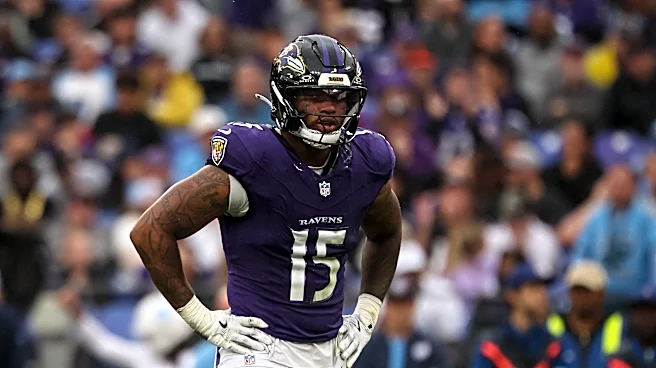


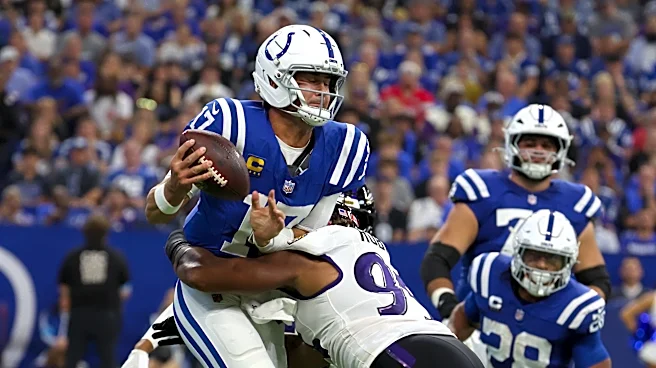
Getting to the quarterback in the NFL is not as simple as beating an offensive tackle and running toward the backfield. Mike Green knows that better than most, and the Ravens outside linebacker offered a detailed look at the strategy behind pass rushing during his appearance on the team's The Lounge podcast.
Speaking with hosts Ryan Mink and Garrett Downing, Green explained that a successful pass rush depends on several things happening together. A defender can have the right move, but that does not guarantee an opportunity to bring down the quarterback.
“There's a bunch of things that go into getting sacks,” Green said. “A lot of things have to go right. Not only if your move works or not, you got to make sure that our coverage is locked down.”
Green explained that strong coverage gives the pass rush more time to get home. Defenders also have to work together, maintain their rush lanes and make sure the quarterback does not get rid of the football before they can finish the play.
“You got to make sure that the defensive line is rushing together, and you got to just make sure that it's a third-and-long situation and the quarterback is dropping to a certain depth,” Green said.
Another important part of the job is setting up the offensive tackle. Green said pass rushers cannot simply rely on the same move over and over because offensive linemen are constantly adjusting to what they have seen.
“I think that's probably one of the key things to be a really good pass rusher,” Green said. “You have to set up the tackle and you have to be in the right situations and in the right place at the right time.”
For an edge defender, repeatedly threatening the outside shoulder of an offensive tackle can force the blocker to change his positioning. Green's explanation illustrates why he considers the spin move a change of pace. Its effectiveness can depend on how the tackle has responded to his previous rushes.
He described the matchup as a back-and-forth game in which both players are trying to anticipate what the other will do.
“You want to do moves based off what he does, and he wants to stop your moves based off what you previously have done,” Green explained. “So it's just like you're playing this back-and-forth game.”
That is also why Green does not rely on his spin move every time he rushes the passer. He views it as a changeup that can be more effective after he has shown an offensive tackle other moves.
“I'll probably just say whenever I just need to change up,” Green said. “Sometimes I'm like, no, I shouldn't do it at all. Sometimes we're just like, yeah, you know, I should probably do it a little bit more than often. But I kind of just think it just depends on the type of game it is, what the offense is doing, and where we are in the game.”
Green also emphasized the importance of coverage, an area that has contributed to Baltimore's defensive inconsistency this season. When opposing quarterbacks can identify an open receiver immediately after the snap, even a successful move at the line of scrimmage may produce little more than a pressure. Improvements in the secondary could create additional finishing opportunities for Green and the rest of Anthony Weaver's front.
Green's explanation provides a glimpse into the preparation and decision-making behind his recent production. His growing sack total is the result of more than individual athleticism; it also reflects the timing, teamwork and technique required to consistently pressure NFL quarterbacks.
This article originally appeared on Ravens Wire: Ravens’ Mike Green explains how he sets up tackles to finish sacks