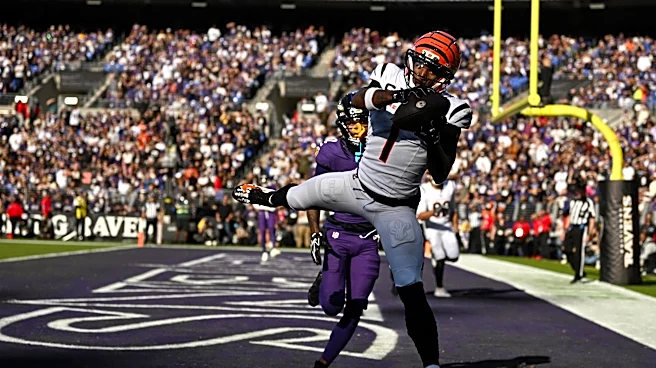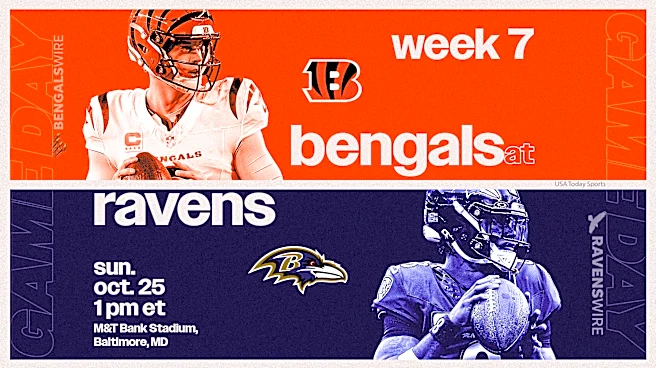

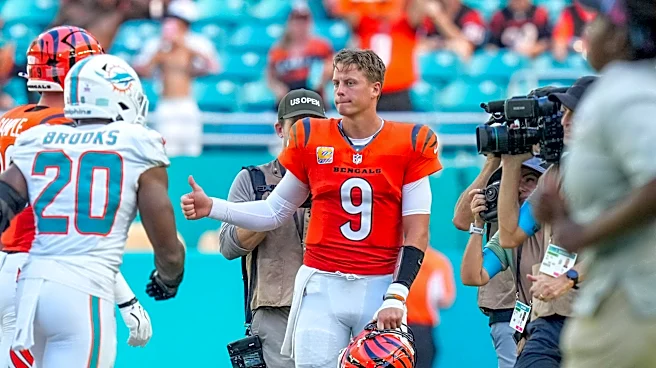
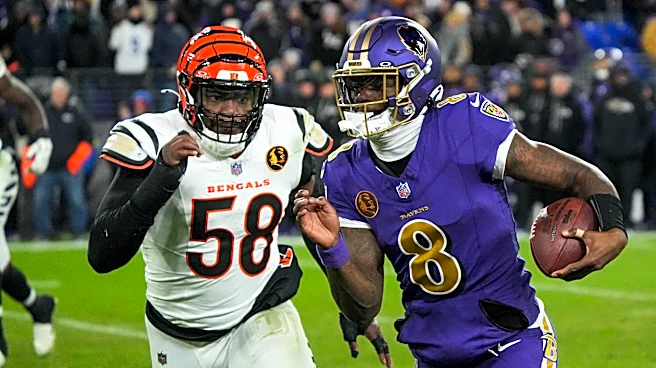

Another week... Another loss against AFC North competition... The Baltimore Ravens have suddenly dropped from top-ten on many national power rankings to lastin the division. A35-13 loss to the Cincinnati Bengals left plenty to dissect, but the most troubling part wasn't simply the final score.
The most frustrating aspect of the result was how many questions remain about what this team can realistically accomplish. Some concerns involve personnel, others involve the offense's limitations, and one is bigger than either side of the ball.
These aren't declarations that the season is lost or that certain players can't contribute. They're questions worth asking after another disappointing performance. Baltimore's margin for error is shrinking, and expectations
are still considerably higher than what the team has consistently delivered. That said, here are a few random thoughts fr fodder.
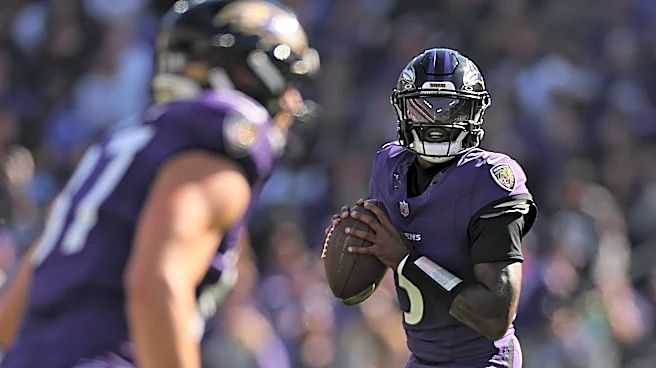
Can Tyler Huntley sustain the offense if Lamar Jackson remains out?
Tyler Huntley has earned a reputation as a capable backup who can spark the offense when called upon. That reputation is deserved, and it makes it reasonable to wonder whether he could perform better with a full week of preparation than after Lamar Jackson's departure.
The results, however, have been uneven. When Jackson was forced out in Week 4, Huntley completed eight of nine passes for 63 yards. He didn't exactly transform the offense, although the circumstances made it easy to give him the benefit of the doubt. His Week 5 performance against the Atlanta Falcons offered more encouragement. He completed 24 of 32 passes for 201 yards and two touchdowns without an interception, and he added a rushing touchdown.
The subsequent performances against the Cleveland Brownsand Cincinnati have made the conversation more complicated. Huntley deserves credit for stepping into a difficult situation, and Baltimore can't pin its offensive struggles entirely on its quarterback. Protection, play calling, penalties, and the supporting cast all matter. Still, the difference between providing a spark and sustaining an offense over multiple games is significant.
Perhaps Huntley is at his best when he can enter a game and change its rhythm for a stretch. That doesn't necessarily mean he can maintain that level as the primary quarterback over an extended period. It's not an indictment of his ability. It's a question about the limits of his role. The Ravens need to know the answer because they can't take Jackson's availability for granted.
Does Baltimore need to reconsider Marlon Humphrey’s role?
Marlon Humphrey has been an important part of the Ravens for years, and questioning his future at cornerback isn't the same as questioning his value to the team. Still, his recent struggles in coverage raise a difficult possibility: Could he be better elsewhere?
There have been too many snaps this season in which Humphrey has looked uncomfortable trying to stay attached to receivers, and the Bengals game only intensified those concerns. Cornerback is an unforgiving position. A slight loss of recovery speed or a delayed reaction can turn an otherwise solid rep into a major gain for the offense.
That doesn't automatically mean Humphrey should move to safety. The transition would require its own evaluation of his range, instincts, tackling, and ability to operate in space. One poor performance shouldn't erase the body of work that has made him a respected Raven. But Baltimore has to evaluate what Humphrey can do now, not simply what he has done in the past.
Could a move to safety extend his career and allow him to use his experience and physicality differently? It's a legitimate offseason question, especially if the Ravens believe his current struggles are more than a temporary dip in form.
How much can the running game improve with this offensive line?
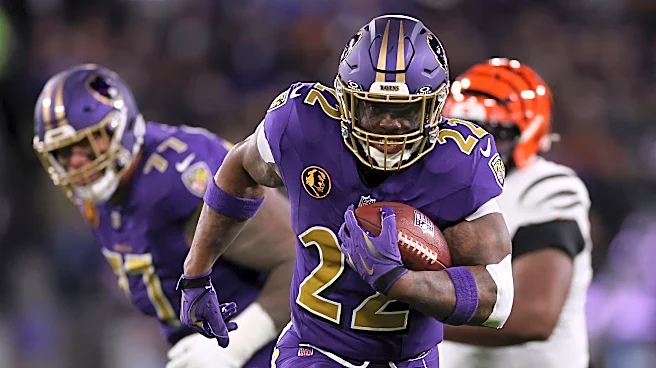
Derrick Henry can still deliver the kind of punishing run that changes a game. His stiff-arm still gives defenders trouble, and he can wear down a front seven when the blocking gives him a chance to build momentum, but a great running back cannot manufacture consistent rushing lanes on every snap.
Baltimore's ground game has too often looked dependent on whether the offensive line can create space. At times, the blocking works and Henry looks like the force everyone expects. Then there are stretches when the lanes disappear, the offense falls behind schedule, and the running game becomes difficult to sustain.
The natural response is to call for better blocking, different front combinations, or more creativity in the run scheme. Those adjustments may help, but they also raise a tougher question: What if the current personnel has limitations that shuffling the lineup can't fix?
That possibility shouldn't stop the Ravens from trying to improve. It should, however, force them to assess the problem honestly instead of assuming the ground game will eventually click because Henry is still Henry. If the offensive line has a relatively low ceiling, Baltimore may need to adjust its expectations and find other ways to keep defenses from concentrating on the run.
What would restore confidence in the Ravens as contenders?
This is the biggest question, and it goes beyond any single player or position group. Baltimore has shown enough talent to look dangerous against good teams, but talent alone doesn't make a team belong among the NFL's elite. That requires a level of consistency the Ravens haven't demonstrated often enough.
Some games, Baltimore looks capable of overwhelming an opponent; in others, basic problems become hard to overcome. The losses to Cleveland and Cincinnati are particularly concerning because divisional games demand more than flashes of high-level football. They require teams to execute when the opponent understands their personnel, tendencies, and weaknesses.
The upcoming matchups against the Buffalo Bills and Jacksonville Jaguars will meaningfully test where Baltimore stands. Those games won't answer every question about the team's long-term outlook, but they can offer a clearer picture of whether the Ravens can compete with strong opponents when the pressure rises.
The concern isn't that Baltimore has no path to becoming a contender. It's that the team hasn't made a convincing case that its best performances reflect its true level rather than occasional glimpses of what it could be. Until the Ravens demonstrate that they can sustain that level, questions about their ceiling are fair. The next two games won't define the season, but they could help determine whether expectations need recalibration.
This article originally appeared on Ravens Wire: What is the Ravens’ ceiling? 4 questions after another collapse