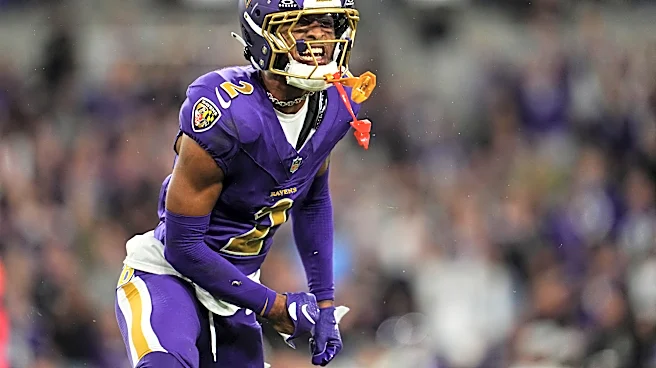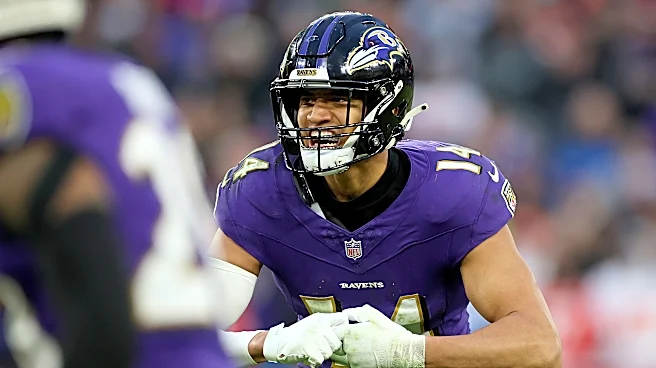





The Baltimore Ravens enter training camp with one of the NFL’s most talented and versatile safety groups, led by Kyle Hamilton and second-year defender Malaki Starks.
Hamilton is widely considered the league’s best player at the position, while Starks established himself as an immediate starter during an encouraging rookie season. The addition of veteran Jaylinn Hawkins gives defensive coordinator Anthony Weaver another experienced option capable of playing significant snaps and creating turnovers.
The primary questions at safety are not about whether Baltimore has enough starting talent. Training camp will determine how the Ravens distribute snaps among their top three players and whether Keondre Jackson can secure a roster spot through special
teams. Undrafted rookies Silas Walters and Jahquez Robinson will try to force their way into the conversation.
Kyle Hamilton
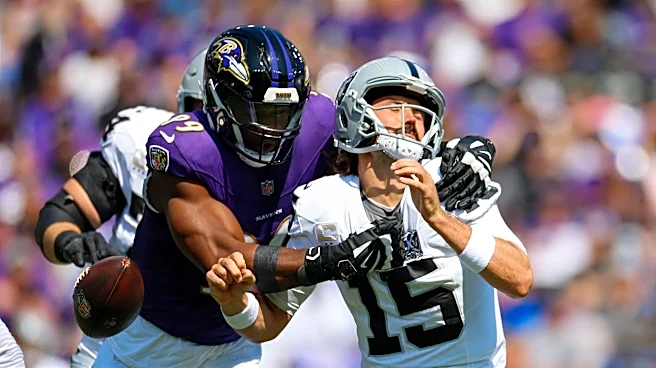
Hamilton remains the player around whom Baltimore can construct its defense. The 6-foot-4, 218-pound safety can align deep, cover the slot, defend tight ends, pressure quarterbacks and play near the line of scrimmage without creating an obvious mismatch for the Ravens.
His presence gives Weaver tremendous freedom. Baltimore can change coverages after the snap, disguise pressure and move Hamilton based on the opponent’s personnel without substituting. That versatility becomes even more valuable with Starks and Hawkins available to handle traditional safety responsibilities behind him.
The Ravens allowed an opposing quarterback rating of 49.0 when Hamilton was on the field last season, compared with 90.0 when he was absent. That contrast illustrated how much Baltimore’s communication, coverage and overall defensive structure depended on him.
Hamilton enters his fifth season without anything to prove during training camp, but his usage will remain a central storyline. Baltimore should continue moving him throughout the formation rather than limiting one of the NFL’s most versatile defenders to a conventional safety role.
Malaki Starks
Starks enters his second season positioned to make a significant jump after starting immediately as a rookie. The 2025 first-round pick recorded 84 tackles, two interceptions and four passes defensed while appearing in all 17 games. He played with discipline on the back end and rarely allowed his responsibilities to become too large for him.
The next step is producing more game-changing plays. Starks had six interceptions during three seasons at Georgia, and Baltimore would benefit from seeing that playmaking ability translate more consistently to the NFL.
His relationship with Hamilton gives the Ravens two young defensive backs capable of exchanging responsibilities before and after the snap. Starks can operate as the deep safety when Hamilton moves toward the line of scrimmage, but he also possesses the physicality and instincts to play downhill.
Starks is not a rookie learning how to survive an NFL training camp. He is an established young starter who could emerge as one of Baltimore’s most important defensive players in his second season.
Jaylinn Hawkins
Hawkins gives the Ravens a proven third safety after signing a two-year, $10 million contract during free agency. He started 15 games for New England last season and established career highs with 71 tackles, four interceptions, six passes defensed and 1.5 sacks.
Baltimore’s investment suggests Hawkins will be more than an emergency reserve. His range and experience should allow Weaver to use three-safety packages while moving Hamilton into the slot, into the box or onto the line of scrimmage.
Hawkins also provides insurance against injuries and gives the Ravens another defender who can finish plays when quarterbacks make mistakes. The exact distribution of snaps between Hawkins and Starks will be worth monitoring, but Baltimore should have a role for all three of its top safeties.
Keondre Jackson
Jackson enters his second season with the clearest path to the fourth safety job. The former undrafted free agent began last year on the practice squad before earning a promotion to the 53-man roster through his performance on special teams.
He appeared in 12 games and recorded 13 tackles, one forced fumble and one fumble recovery. Jackson’s defensive opportunities were limited, but he established himself as one of Baltimore’s most energetic special teams contributors.
That experience gives him an advantage over Walters and Robinson. The fourth safety may not receive many defensive snaps when Hamilton, Starks and Hawkins are healthy, making performance on coverage and return units particularly important. Jackson has already demonstrated that he can contribute in those situations.
Training camp will determine whether Jackson can expand his defensive role while maintaining the special teams value that earned him a roster spot last season.
Silas Walters
Walters arrives as an undrafted rookie after developing from a walk-on into a second-team All-MAC selection at Miami of Ohio. He appeared in 40 college games and finished his career with 200 tackles, three interceptions and 24 passes defensed.
The production reflects a defender with experience reading offenses and making plays on the football. Walters recorded 71 tackles and three interceptions during his final season after collecting 95 tackles, 12 pass breakups and two fumble recoveries in 2024.
His immediate challenge will be adjusting to NFL speed while proving that he can contribute on special teams. Baltimore’s top three safety positions appear settled, and Jackson has already established himself in the kicking game. Walters will need to create turnovers, tackle consistently and earn roles on multiple special teams units to make the 53-man roster.
Jahquez Robinson
Robinson offers intriguing size at 6-foot-2 and 201 pounds. He played cornerback earlier in his college career before settling into a safety role at Auburn, giving him experience covering receivers and playing in space.
He appeared in all 12 games with eight starts during the 2025 season, recording 27 tackles. Robinson’s path through Alabama, Colorado and Auburn exposed him to different schemes and levels of competition, but he will need to demonstrate greater consistency during his first NFL training camp.
His combination of size and coverage experience makes him an interesting developmental prospect for Weaver. Like Walters, however, Robinson will probably need to earn his initial opportunity through special teams. A practice-squad position may be the most realistic outcome unless he produces a strong preseason.
Biggest question: How will the Ravens deploy their top three safeties?
Baltimore’s most important decision at safety will involve maximizing Hamilton, Starks and Hawkins without taking one of its best defenders off the field. Hamilton’s versatility provides the answer.
The Ravens can use Hamilton as a slot defender, dime linebacker or pressure player while Starks and Hawkins handle the deep portions of the field. That approach would allow Baltimore to field three safeties without sacrificing coverage ability or becoming vulnerable against the run.
Jackson enters camp as the favorite for the fourth spot because of his special teams value. Walters and Robinson are more likely to compete for a fifth safety job or practice-squad position.
Projected roster: Kyle Hamilton, Malaki Starks, Jaylinn Hawkins and Keondre Jackson.
This article originally appeared on Ravens Wire: Baltimore Ravens 2026 training camp preview: Safety