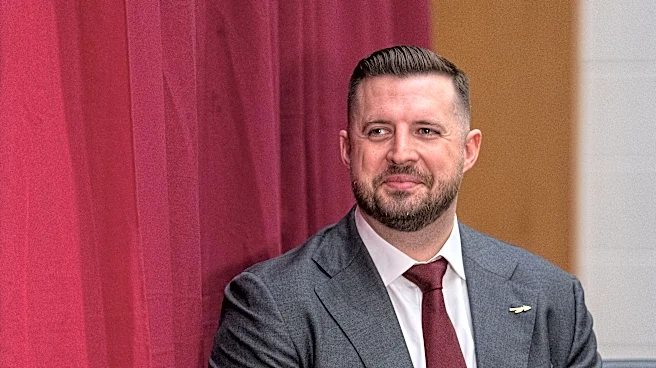





Florida State basketball’s 2026-27 schedule wasn't built simply to give the Seminoles tougher games. Luke Loucks says there is a larger calculation behind it.
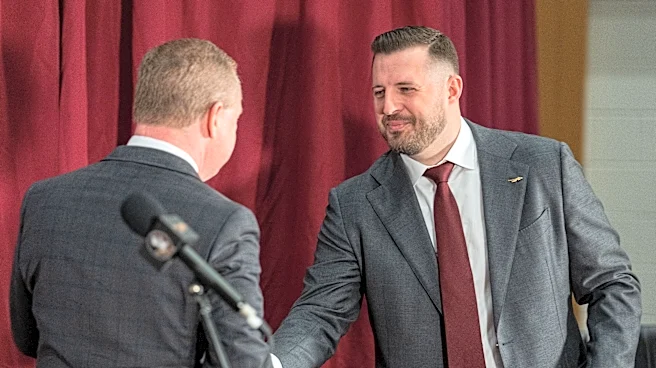
During a recent conversation with Voice of the Seminoles Jeff Culhane, Loucks explained that FSU intentionally strengthened both its preseason and nonconference schedules with one goal in mind: discover the team’s weaknesses early while building the type of résumé that can matter in March. The interview appeared on the Seminole Sports Network podcast.
“There’s a little bit of math behind what we’re doing,” Loucks said.
That process begins before the regular season. Florida State will play exhibitions against the Mississippi State Bulldogs, Auburn Tigers and LSU Tigers in October, giving Loucks’
rebuilt roster three opportunities against SEC competition before the games begin counting.
Loucks does not want to wait until the middle of the season to discover what needs fixing.
“You don’t want to figure out what your problems are 10 games in, kind of like we did last year,” Loucks said. “We want to find out what’s going on early.”
The regular-season schedule follows the same philosophy. FSU hosts rival Florida on Nov. 10, travels to Tennessee for the ACC/SEC Challenge on Dec. 1, and faces Texas A&M and Houston at neutral sites later in December. The Seminoles also host Dayton as part of a 14-game nonconference schedule.
Loucks said the program has deliberately moved away from filling the schedule with "cupcake" games that might produce comfortable victories without doing much for Florida State’s postseason résumé.
“For your NCAA Tournament hopes, it really does no good. It doesn’t help,” Loucks said.
A major piece of that thinking is Wins Above Bubble, or WAB, one of the metrics available to the NCAA Tournament selection committee. WAB compares a team’s actual number of victories with how many games an average bubble team would be expected to win against the same schedule. The NCAA stresses that WAB is one of several tools considered rather than a standalone formula for tournament selection.
That has changed how Loucks and his staff think about scheduling. He said FSU consulted with the NCAA, ESPN and people familiar with the selection process while determining how to put the Seminoles in a better position for an at-large bid.
“You’ve got to play real mid-major teams and take care of business,” Loucks said. “It gives you this mathematical equation at the end of the year that should help you.”
Of course, Loucks acknowledged the most important part of any scheduling strategy cannot be manufactured.
“You’ve got to win games.”
Florida State begins the regular season Nov. 2 against Florida A&M in Tampa before beginning a schedule specifically constructed to find out how good the Seminoles are and strengthen their March résumé if they prove capable of handling it.
Follow us @FSUWire on X and like our page on Facebook to follow ongoing coverage of Florida State news, notes, and opinions.
This article originally appeared on FSU Wire: Luke Loucks reveals the strategy behind FSU’s tougher schedule