

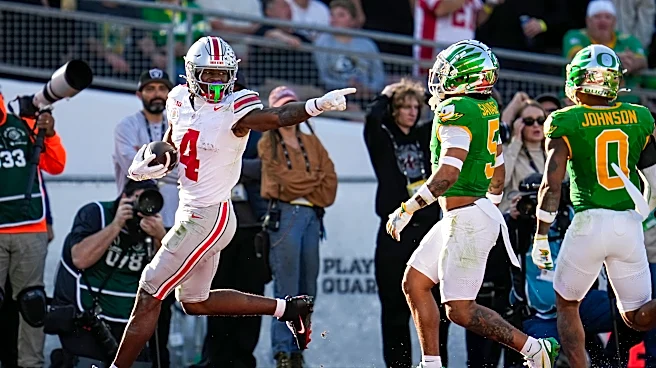

Name, Image and Likeness (NIL) has changed the landscape of college football greatly over the last few years, and it's sure to continue shaping the sport. But one of the things not often thought about is the impact that it has on young athletes trying to showcase their brand and navigate something athletes didn't have to worry about just a few years ago.
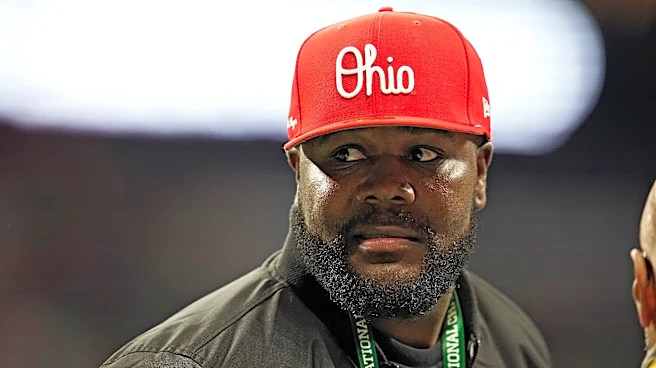
There are also lessons to be taken for other potential entrepreneurs and everyday Americans trying to enter the world of business startups. Former Ohio State national-title-winning quarterback Cardale Jones was instrumental in starting the NIL efforts at Ohio State and is still heavily involved in the media and is partnering with Chase to explore how local businesses, sports, and partnerships
can expand economic opportunities for student-athletes, entrepreneurs, and the broader Columbus community.
It's an important topic, and so we were able to get his take on where things are, where they might be going, and what advice he can give to student-athletes and other non-sport entrepreneurs.
And of course, we couldn't let the opportunity pass without asking Jones his thoughts on the Ohio State quarterback situation since he was involved in a similar scenario himself and one of the most improbable runs to the first-ever four-team College Football Playoff national championship as a third-string quarterback in 2014. Been there, done that.
Off we go ...
Phil Harrison from Buckeyes Wire Introduction: Former Ohio State Quarterback Cardale Jones interview
(Harrison) - Cardale, thanks again. One thing I want to do here is talk about name, image, and likeness — how it translates to today's athlete, and how it translates to a normal person trying to start a business. We'll dive into that. If you don't mind, I'd also like to ask you at the end about the current Ohio State quarterback situation, but we'll put that off until later.
Everyone at Ohio State knows Cardale mainly from the 2014 season, when he stepped in on that most improbable run for a national title and, I would argue, even elevated the offense towards the national title. So thanks for joining us.
My understanding is you're in Columbus right now at a Chase for Business event; is that correct?
(Jones) - That is correct.
On what Jones is involved in today
(Harrison) - Everyone knows your journey at Ohio State, what you did, and then you played professional football for a while. Why don't you tell everybody what you've been up to lately, and what kind of things you're trying to do in the NIL and entrepreneurship space? What are you involved in right now?
(Jones) - First and foremost, thanks for having me. The thing that takes a lot of my time on a daily basis is I'm still involved in the NIL field and world with Ohio State, and just the recruiting aspect. And then, during the football season, I work for CBS, back and forth between here and New York, where our studios are, and Fort Lauderdale.
Then, third, having unique opportunities like this, to partner with brands and companies like Chase, to really share the same type of passions when it comes to educating people in the financial world. And the biggest, hottest thing, I would argue, in the country over the last two to three years has been NIL, because of some of the deals that have been reported and some of the evaluations of some of these rosters around football programs, not just here at Ohio State, but around the country.
So when you think about those types of things, and players and teams having to deal with things they've never had to deal with before, why not bring in the right resources to support this new movement?
On the start of NIL and the importance of providing resources at Ohio State
(Harrison) - Right, and I think it's a space that's really missing, because things have changed enormously. You were actually involved in NIL from the start. You kind of helped get things off the ground.
(Jones) - Yeah, I had the opportunity to testify at the State House to push NIL. And then from there, an executive order went into play, and a buddy and I started the foundation of the first collective here at Ohio State. We were able to do some unbelievable things, raise some money, and employ some things I love about football and basketball. I think, you know, just from that brief time before the school was able to take over NIL, we made a significant impact on the football program and the national championship run, which we were extremely proud of and hung our hats on, because ultimately our goal was to continue to attract the right athletes to Ohio State.
(Harrison) - Right, yeah, and it was such a key part, I think, of getting NIL off the ground, because some programs fell behind trying to figure it all out.
On the early days of NIL and the journey for Jones
(Harrison) - And it was such a key part, I think, of getting NIL off the ground, because some programs fell behind trying to figure it all out.
(Jones) - They did. And I had the opportunity to consult for about 40 schools around the country, just talking about best practices when it comes to NIL, because it's still a forever-changing landscape, and there are so many unknowns. I wouldn't say schools were behind; they just didn't know how and what to do.
It's been rewarding for me, and not just for NIL for student athletes here at Ohio State. I testified at the State House, and I was for all student-athletes. I wasn't for, in particular, the football and basketball programs, because I know they're going to find a way to be compensated. I was really for the Olympic-sport athletes and the non-revenue-sport athletes, because if they're able to go out and post a camp or a clinic, or monetize their social platforms, they should definitely have the right to.
On further guardrails needed for NIL, and how Ohio State and others can adapt
(Harrison) - That was missing for so long. So it's good to see it take that step, but some would argue there's still a need for even more guardrails there. It's almost like the Wild West, where you've got tampering going on that's not really being held to the standard it should be. What has changed the most, you think, from when you first came on, working to get NIL off the ground, to now? And what's the biggest challenge going forward?
(Jones) - Tampering is going to happen. I think it's more of a social norm when you're talking about NIL and the transfer portal window, because when you talk about the money involved, it's easy to just sell potential to an athlete with a dollar sign, versus what you have to offer as a university or a coaching staff or a college team, or whatever the case may be.
These kids are so accessible now, especially with having agents and third-party companies not being regulated at all by the NCAA. So tampering is always going to be there. If I sat here and told you I had the solution, I'd be lying to you.
I ultimately was always for a revenue share, strictly with the programs, but I do understand that causes some other issues when you talk about Title IX and just other things universities are already allocated to fund when it comes to the benefits from the sporting atmosphere. So I think that conversation of trying to ultimately get it under wraps is a longer conversation, versus giving athletes the regular resources to maximize how the situation is today.
On whether Jones would have liked to be playing in the NIL era at Ohio State
(Harrison) - Yeah, it's changed so much. I'm sitting here thinking, ten years ago, who would have thought we'd be where we are today, right? Again, I think it's a good step in the right direction. Do you think you would have loved to be playing in this NIL era?
(Jones) - You know what, I don't know. Honestly, I don't know. I get that question a lot. I think the mindset I was fortunate to be a part of and develop through the era I played in, I don't think I would change it for a dollar amount.
I can't accurately say I would have the same mindset if I had such an easy route to say, "Hey, this is not my way here; I can jump in the transfer portal," or, "Hey, I hear this other kid getting $3 million, and I'm only getting $2 million, and I have better stats, well, I want another million." I couldn't accurately say I wouldn't fall prey to the changing times. And I don't know how sustainable that mindset is, even in life after football. So I don't think I'd change the mindset, the lessons I learned from just playing football. It was for the love of the game and to have an opportunity to play in the NFL, versus being majorly compensated on a college level.
On tips for today's college athlete at Ohio State and beyond when dealing with NIL
(Harrison) - These are things people don't think about. It's always like, yeah, more money's great, but there are so many other things that come with that in the locker room that can be a problem, and so much transferring because of money. You're right, there need to be some guardrails; the NCAA needs to get involved, and Congress sounds like it's going to get involved. So it'll be interesting to see where it goes.
Diving into some questions about what you're doing right now: these athletes are having to deal with things that most athletes didn't have to deal with just a few years ago. So what kind of tips would you give athletes on how they can treat their name and platform like a business? You've been through this, right?
(Jones) - The tips I give them now, even from the high school side of things, are: one, protect your brand. Your brand is going to be everything to you. And that goes from what you put on social media, how you treat people around you, and all of those things. And two, develop the right people and develop the right team around you as well.
My biggest concern right now is that the majority of student-athletes are coming from inner cities all around the country, and it's going to be life-changing for their families. So when you're talking about that pressure alone, where if it's just even six figures, to seven, to some reported eight figures, that pressure alone opens up a whole different can of worms that athletes never had to deal with at this time in their life.
So imagine being able to help your family, imagine trying to pick the right team, and also trying to perform at a high level at a major university. Like I said before, I don't think I'd trade my era for this, because I can only imagine, with my family dynamic and the people surrounding me at the time.
On lessons Jones can give to entrepreneurs from his journey from Ohio State quarterback to a business owner
(Harrison) - So you made a journey from Ohio State national-title-winning quarterback — I know you love to hear that every time after your name — to a business owner yourself. What kind of lessons do you think you can put out there for people from your own path?
(Jones) - I think the biggest thing is learning from experiences. When I look at some of the things Ohio State is doing right now, in particular inviting so many former players back to have a big brother, little brother type of program with a lot of the younger players and freshmen in particular, and just having an opportunity to have a resource to reach out and ask those questions — how to start a business, or how to continue to build your résumé, whatever those questions may be — I think that access is limitless. I think you can't put a dollar amount on that, because if I can learn from someone else's mistakes, I can avoid making the same mistakes myself.
(Harrison) - Absolutely. And I always want to follow; I always want to trailblaze and travel a path behind someone that's figured it out, you know?
(Jones) - One hundred percent.
On what advice Jones could give Ohio State players and others wanting to be an entrepreneur and start a business
(Harrison) - One of the things I wanted to ask you too is, you've kind of made the transition to entrepreneurship. I think a lot of people are scared, and maybe they have an entrepreneurial spirit, but they're scared because they're afraid of failure, or they don't know where to start. So, outside of sports in general, what do you think people can learn from? Where would they go to start? What could you tell people who want to be entrepreneurs but just don't know where to go, or are afraid to do it?
(Jones) - I think the number one thing is, whatever you're doing, make sure you love it, so what you're doing doesn't feel like a job. I look at the relationship I'm building right now with Chase — it's a lot of sweat equity. It's a lot of time and energy, right? It's not necessarily clocking in at 9 a.m. and clocking out at 5 p.m. You're always on, especially when you're talking about representing a brand outside of that building or that facility. You're on the clock 24 hours a day, right?
So the mindset has to change. And then, two, if you find what you love to do and make your work as meaningful and impactful as possible, versus chasing a dollar, I think that's the biggest thing I can say. About me personally, I'm not financially driven. I've always been purpose-driven. So finding your purpose in entrepreneurship, whatever it is, then it never feels like you're working a job, even if the days can be long. But if you're feeling like, "Hey, I have to do this because this is how I pay a bill," versus, "I want to influence change, I want to educate," whatever the case may be, to drive and continue to drive that purpose — that's the fuel to that fire.
So those are the kind of things I harp on with the student athletes now, as they continue to explore entrepreneurship. A lot of guys love fashion. Guys are thinking about building a fashion brand, and even though I'll probably buy just to support them, I'll probably never wear it, because I think their fashion is a little different than mine.
But especially with student athletes, finding your passion outside of your sport, and not just challenging them with this probably monthly, because you're putting so much time, effort, and energy into building that Ohio State brand, you're also building your brand within that. And I say, when the ball stops, when you're done with the ball, whatever it is, you'd be a fool not to put that same time, effort, and energy into whatever you want to do after that sport is done.
On the relationship Jones is building with Chase
(Harrison) - Before I jump to another topic here, is there anything else you want to talk about, as far as what you're doing, what NIL can teach, any entrepreneurship you want to talk about or plug, before I jump into some football stuff?
(Jones) - I think, honestly, with the relationship I've built right now with Chase, this is unique because of their influence right here, and it's been amazing, the relationship with the school and the things I've been doing. It's pretty cool to see things that align with a brand that is respected and has notoriety on a national level. So it's been pretty sweet.
(Harrison) - Yeah, and they have the jersey patch now at the Ohio State level, right?
(Jones) - Yeah, the relationship with athletics has been pretty cool.
(Harrison) - Yeah, and it's a good budding relationship. I think it's cool, and there's such a big footprint there for Chase in Columbus. So I think that's awesome.
On to football ... Advice Jones can give to a backup quarterback at Ohio State from his similar experience
(Harrison) - All right, well, if you don't mind, I want to switch gears a little bit. All that NIL stuff is great and so important, but I think some Ohio State fans might want to hear your take, since you've been involved in a very similar situation — where you had to jump in as a third-string quarterback, and I would argue elevating the offense even more than what it was, on the way to a national title. In fact, I remember Nick Saban afterwards saying you kind of posed some challenges for Alabama that Ohio State didn't have going into the game, and maybe you were the difference in the Buckeyes being an even better team than without you at quarterback.
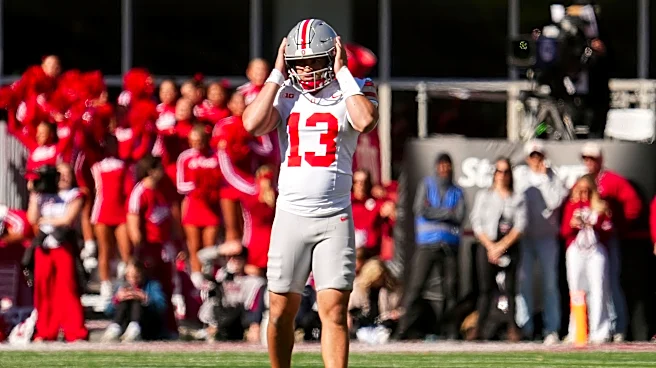
So Ohio State's now faced with losing Julian Sayin for an indefinite amount of time. They've got two quarterbacks in there. We don't know who's going to start. We think it's probably Luke Fahey, but Tavien St. Clair has been given that opportunity to compete. What kind of advice would you give? Well, first of all, what was your mindset going into that when you had to jump in? And what kind of advice would you give Luke Fahey and/or Tavien St. Clair as they try to jump in and keep this thing going, with all the big goals still on the table?
(Jones) - Well, they don't have to be Julian Sayin. Luke and Tavien are there for a unique reason. They are more than talented enough to be the quarterback at Ohio State. I think the biggest downfall would be if they go in there and think they've got to go out there and be Julian Sayin. And then also, just the attention to detail, and the players around them — they've got to think just that about making up for the lack of experience, which all these quarterbacks have been going through. So going in there and just being themselves is more than enough to help this team win.
On whether Ohio State can still reach all of those lofty goals with a backup quarterback
(Harrison) - Perfect, yeah, I would agree. And then, taking that a little bit further, right? You had a lot of talent around you. Ohio State still has a lot of talent, obviously, on the roster around whatever quarterback gets the nod. A lot of people are kind of saying that, even though Ohio State's ranked number two in the country right now, a lot of people in the national media are killing Ohio State's chances of making the College Football Playoff now. What do you think about that? Is there enough talent? Do you think they still get this thing done?
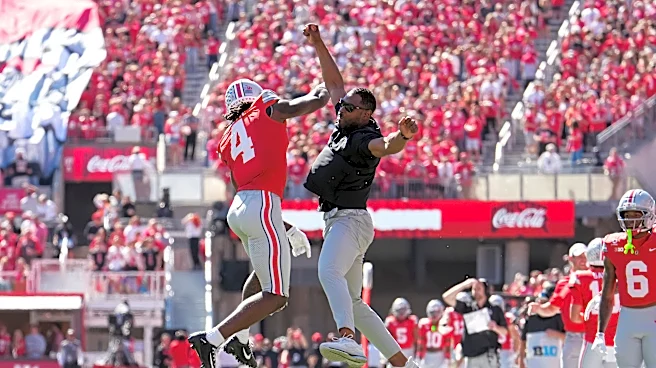
(Jones) - One hundred percent. I think when you look at the dynamic of everyone around these guys, starting with Jeremiah Smith, and then the guys in the backfield, and then the wave of linemen and the depth of the defense, I think they've got more than enough talent to make a deep run.
Once again, we want to thank Jones for taking the time out of his very busy life to talk about the importance of NIL, today's athletes, how to navigate that all, along with advice for today's entrepreneurs with what he's doing in partnership with Chase. And of course, we are grateful for him weighing in on the current quarterback situation at Ohio State with him experiencing an eerily similar situation that resulted in the 2014 national championship.
Contact/Follow us @BuckeyesWire on X (formerly Twitter) and like our page on Facebook to follow ongoing coverage of Ohio State news, notes, and opinion. Follow Phil Harrison on X.
This article originally appeared on Buckeyes Wire: Exclusive: Cardale Jones on NIL, entrepreneurship, Ohio State QBs