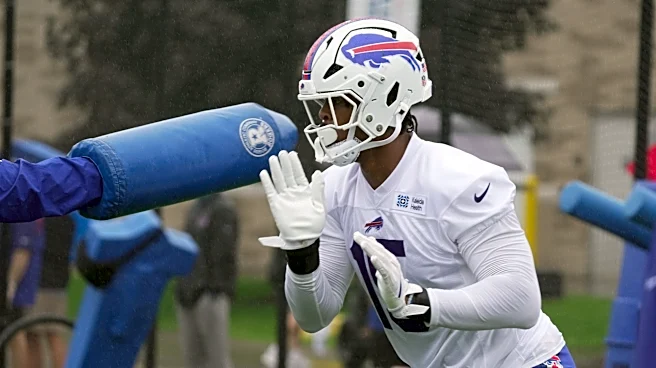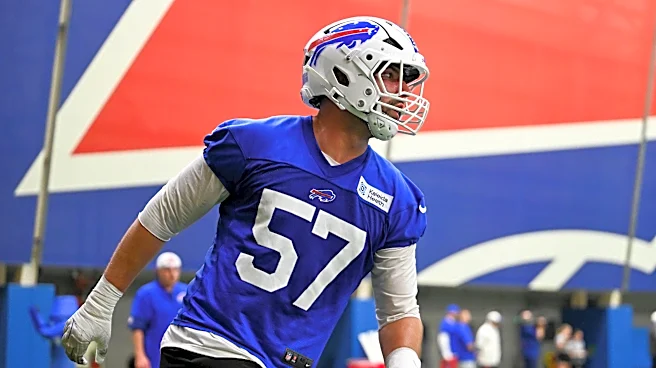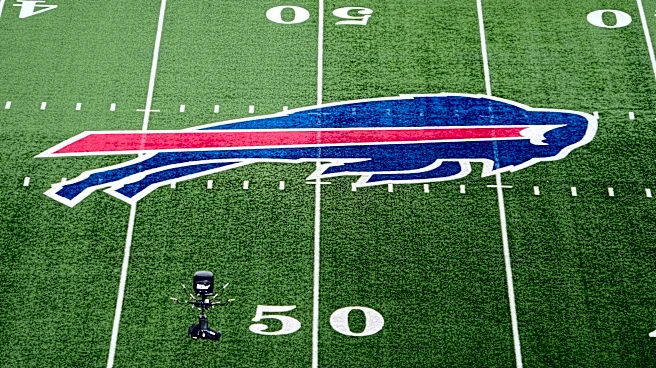




Buffalo's new $2.1 billion Highmark Stadium will open on natural grass, and the Bills general manager says that call was made before the blueprints were locked.
After they spent two years answering questions about sight lines, canopies, Bison statues, and wind panels at the new Highmark Stadium. On The Pat McAfee Show, Brandon Beane answered the one that actually shows up on injury reports.
The team is playing on home field grass. And according to Beane, that wasn't a late-stage design compromise — it was an ownership directive that shaped everything after it.
"Even before we knew exactly what this stadium was going to look like, Terry and Kim were both like, 'No, we want to do grass. We know the players really like that,'" Beane said. "Our guys
in the locker room are definitely excited about moving over there and finally getting grass here in Buffalo."
He framed the decision as coming from the top, not from a facilities committee. Terry and Kim Pegula wanted natural grass in the building, and the football operation didn't have to fight for it.
That matters more than it sounds. Grass in Buffalo is not a default — it's a maintenance line item with a heating system attached. Committing to it before the design was finalized meant the subsurface infrastructure got engineered in rather than bolted on.
"Technology's changed," Beane added. "Just like these golf courses, they have these subair systems, so they can control the flow and the moisture. And then we've got some grow lamps that these guys will be using as the weather changes here."
The playing surface sits over a subair system that pulls water down through the profile and pushes warm air back up, paired with heating elements and grow lamps for the stretch of the calendar when Orchard Park stops cooperating.
The NFLPA has spent years pushing the league toward natural surfaces, and player surveys have consistently ranked grass ahead of turf on lower-body injury risk. For a team whose entire competitive model runs through a 30-year-old quarterback taking contact he doesn't always need to take, the surface under Josh Allen's feet is a roster-preservation issue.
Some of the Bills most expensive production on the field is concentrated in players whose value depends on ankles, knees and plant-and-drive movement.
A Buffalo January can chew up a grass field regardless of what's buried underneath it. Though Beane notes the Bills are prepared to re-sod if the surface degrades, including mid-season if it comes to that.
That's an operating cost most franchises would rather not absorb. Buffalo is absorbing it because the alternative is playing the most important stretch of Joe Brady's first season as head coach on a compromised field.
This article originally appeared on Bills Wire: Brandon Beane: Why the Bills will touch grass in new stadium