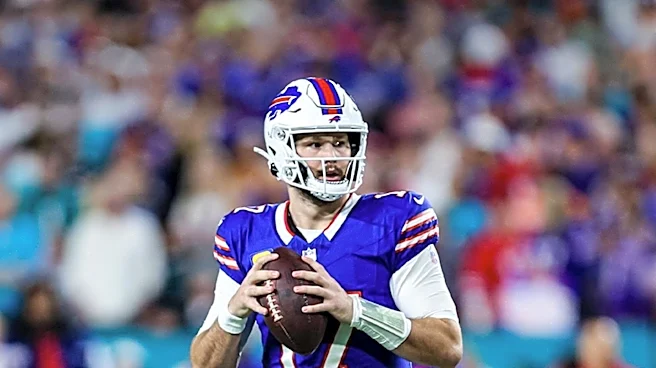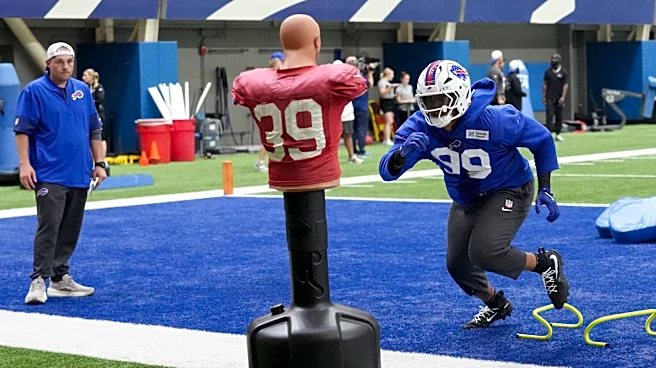

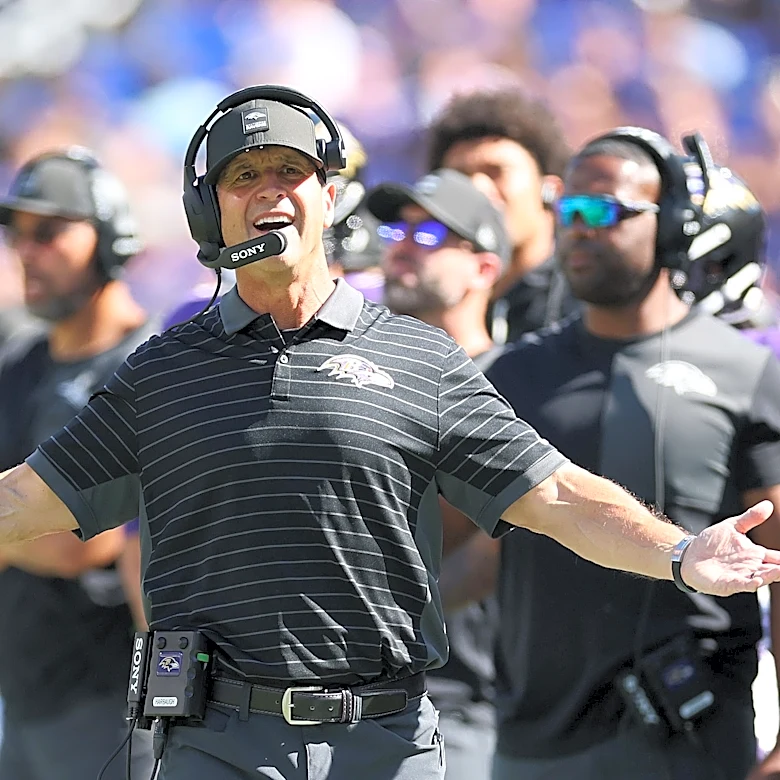


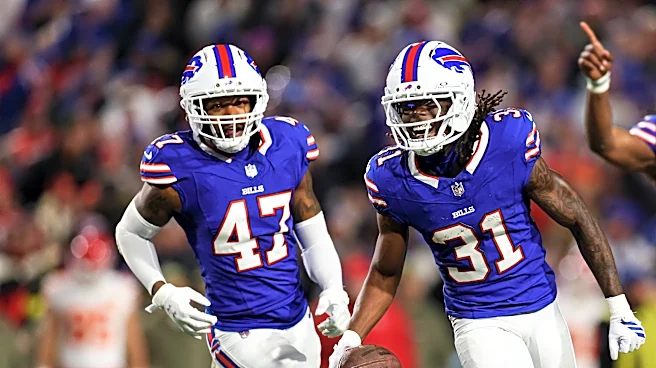
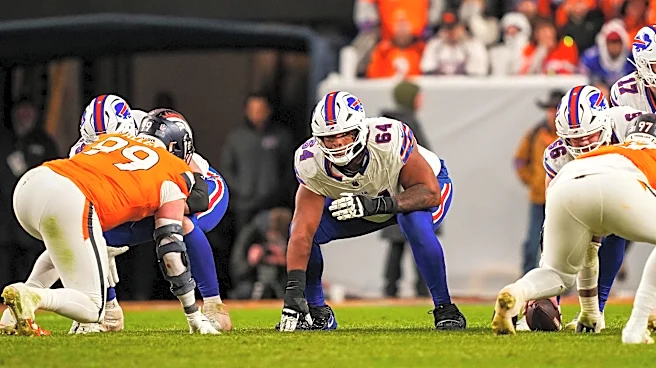
The Buffalo Bills left the 2026 NFL Draft with seven picks, a class Brandon Beane built to help to maximize Josh Allen's prime and the Bills' Super Bowl window while giving new defensive coordinator Jim Leonhard the pieces to help his hybrid defense to succeed.
Some of these rookies will play meaningful snaps this season, as GM Brandon Beane has aimed to bolster the rosterin the last two NFL offseasons with more immediate contributors.
Here's how they rank up by potential 2026 impact...
9. Tommy Doman Jr., P (Michigan)
Beane didn't spend a late-round selection on a punter as a throw in. The team has been actively searching over several seasons for a consistent presence at the position. Doman's directional leg and hang time offers legitimate camp competition for the first time in a while.
If Doman wins the job, the Bills quietly upgrade a phase that matters, including in the January weather during the playoffs.
8. Ar'maj Reed-Adams, iOL (Texas A&M)
Reed-Adams is a developmental interior lineman on a roster that just re-enforced their trenches up front. He's not going to unseat anyone in Year 1, what he instead offers is some guard/center flex and a physical profile — 6-foot-5, 314 pounds — that fits Buffalo's gap-scheme lean. Think of him as an in-house answer to a 2027 free-agent roster need more-so than a 2026 immediate contributor, though he may see rotation time to get his feet wet.
7. Zane Durant, DT (Penn State)
The fifth-round pick out of Penn State is the most under-discussed rookie on the roster, yet he adds to a key rotational arsenal at his position group.
Buffalo's interior defensive line rotation behind Ed Oliver was thin in 2025, and with an aging DaQuan Jones off the books and DeWayne Carter and T.J. Sanders returning from injuries, the 6-foot-1, 290 pound three-technique with 10 sacks, 22 tackles for loss and 40 starts across four seasons in Happy Valley can contribute as a rotational interior rusher. Leonhard's 3-4 hybrid utilizes a four-man interior rotation, and Durant can be that fourth piece.
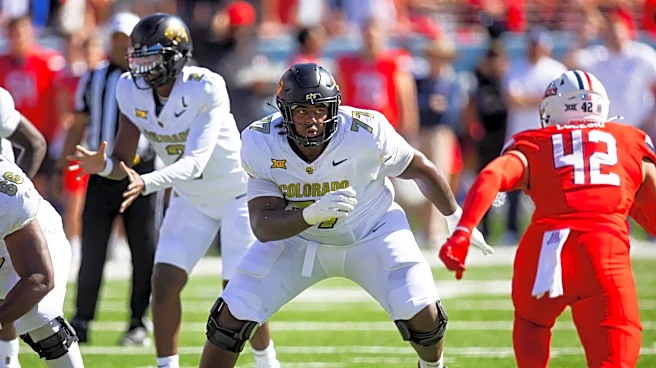
6. Jude Bowry, OT (Boston College)
Bowry was drafted for the same reason Spencer Brown once was — length, arm strength and enough tape against ACC edges to project as a swing tackle. He'll be brought along slowly behind Dion Dawkins, but he'll be the first tackle up if either of those two starters misses time. In a division where the Patriots just made the Super Bowl behind a rebuilt front, having a fourth tackle who can actually play is a strong add.
5. Skyler Bell, WR (UCONN)
Bell's OTA reviews were louder than any Day 3 rookie's should have been, and there's a real reason: Joe Brady's offense needs a slot separator behind Khalil Shakir, and the depth chart got thinner the moment DJ Moore slid into the WR1 role on the outside. Bell isn't going to lead the room in targets. But in three-receiver sets — the personnel grouping Brady used on 60-plus percent of Buffalo's snaps in 2025 — he has a runway to earn catches as a rookie, especially given his athleticism and positional versatility.
4. Toriano Pride Jr., CB (Missouri)
Pride walks into the most crowded position group on the roster — Christian Benford, Max Hairston, Davison Igbinosun, Dee Alford on his new $21 million max value three-year deal — and he still may play meaningful snaps. Leonhard's hybrid scheme rotates corners through nickel, dime and matchup packages the way college defenses do, and Pride's three years of SEC reps against Ole Miss, Alabama and Georgia wideouts translate directly.
3. Jalon Kilgore, S (South Carolina)
Kilgore made Brandon Beane a promise in his post-draft call, and the tape backs it up. With Cole Bishop ascending into a full-time starter role and Taylor Rapp entering a contract year, Buffalo needed a young safety who could play the deep half and cover a tight end in the slot. Kilgore does both. Leonhard's two-high, disguise-heavy shell puts a premium on safeties who can rotate late and tackle in space — and Kilgore, at 6-foot-1, 210 pounds with speed, is a plug-and-play fit for the third safety role that will see on-field snaps.
2. Kaleb Elarms-Orr, LB (TCU)
One of the Bills' most important defensive rookies is the 6'2 linebacker who ran a 4.47 second 40 yard dash at 232 pounds. Elarms-Orr can help to unlock Leonhard's 3-4 hybrid, which is built around linebackers who can walk down to the line, cover backs and tight ends in man, and blitz the A-gap on the same series. Matt Milano's future remains unkown, Terrel Bernard is is locked in but needs help around him, and Elarms-Orr's rookie-year floor can include significant defensive snaps as a sub-package weapon. His ceiling is starting alongside Bernard by December and giving Buffalo the athletic second-level defender it has quietly needed.
1. T.J. Parker, OLB (Clemson)
The Bills' first pick of the 2026 draft — No. 35 overall, acquired in the Round 1 trade back with the Titans — is also the rookie with the clearest path to a more immediate defensive role. Parker posted 11 sacks, 19.5 tackles for loss and six forced fumbles as a Clemson sophomore in 2024 before an inconsistent 2025 (five sacks, 9.5 TFL) pushed him into Day 2. The dip is why he was available at 35.
He joins an edge room built around Greg Rousseau, Bradley Chubb and the recovering Michael Hoecht. Those are veteran players Leonhard needs to keep fresh in a 3-4 hybrid that asks its outside linebackers to drop into coverage more often than they did under the old regime, and is a group a young player like Parker adds to.
This article originally appeared on Bills Wire: Ranking the Bills' 2026 NFL Draft class by potential impact